Roger Federer Inducted into the International Tennis Hall of Fame
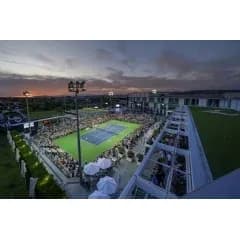
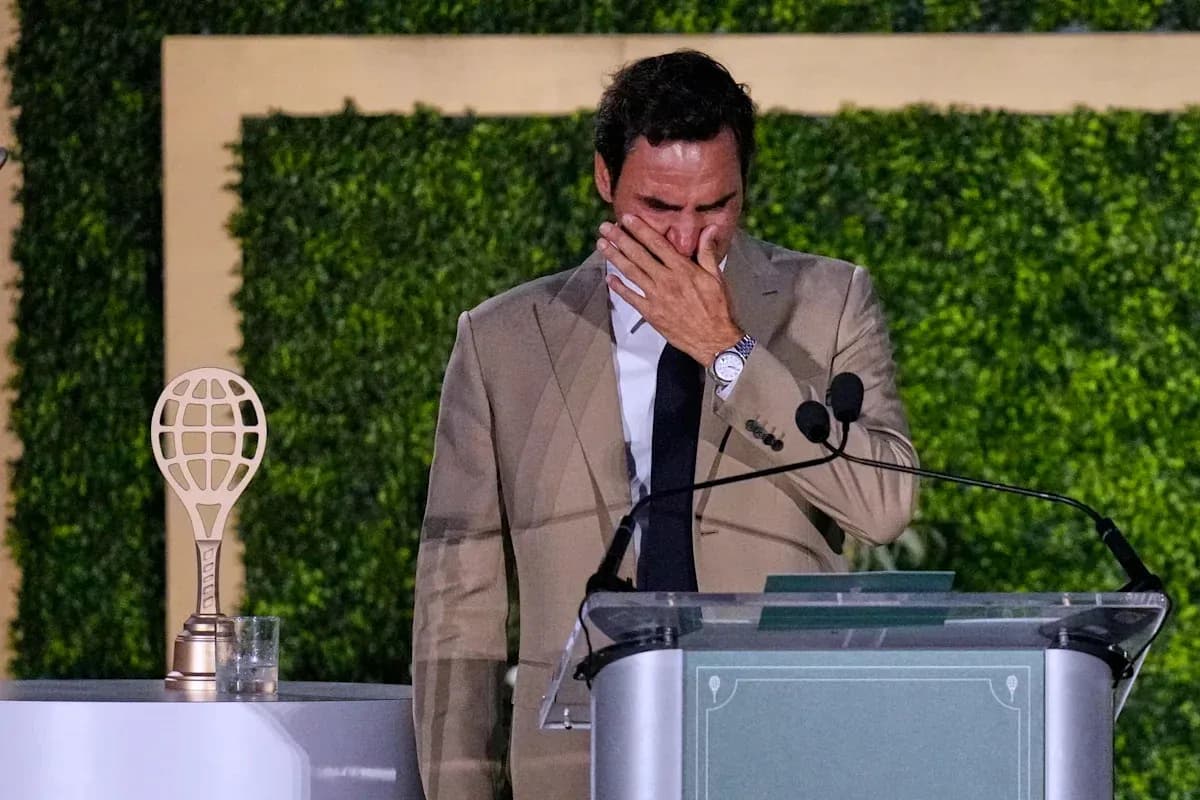
NEWPORT, R.I. — As the sun slipped behind the stands and shadows stretched across the grass horseshoe court in Newport, Roger Federer walked slowly toward the stage, already fighting back emotion.
Tan suit, familiar elegance, same measured stride. Different arena. This was not Centre Court at Wimbledon or Arthur Ashe Stadium. This was the International Tennis Hall of Fame, and for the first man to win 20 Grand Slam singles titles, the weight of the moment hit almost immediately.
He kissed and hugged his wife, Mirka, who had just introduced him, then turned to the microphone and exhaled.
"Oh man," he began, voice already unsteady. "This is very high level and a tough act to follow."
He tried to lighten the mood, teasing his wife — "I don't know if you have been practicing secretly" — but the challenge was clear. The Swiss Maestro, so often ice-cool in the tightest fifth sets, knew this would be a different kind of test.
The Maestro Meets the Moment
The Hall rolled out its first-ever red-carpet show on center court roughly 90 minutes before the induction ceremony, and Federer, 45, admitted he felt the nerves.
He told the crowd he "was a little stressed to be honest," an admission that drew smiles from fans used to seeing him glide through pressure with effortless calm. The man whose game had once redefined grace under fire now stood disarmed by nostalgia and gratitude.
Over nearly 30 minutes, the statistics that defined his career hovered unspoken in the background: a record 237 consecutive weeks as world No. 1 in the ATP rankings, five straight U.S. Open titles from 2004–08, 10 consecutive Grand Slam finals with eight trophies collected along the way. Eight Wimbledon crowns. Six Australian Opens. The elusive French Open in 2009 that completed his career Grand Slam, a club that includes only eight men.
Those numbers built his legend. On this night, his tears told the story.
Tears for Heroes, Coaches, and Mirka
The first cracks appeared midway through the speech, when Federer turned to his childhood hero, Stefan Edberg. The elegance he once tried to copy as a boy now stood reflected in his own career, and the emotion rushed in.
These, he insisted, were "happy tears."
They kept coming. He choked up again when he spoke about longtime coach Severin Lüthi, a constant presence through the grind of the tour and the twilight of his career. Each name he mentioned seemed to pull another memory to the surface.
Then came the hardest part.
"Now the Mirka part," he said, stopping as the words caught in his throat. "Oh gosh, this such a mess."
The crowd laughed softly, but he couldn’t quite escape the wave. The man who had stared down match points in Grand Slam finals now stood blinking back tears, trying to regain control.
"I need tissues and sunglasses, everything to protect me right now," he told the audience, half-joking, half-pleading with himself to hold it together.
He didn’t, not completely. And that felt right. The tears took over, like a clean return that catches the line before you can react.
A Champion’s Closing Notes
Eventually, the competitor in him resurfaced. Just as he had so often rallied from break points or tiebreak deficits, Federer found his rhythm again to close out the speech.
He thanked the ball kids — a small detail to some, a telling one to those who watched his career closely. Respect for every layer of the sport had always been part of his identity. He urged players to keep pushing tennis to new heights, to keep stretching the boundaries he and his rivals once redrew.
"I'm thrilled to have made the journey here," he said. "It's amazing to see yourself in a place like this. To immerse yourself in the history of the sport means a lot to me."
The boy who idolized Edberg now sits beside him in the Hall’s pantheon. The player who dominated the modern era now becomes part of its permanent history.
Carillo Joins the Club
Federer did not go in alone.
Mary Carillo, the former player turned acclaimed broadcaster, entered the Hall as a contributor, presented by Billie Jean King. Already a member of the Sports Broadcasting Hall of Fame, Carillo’s voice has framed some of the sport’s defining moments for generations of viewers.
"She has earned her spot in sports journalism and she has earned her spot in Newport," King said, a concise verdict on a career built on sharp insight and unwavering authenticity.
Carillo, 69, stood before a cluster of Hall of Famers, clearly moved.
"To walk through these gates here in the company of you people, that was beyond my dreams," she said.
On a warm Newport evening, the sport honored two very different careers — one defined by balletic footwork and a one-handed backhand that seemed to bend physics, the other by words that helped explain those miracles to the world.
Federer, at 45, now belongs to the place he once only visited. The trophies are long since won, the rankings passed on, the rivalries archived. What remains is his place in the game’s memory — and now, officially, in its Hall.