Serena Williams Advocates for Women's Healthcare Equity
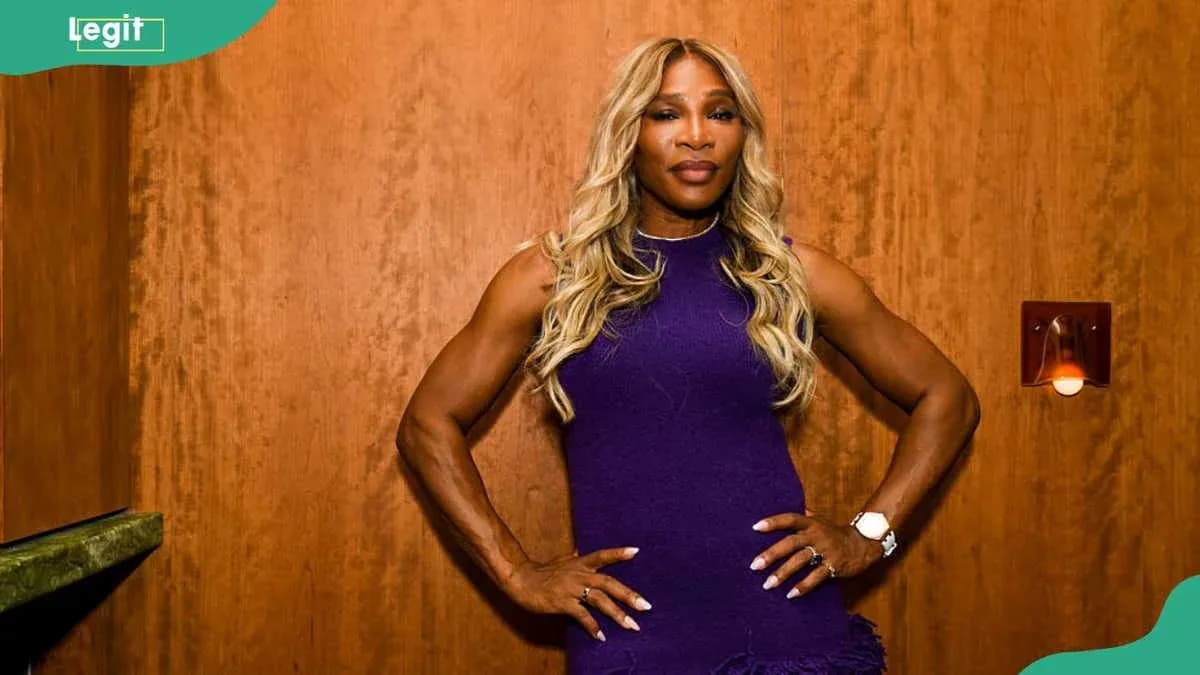
Serena Williams has spent a career forcing the world to pay attention. On Thursday in New York, she did it again — this time without a racket in her hand.
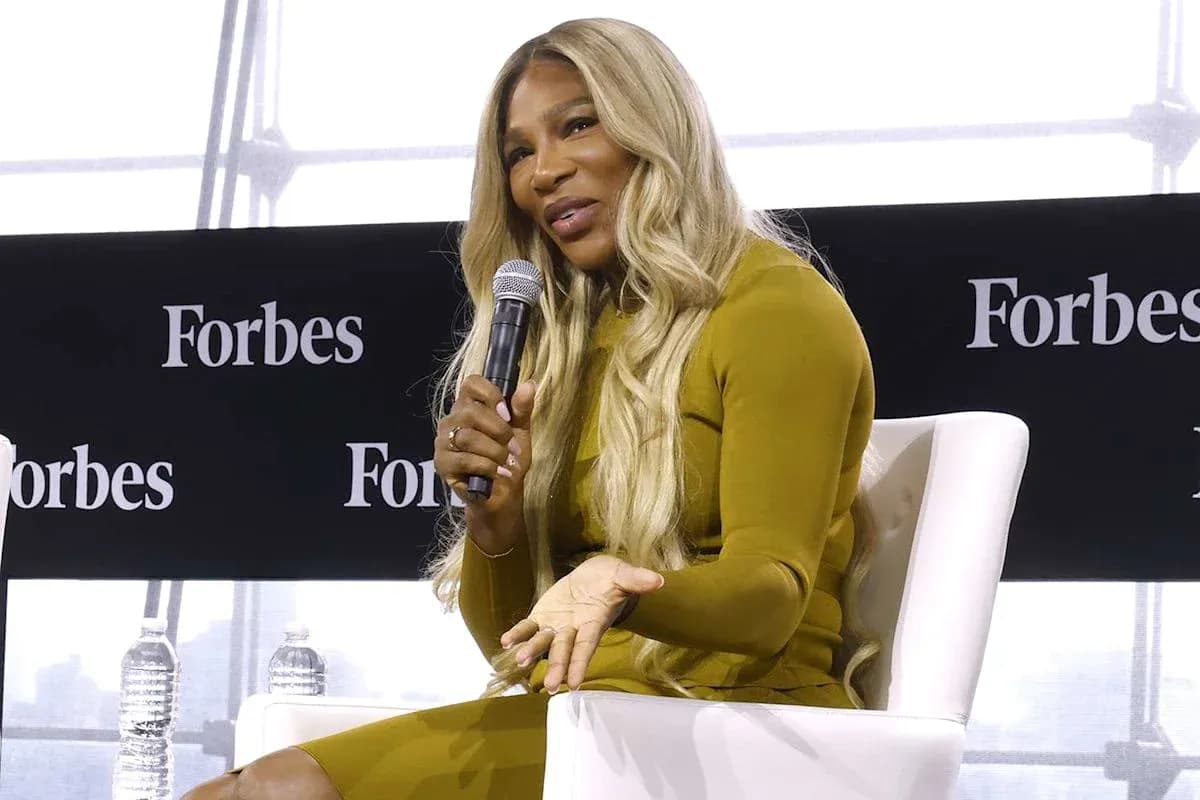
Speaking at the Forbes Power Women's Summit 2026, the 44-year-old stepped back into one of the darkest chapters of her life: the birth of her first daughter and the medical crisis that followed. The story is familiar by now, but the impact clearly still hits her — and the room.
“When I told my story, I didn't realize how many people could relate,” Williams said on stage, reflecting on the aftermath of her 2017 delivery of Alexis Olympia, her first child with husband Alexis Ohanian.
At first, she thought the ordeal was mainly about race and inequality in care for Black women. Then the responses poured in.
“At first I thought it was just a minority problem, but then I realized it's a women's problem,” she said.
Women from every background reached out. Different countries, different hospitals, same fear. Same sense of not being heard. Williams called it “a nightmare's tale” that so many shared about giving birth.
And then she added the kind of line only she can deliver — sharp, wry, and cutting straight to the point.
“If men were giving birth, they would have sweets [and] like all kinds of medicines,” she joked. “So it wouldn't be the same problem at all.”
A champion fighting for her own life
Behind the humor sits a brutal reality.
In 2017, as she went into labor with Olympia, Williams was rushed into an emergency C-section. The delivery was only the beginning. Afterward, a coughing fit caused her surgical wound to reopen. That led doctors to uncover a large hematoma — a swelling of clotted blood — in her abdomen.
Then came the real fight.
Williams endured a six-day battle with a pulmonary embolism, a condition in which one or more arteries in the lungs become blocked by a blood clot. It required multiple surgeries. It could have cost her life.
“I knew something was wrong with me and it was super important that I was heard,” she told the audience. She credits her medical team — and one key decision.
“Thankfully, my doctor listened to me. The nurses did, but I was so fortunate enough to have a doctor that did and literally saved my life.”
That experience changed her. The champion who once stalked the baseline now stalks a different kind of injustice: how women — especially women from underrepresented communities — are treated when their health is on the line.
From center court to the front lines of health equity
Williams didn’t just move on. She moved into action.
Her ordeal helped push her into advocacy work focused on improving healthcare access for women and marginalized groups. She became the first entrepreneur-in-residence for the Reckitt Catalyst program, a global social impact and innovation initiative backing female and underrepresented entrepreneurs working on health, hygiene, water and sanitation solutions.
“What these women are doing is they're really letting us know that women's healthcare is so important, and healthcare in general,” she said. Then she grounded it in the everyday reality that often gets overlooked: “Because also we're talking about women who take care of the kids, you know, I take care of my kids mostly.”
For Williams, this isn’t abstract policy talk. It’s about practical fixes, real connections, and opening doors that have stayed closed for too long.
“With the program, we're able to actually solve a lot of issues,” she explained. “Make, like I said, make those connections that are really vital, that are really important to open so many doors. Because every time we open a door, we're solving another problem that's closer to helping us all in this room and helping our kids.”
This is the same relentless logic she brought to tennis: identify the weakness, attack it, repeat until the job is done.
“We are not rising to the challenge”
Williams has been telling this story for years, not to relive the trauma, but to force change.
In a 2018 opinion piece for CNN, she laid out the stark contrast between what exists and what’s actually delivered to women around the world.
“We know simple solutions exist,” she wrote at the time, “like access to midwives and functional health facilities, along with breastfeeding, skin-to-skin contact, clean water, basic drugs and good nutrition.”
Then came the indictment.
“Yet we are not doing our part. We are not rising to the challenge to help the women of the world,” she added.
On Thursday, the message carried the same urgency. The statistics may be global and impersonal, but she keeps dragging the conversation back to the individual woman in the hospital bed, the mother at home, the child who needs her.
“Together, we can make this change,” she wrote in that same piece. “Together, we can be the change.”
It’s the kind of line that could sound like a slogan in someone else’s mouth. Coming from a woman who nearly died in childbirth, it lands differently.
A new chapter, same mission
Williams’ life has shifted again since that first crisis. In August 2023, she and Ohanian welcomed their second daughter, Adira River Ohanian.
“Welcome, Adira River Ohanian,” Ohanian wrote alongside a family photo after the birth. “I'm grateful to report our house is teaming [sic] with love: a happy & healthy newborn girl and happy & healthy mama. Feeling grateful. @serenawilliams, you've now given me another incomparable gift — you're the GMOAT.”
The “GMOAT” — Greatest Mother of All Time — line made headlines, as her career always has. But on Thursday, the 23-time Grand Slam singles champion wasn’t chasing another title. She was pressing a different point.
Her message was blunt: women are still not being heard, even when their lives are at stake. She survived because someone finally listened. Too many others don’t get that chance.
The trophies are already in the cabinet. The question now is whether the world will show the same ruthlessness in fixing women’s healthcare that Serena Williams once showed from the baseline.