Siniakova and Townsend Achieve Career Doubles Grand Slam at US Open
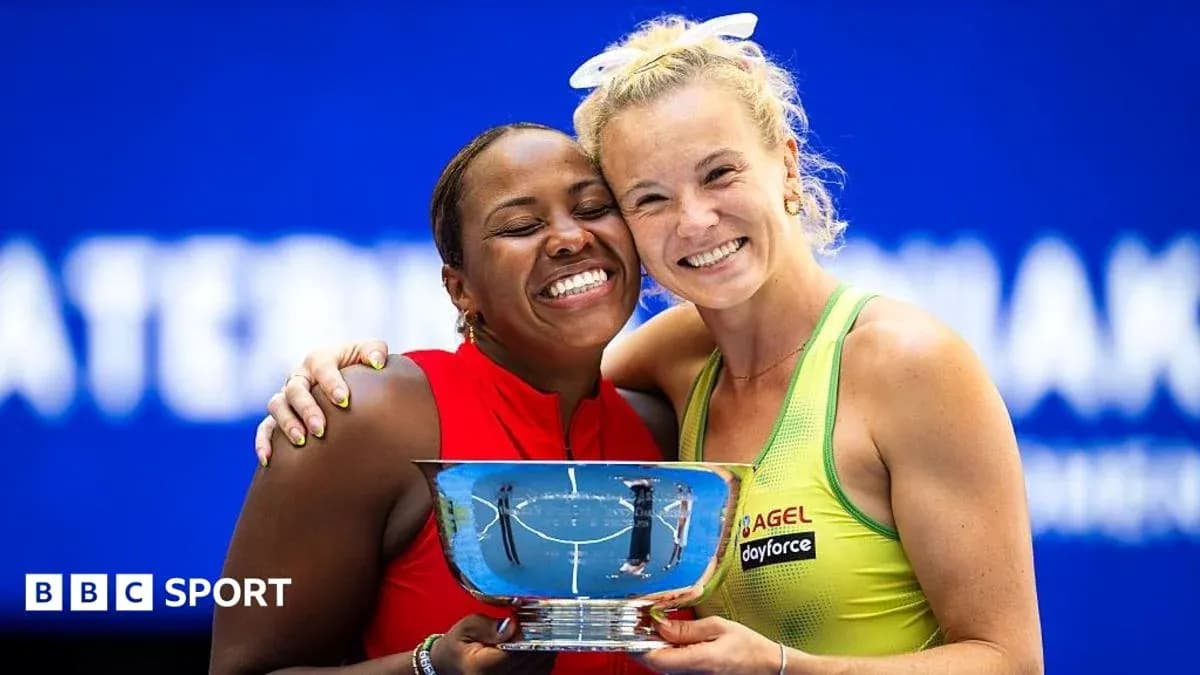
Katerina Siniakova and Taylor Townsend stood on the baseline in Arthur Ashe Stadium with the noise still swirling and the moment finally catching up with them. A year of dominance, a fortnight of control, and one nervy opening set had just delivered something tennis almost never sees: a career doubles Grand Slam as a team.
They did it the hard way on the day, but they did it. The top seeds beat American wildcards Ashlyn Krueger and Robin Montgomery 5-7 6-0 6-2 in the US Open final, coming back from a set down to complete their sweep of the majors.
Wimbledon 2024. Australian Open 2025. Roland Garros this year. Now Flushing Meadows. Four different stages, same outcome. The partnership is now etched into the sport’s history.
Siniakova climbs into rare air
For Siniakova, this was not just another trophy for an already crowded cabinet. It was her 12th Grand Slam doubles title, a number that plants her firmly among the giants of the Open era. Only seven other women have reached a dozen or more.
This one came with a twist no one else can claim.
The Czech becomes the first player ever to complete the career Slam in doubles with two different partners. She first did it alongside compatriot Barbora Krejcikova, a pairing that dominated the tour. Now she has repeated the feat with Townsend, proving her versatility and longevity at the very top of the game.
If she ends this season as the world No 1 in doubles, it will be the sixth time she has finished a year on top. That would push her past Martina Navratilova for the most year-end No 1 finishes in WTA history. It is the kind of statistic that usually belongs to a bygone era. Siniakova is writing it in real time.
Townsend’s homecoming moment
For Townsend, this title hits differently.
The 30-year-old American had walked off this court last year with a runner-up plate and a hollow feeling, after losing the US Open final with Siniakova to Gabriela Dabrowski and Erin Routliffe. She had come close to a home Slam, close enough to feel it and then watch it slip away.
This time she stayed on court until the very end.
Her first US Open doubles crown arrives not as a surprise run, but as the culmination of a season where she and Siniakova have set the standard. The fact it came against two young Americans, Krueger and Montgomery, only sharpened the edges of the occasion. The underdogs pushed, the favourite team bent, but they did not break.
From collapse to control
For six matches at this tournament, Siniakova and Townsend barely gave a glimpse of weakness. They had not dropped a set coming into the final. Then the pressure of the moment finally showed.
Serving at 5-6 in the opening set, Siniakova’s usually reliable delivery deserted her. Three double faults in the final game handed Krueger and Montgomery the set. The stadium stirred. The wildcards sensed something.
That was as generous as the top seeds would be.
The response in the second set was ruthless. After dropping the first game, Siniakova and Townsend ripped through 23 of the next 27 points. Returns landed deep, volleys snapped away, angles opened up. The Americans suddenly looked rushed, then overwhelmed. A 6-0 set in a Grand Slam final is a statement; this one felt like a reset of the entire match.
The decider never really got away from them. An early break gave Siniakova and Townsend a 3-1 lead and, with it, control of the scoreboard and the tempo. They held firm on serve, shut down any hint of a comeback, and closed out the match with the calm of a team that knows exactly where it belongs.
A partnership built to last?
Doubles history tends to be carved out over years, with pairings that come and go, peaks that flare and fade. Siniakova has already lived one great chapter with Krejcikova. Now, alongside Townsend, she has created another.
Four Slams together, all different surfaces, all in the space of two seasons. A career Slam as a team already secured. Twelve majors for Siniakova, a first US Open for Townsend, and a place in the record books that will not be easy to match.
The question now is not what they have achieved. That is clear. The question is how far this partnership can push the ceiling of what dominance in women’s doubles looks like.