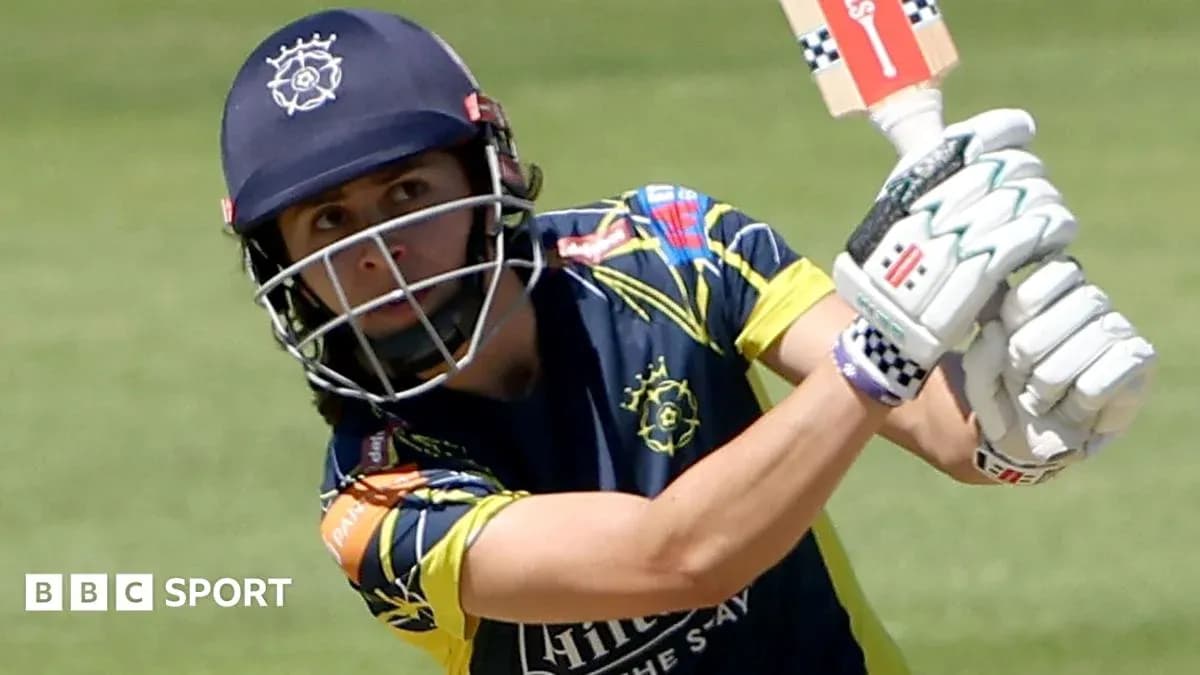
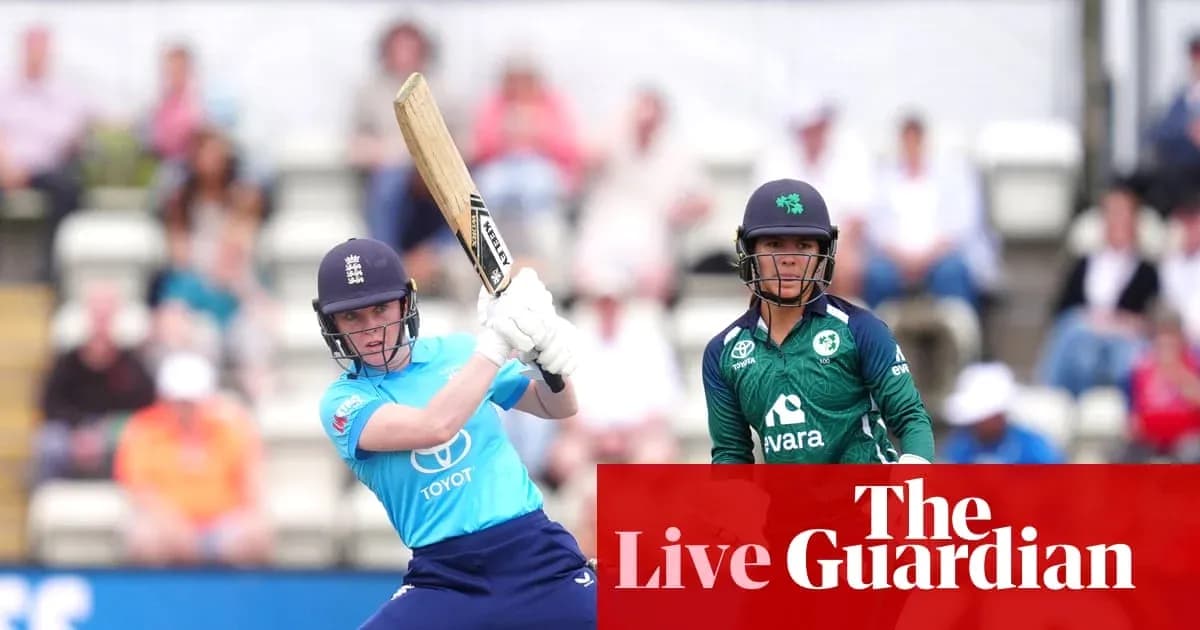
Sophia Dunkley’s Century Leads England Against Ireland
Sophia Dunkley lit up New Road with a commanding century as England’s batters dominated Ireland before a late-innings wobble dragged the total back towards something more human.
For most of the afternoon, though, this was Dunkley’s stage.
Dunkley’s measured hundred anchors England
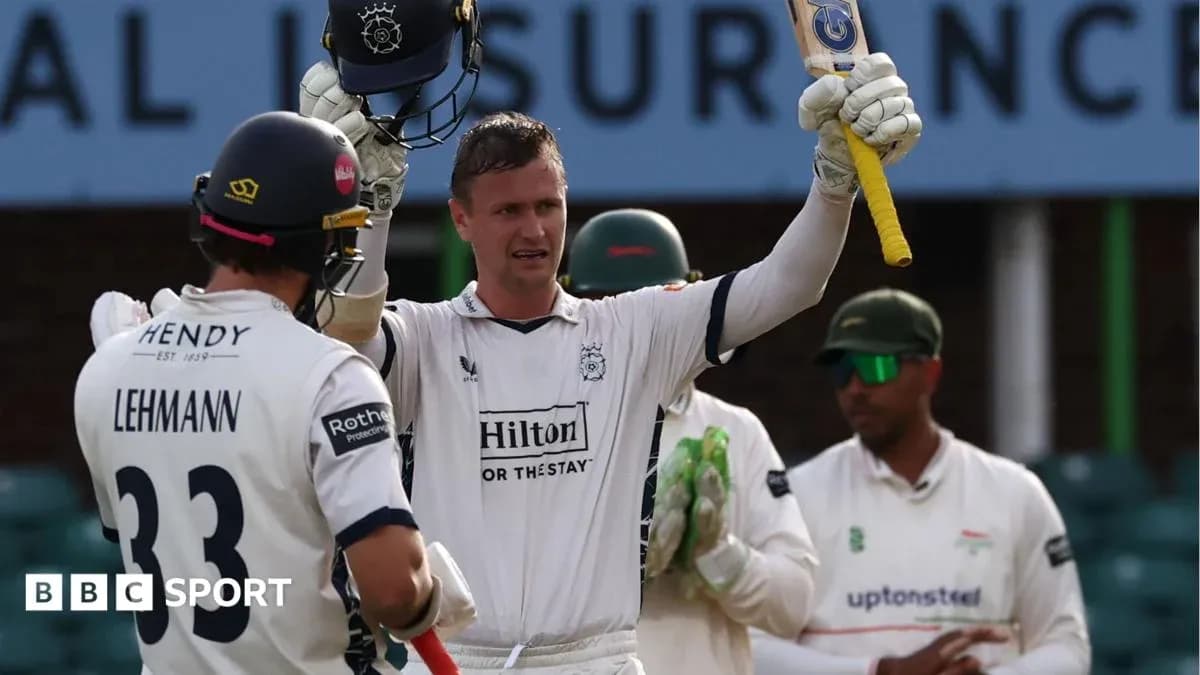
She started quietly, almost cautiously, but once settled Dunkley controlled the tempo of the innings with the assurance of a player who knows this level now belongs to her. Her hundred arrived in fitting style: a pull shot to move to 99, then a clipped single to bring up three figures from exactly 100 balls. Helmet off, bat raised, a brief punch of the glove. No theatrics, just a clear sense of a job well done.
By then she had already threaded England’s innings together, first with fluency and then with authority. Boundaries flowed – 11 fours in all – as she punished anything even slightly off length. Ireland tried to hurry her with the occasional short ball from Cara Murray and Arlene Kelly, but Dunkley rode it out, adjusting, waiting, then driving and cutting them back into line.
Her partnership with Seren Grewcock laid the platform. Grewcock took time to find her range, going 25 balls before her first boundary, but when it came it was worth the wait – a textbook on-drive that oozed timing. A checked drive through the covers followed, and there was a pleasing composure to the way she held her pose after each shot. She moved to 35, looking increasingly at ease, before her innings ended in frustration: shuffling down the pitch and chipping a simple return catch to Murray, who took it low by her ankles. England 183 for 2, and a promising hand cut short.
Dunkley pressed on. Into the 90s with a slower ball from Kelly dispatched over long-on, then a firm stroke leg side to move within touching distance of the milestone. When Grewcock nudged a single to give her the strike, Dunkley steadied herself, ducked a not-quite-short ball from Orla Prendergast’s new-ball partner Jane Maguire’s equivalent in this attack, then cashed in. The hundred felt inevitable by that point, the product of control rather than chance.
Capsey’s rotten luck, Kemp’s intent
The innings shifted again with the arrival of Alice Capsey. She had barely settled when misfortune struck. Having turned Leah Paul’s left-arm equivalent, Cara Murray’s partner Ava McCartney, into the leg side to bring up England’s 200 and jog through for a routine single, Capsey found herself on the wrong end of a classic non-striker’s nightmare. Dunkley drilled McCartney straight back; the bowler got just enough of a thumb on it, and the ball cannoned into the stumps with Capsey out of her ground. Run out for 10. A stinker.
Freya Kemp walked in with licence and made her intent clear almost immediately. She stood tall, then crouched low to whip McBride through the covers for four, a shot that summed up both her range and her confidence. She drove through extra cover, she cut majestically when offered width, and she took on the infield with aggressive running. Ireland’s fielders, already ragged, fumbled again at backward point as England’s total ticked upwards.
A glorious boundary off Murray – drilled through extra cover past a diving Gaby Lewis – underlined Kemp’s timing. When Ireland gambled on a mid-off run-out chance, a direct hit would have sent her back. It missed. Kemp survived, and England kept moving.
The pressure finally told on Ireland’s spinners when Danielle Gibson joined in. She launched McCartney over long-off for the first six of the innings, a brutal, caveman swipe that sent the ball sailing into the distance and the crowd into voice. Cross-batted fours, hard running, and a willingness to attack the spin meant Ireland’s control vanished in patches.
Kemp’s stay ended in spectacular fashion. She launched Murray high and straight, the ball climbing into the sky and seemingly destined for the stands. It didn’t quite make it. Dropping on the thread of the rope, it found Lewis, who flung herself back and clung on at full stretch. A superb catch, Kemp gone for a rapid 23 from 21 balls, and Ireland given a sliver of relief at 260 for 5.
Murray sparks late collapse
Up to that point, England had been cruising towards something monstrous. Then Murray changed the mood.
In the same over that removed Kemp, she lured Charlie Dean into trouble. Dean had just shonked a full toss for four, only to nibble at a flighted delivery that dipped and turned enough to find a faint edge. Amy Hunter did the rest behind the stumps. A double-wicket over, and suddenly England’s charge stumbled.
Murray wasn’t done. She then accounted for Sarah Glenn’s replacement in this XI, Alice Capsey already gone, so she turned to the middle order. Villiers advanced and lofted what should have been a routine boundary over deep midwicket. Instead, she offered a gentle catch to Lewis’ counterpart on the rope, falling for 3. England, once 214 for 3 and rampant, now found themselves 270 for 7, the innings fraying at the edges.
Ireland’s seamers and spinners combined to tighten the screw. McCartney, who had already produced the cruel deflection to run out Capsey, finished with a tidy 1 for 53 from her 10 overs, closing her spell with an over that yielded no boundaries and forced England into ones and twos. McBride kept things quiet too, dragging England back from the prospect of 320-plus into something more manageable.
Gibson fights back, Kelly’s farewell strike
Through the wobble, Gibson held her nerve. She moved to 25, then 30, then 36, cutting McBride for four when offered width and riding out the lbw scare when Ireland sent one appeal upstairs. A huge shout was turned down, the review confirming the on-field call. Gibson responded with a touch of flair, ramping the final ball of Prendergast’s over for four, the sort of audacious stroke that can flip a narrative back in the batter’s favour.
At the other end, Ryana MacDonald-Gay tried to support her. A slog-sweep early in her stay just eluded Lewis at deep midwicket, dropping safe when it might easily have been another wicket. She then nudged singles, turning the strike back to Gibson, who continued to pick gaps and look for the rope.
But on a day that belonged to Dunkley, it was fitting that another story ran alongside: Arlene Kelly’s farewell. In her final appearance, she had already been driven and cut by England’s top order, but she kept coming, kept adjusting. Her reward came late. MacDonald-Gay, looking to muscle one over long-on, heaved across the line and picked out the fielder perfectly. A simple catch for Murray, a neat symmetry for Ireland, and Kelly had her moment.
England’s innings, which had once looked like a procession, closed with a hint of what-might-have-been. They had the platform, the power, and the placement to surge beyond 300 with ease. Instead, a cluster of wickets – sparked by Murray’s guile and supported by tighter fielding – dragged them back.
Dunkley’s 119, though, stood above it all: a second international century, crafted from a slow start into a dominant statement. For Ireland, the question now is simple and brutal: can this batting line-up live with the standard she just set?