Injuries Plague South Africa's Fast Bowlers Ahead of ODI Series
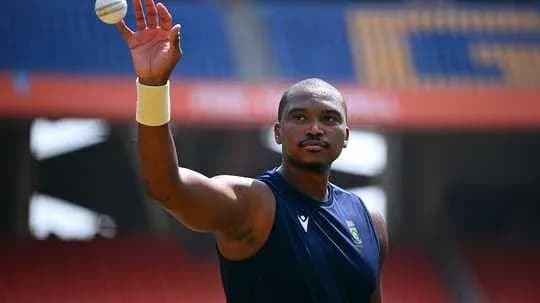
Lungi Ngidi has limped into a club no fast bowler wants a membership card for. The roll of dishonour is short but growing, and right now it belongs almost exclusively to South Africa’s injured quicks.
On Friday, Cricket South Africa confirmed that Ngidi will miss the ODI series against Australia, which starts at Kingsmead on Thursday. The diagnosis? A hamstring strain. The same fate that has already taken Kagiso Rabada, Ottneil Baartman and Lutho Sipamla out of contention. Only Nandré Burger breaks the pattern, sidelined instead by a flaring back problem.
Four fast bowlers. One recurring word: hamstring.
A predictable plague
What looks like a crisis of conditioning has, in fact, a familiar rhythm to it. Shuaib Manjra, CSA’s former chief medical officer and long-time national team doctor, isn’t shocked.
“It’s not surprising, because if you look at any sport there are two peaks in hamstring injuries — the beginning of the season and the end of the season,” he told Cricbuzz.
At the start of a campaign, the load spikes. Players come off breaks, crank up the intensity, and go straight into high-impact work. Bodies that have eased down are suddenly asked to sprint, leap and explode again. Late in the season, it’s the opposite problem: fatigue, not rust, frays the muscle.
“So it’s not surprising.”
Ngidi’s injury fits the calendar. He pulled up last Friday in Centurion, playing for the Titans against the Dolphins in the opening round of first-class fixtures. One match into the domestic season, one more name on the injury sheet.
CSA has offered no timeline for his return, just as they have stayed quiet on Rabada’s chances of making the Test series against Australia, which starts in Durban on October 9. Silence, in this context, speaks loudly.
Tests on the horizon, and a nation watching
For South Africa, the ODIs against Australia are useful but expendable. The looming Test series is not. This is the side defending their World Test Championship crown, their only senior global title, earned against these same Australians at Lord’s last June.
That is why a five-second social media clip of Rabada, posted on Wednesday, has carried such weight. No fireworks, no snarling spell. Just the spearhead of the attack jogging in off a short run and delivering gently in the nets. It was enough to be seized upon as a sliver of optimism by a cricket public desperate for good news.
Because this is not only about who can bowl. It is about who has bowled recently.
Rabada has not played any form of cricket since May. Burger last appeared in June. Sipamla only returned to action last month after sitting out since July. Baartman, before last week, had also been idle since July. For that group, recovery is not as simple as being declared fit and handed a ball.
They will need overs. Spells. The slow, deliberate climb back to full workload. “Getting the overs in the legs,” as the old phrase goes. And if your hamstring has already failed you once, the climb is steeper.
“The other risk for a hamstring injury is a previous injury,” Manjra said. “You’re more likely to pick up another injury if you go back too early.
“Doctors have a saying that the highest risk of an injury is a previous unrehabilitated injury. So we have to ensure that the player is fully rehabilitated, otherwise they are vulnerable.”
Ngidi’s different path
Ngidi’s route into the treatment room looks different. He has not been sitting idle. Between August 27 and September 6 he played six ETPL games for Glasgow Cosmic, sending down 120 of a possible 144 deliveries. That is a solid workload, enough to sharpen rather than overload, on paper at least.
Yet he still broke down a week later.
There is an obvious counter-argument. Should he have been in franchise cricket at all in that window? With a home season stacked with eight Tests ahead, some will say his focus should have been on carefully managed preparation, not another tournament.
But this is professional sport, not a theory exercise. Turning down an overseas deal means turning down money, and those who argue he should have stayed home would need to answer a simple question: would they make up the shortfall?
Patchwork attack, familiar stakes
South Africa have moved quickly to plug the gaps for the ODIs. Nqobani Mokoena has come in for Ngidi. Gerald Coetzee covers for Rabada. Duan Jansen replaces Baartman. Sipamla and Burger were not in the original squad, yet without their injuries they would now be breathing down the door as well.
Instead, an ODI attack that was supposed to blend experience and firepower will lean heavily on Marco Jansen, with Corbin Bosch and Kwena Maphaka also in the frame. It is a group rich in promise, light on caps, and suddenly central to a series that was meant to be a tune-up rather than a test of depth.
The hamstring club grows, the calendar does not slow, and the question hangs over South Africa’s season: how many of their frontline quicks will still be standing when Australia walk out for that first Test in Durban?