Southwest Division: Youth Movements and Established Stars
The Southwest used to be predictable. One power, a couple of plucky challengers, and a doormat or two. Not anymore. Now it’s a collision of timelines: No. 1 picks trying to grow up fast, former MVPs refusing to fade, and one 7-foot-4 MVP finalist looming over everything.
This is a division where Cooper Flagg and Cameron Boozer are asked to grow into franchise faces overnight, where Kevin Durant is still a 25-point scorer on a contender, and where Victor Wembanyama has already dragged San Antonio back to the Finals and wants more.
The balance of power is clear. The storylines aren’t.
Dallas Mavericks: Masai’s Reset and Flagg’s First Real Test
Dallas chased a dream last season and got a reality check instead.
Cooper Flagg arrived with the full weight of a No. 1 overall pick and delivered on the promise. The problem? Almost everything around him broke. Injuries shredded the rotation, the Mavericks stumbled to 26-56, and the postseason didn’t even bother to knock.
So the franchise changed the person at the very top.
Masai Ujiri, architect of a title in Toronto, now runs the show in Dallas. His first major decision set the tone: go to the college ranks for a coach, not the usual carousel of recycled NBA names. Dusty May, fresh off a national championship at Michigan, steps straight into a locker room that looks a lot more like a high-end college roster than a veteran NBA outfit.
That’s the point.
May doesn’t just get a young team; he gets familiar faces. Morez Johnson follows him from Michigan to anchor the front line, joining Zaccharie Risacher, the No. 1 pick from two drafts ago, and Flagg, the current cornerstone. Dallas has essentially doubled down on length, skill and upside up front.
The roster churn reflects that reset. Out go veterans and established names — Khris Middleton, Klay Thompson, Dwight Powell, Marvin Bagley III — along with Ryan Nembhard and Brandon Williams. In come Santi Aldama, Tarik Biberović, Sergio de Larrea, Johnson, Tobi Lawal, Risacher and Marcus Sasser. It’s a frontcourt-heavy influx with just enough guard help to keep the ball moving.
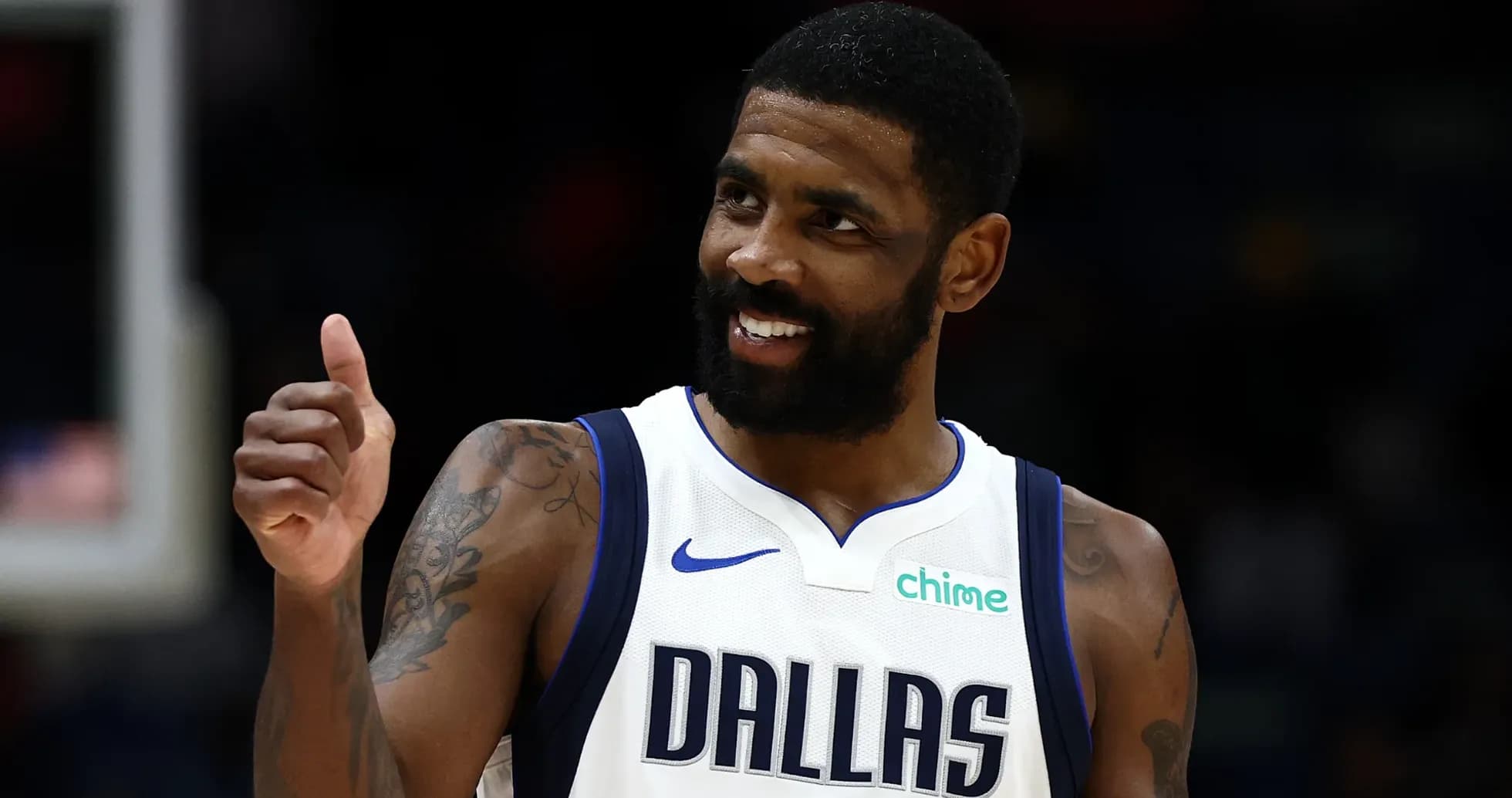
The wild card is still Kyrie Irving. His return from injury gives Dallas the one thing young teams rarely have: a closer who has seen everything. But the franchise’s heartbeat now belongs to Flagg. If he makes the leap from promising No. 1 pick to All-Star, Ujiri’s rebuild accelerates overnight.
If he doesn’t, Dallas waits. Again.
Houston Rockets: Running It Back, With a Sharper Edge
Houston doesn’t feel like a rebuilding story anymore. It feels like a team on the clock.
The Rockets went 52-20 in a brutal Western Conference, rode a breakout from Amen Thompson, watched Alperen Sengun turn into a star, and still crashed out in the first round. That kind of season usually sparks panic moves. Houston chose conviction instead.
The core stays. The tweaks are precise.
Kevin Durant, still a 25-point machine as he inches toward 38, remains the offensive anchor who bends defenses and forces double-teams. Thompson’s growth as a dynamic two-way guard and Sengun’s rise as a skilled hub inside give Houston a modern, layered attack.
The front office stayed out of the blockbuster market and focused on margins. Bogdan Bogdanović arrives to stretch the floor, one of the league’s more efficient deep threats and a perfect fit next to Durant and Sengun. Marcus Smart joins as a veteran guard who can organize, defend, and bark when needed.
That last part matters because Fred VanVleet is coming back from a lost season. He missed the entire campaign rehabbing, and Houston is betting heavily on his return. If VanVleet looks like himself, the Rockets suddenly have a three-guard mix — VanVleet, Thompson, Smart — that can toggle between playmaking, defense and shooting without losing structure.
They did pay a price in depth and versatility, moving on from JD Davison, Dorian Finney-Smith, Jeff Green, Aaron Holiday and Josh Okogie. But the spine of the team is intact.
The mandate is clear: 50 wins can’t be the story anymore. The Rockets need Sengun and Thompson to take another step, Durant to beat the clock one more time, and the revamped backcourt to carry them past the first round. Anything less will feel like a step in place.
Memphis Grizzlies: Life After Ja and the Boozer Era Begins
Memphis didn’t just have a bad season. It had a season that forced an identity crisis.
A major midseason deal involving Jaren Jackson disrupted continuity. Ja Morant’s injuries wiped out any chance of rhythm. The Grizzlies never found traction, stumbled to 25-57, and watched the postseason from home.
The front office answered with a decision that had hovered over the franchise for years: Morant is gone.
His trade to the Trail Blazers ends an explosive, chaotic era in Memphis. It also clears space — emotionally and tactically — for something new. The team is no longer built around one of the quickest, most electrifying guards in the league. It’s being reshaped around a different kind of star.
Enter Cameron Boozer.
One of the top players in college basketball, Boozer arrives with the profile of a franchise centerpiece. Not just numbers, but presence. He brings size, skill and a game that can translate into a long-term identity, not just nightly highlights.
Memphis didn’t stop there. The offseason was a full-scale retool. In come Boozer, Jerami Grant, AJ Johnson, Karim López, Kris Murray, Quinten Post, D’Angelo Russell, Richie Saunders and Isaiah Stewart. Out go Santi Aldama, Kentavious Caldwell-Pope and, most notably, Morant.
Grant, acquired in the Morant deal, gives the Grizzlies a proven two-way forward who can score, defend and bridge eras. Zach Edey and Cedric Coward add size and youth to a front line that suddenly looks completely different.
This isn’t a gentle transition. It’s a hard pivot.
Memphis will live with the growing pains of a Boozer-led group because the payoff could be a new, sustainable core. The question isn’t whether they’ll look different. It’s how quickly that difference translates into wins.
New Orleans Pelicans: Waiting on Zion, and on a Decision
The Pelicans got something last season they’ve rarely had: Zion Williamson on the floor.
He played 62 games, a refreshing run of availability for the former No. 1 pick. The result? Still just 26-56 and another year without playoff basketball in New Orleans.
So the front office did… almost nothing.
No splashy signings. No big trades. Just a quiet offseason that says more about timing than ambition. The major change comes on the bench, where Jamahl Mosley takes over after his stint in Orlando.
Mosley walks into a familiar assignment: nurture a young core and see who rises. In Orlando, he shepherded a group that grew into a playoff team. In New Orleans, he inherits Derik Queen and Jeremiah Fears as key developmental pieces, and a roster that still hasn’t fully defined itself.
The additions are modest — Jaron Pierre Jr. and Trendon Watford — while Kevon Looney departs. The real drama sits higher in the rotation.
Dejounte Murray, Jordan Poole and Trey Murphy sit at a crossroads. Are they foundational pieces for the next phase, or assets to be moved when the trade deadline arrives? The Pelicans have essentially pushed that decision to February.
Until then, the bet is simple: internal growth and one star finally staying healthy.
If an All-Star emerges from this group, the safest guess remains Zion. But New Orleans has run out of patience for hypotheticals. At some point, the franchise has to decide whether this core is worth doubling down on or breaking apart.
That moment is coming. Just not yet.
San Antonio Spurs: Wembanyama’s Next Step and a Title-Or-Bust Edge
San Antonio is no longer in the “promising future” phase. The future arrived last season.
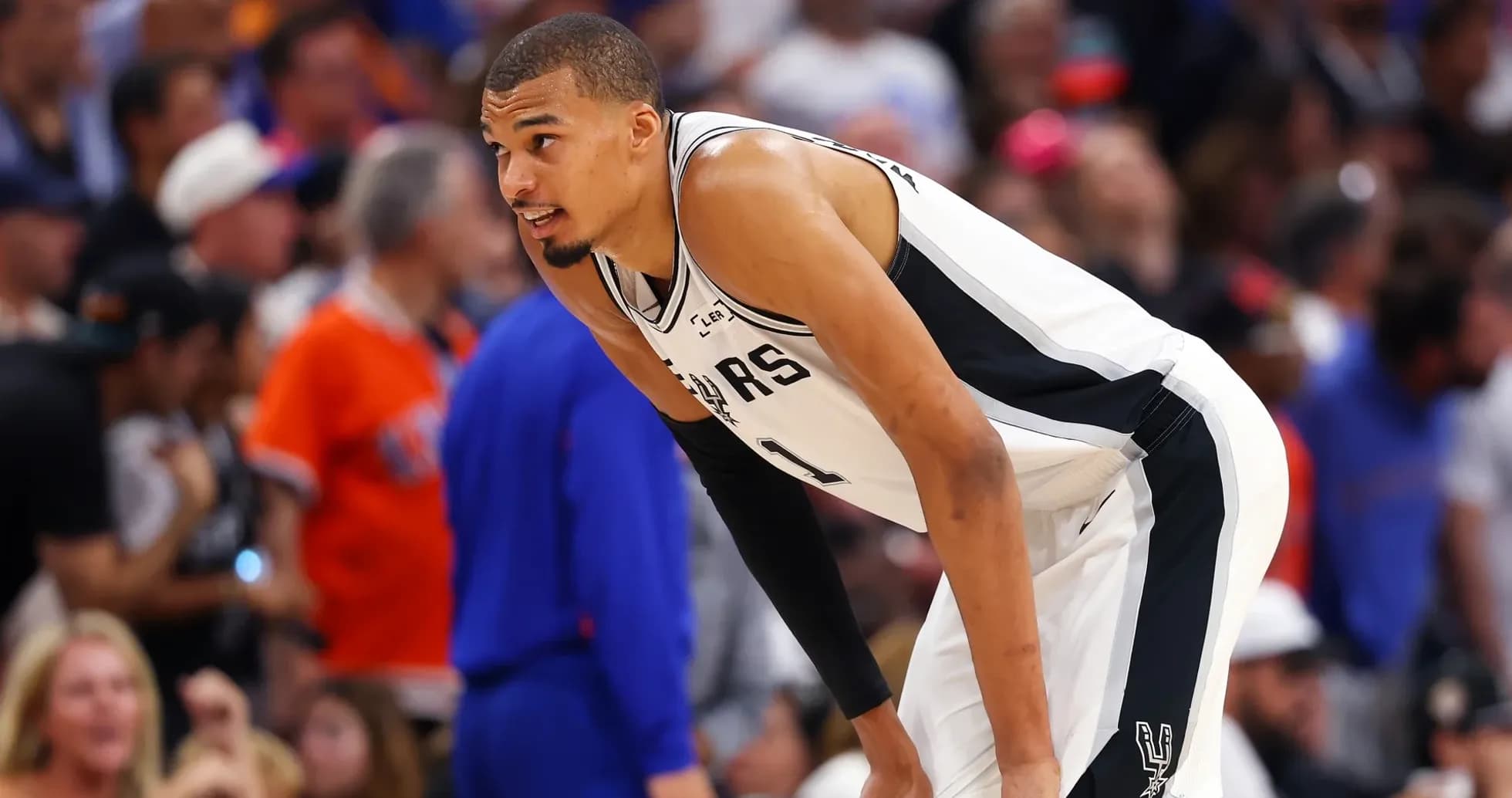
Victor Wembanyama put together an MVP finalist campaign, dragged the Spurs to a 62-20 record, and carried them back to the NBA Finals. The run ended painfully, with too many blown leads against the Knicks, but it didn’t feel like a one-off. It felt like the start of something.
The Spurs treated it that way.
The core stays young, deep and ambitious. Wembanyama sits at the center of it all, humbled by falling short of a title and clearly motivated to fix that. Around him, San Antonio kept layering the roster with the same methodical approach that defined its dynasty years, only with a modern twist.
This summer brought more youth to the development pipeline: Tarris Reed Jr. and Jayden Quaintance, a pair of big men drafted to grow in Wembanyama’s orbit, and Maliq Brown plus Ja’Kobi Gillespie to add depth and energy. Out go veteran bigs Bismack Biyombo, Kelly Olynyk, Mason Plumlee and forward Lindy Waters III, a sign that the Spurs are comfortable handing more responsibility to their younger frontcourt.
The headline addition, though, is Tobias Harris.
Fresh off a solid stint in Detroit, Harris arrives with a clear brief: score, steady, and help win a ring. His polished midrange game gives San Antonio a reliable release valve when defenses tilt hard toward Wembanyama. He fits as a plug-and-play forward who doesn’t need the ball to impact games but can punish single coverage when it comes.
This isn’t a team searching for its identity anymore. It’s a contender refining the details.
San Antonio already knows it can reach the Finals with this blueprint. The next step is the hardest one: finishing the job. With Wembanyama pushing his own ceiling higher and Harris adding another layer of reliability, anything less than another deep run will feel like a missed opportunity in a division that’s chasing, not leading, the standard he’s set.