Spain's Coaching Dominance at the Ballon d'Or
The Ballon d’Or stage is usually reserved for the players. The goalscorers, the magicians, the headline-makers. But in London, in two months’ time, the spotlight will tilt a little further back, towards the dugout.
Ten coaches. One trophy. And a year in which the men on the touchline and the women in the technical area have rewritten the limits of dominance.
Spanish Minds, Global Grip
Look at the men’s shortlist and one theme hits you straight away: Spain runs this show.
Of the five nominees, four are Spanish:
- Mikel Arteta (Arsenal)
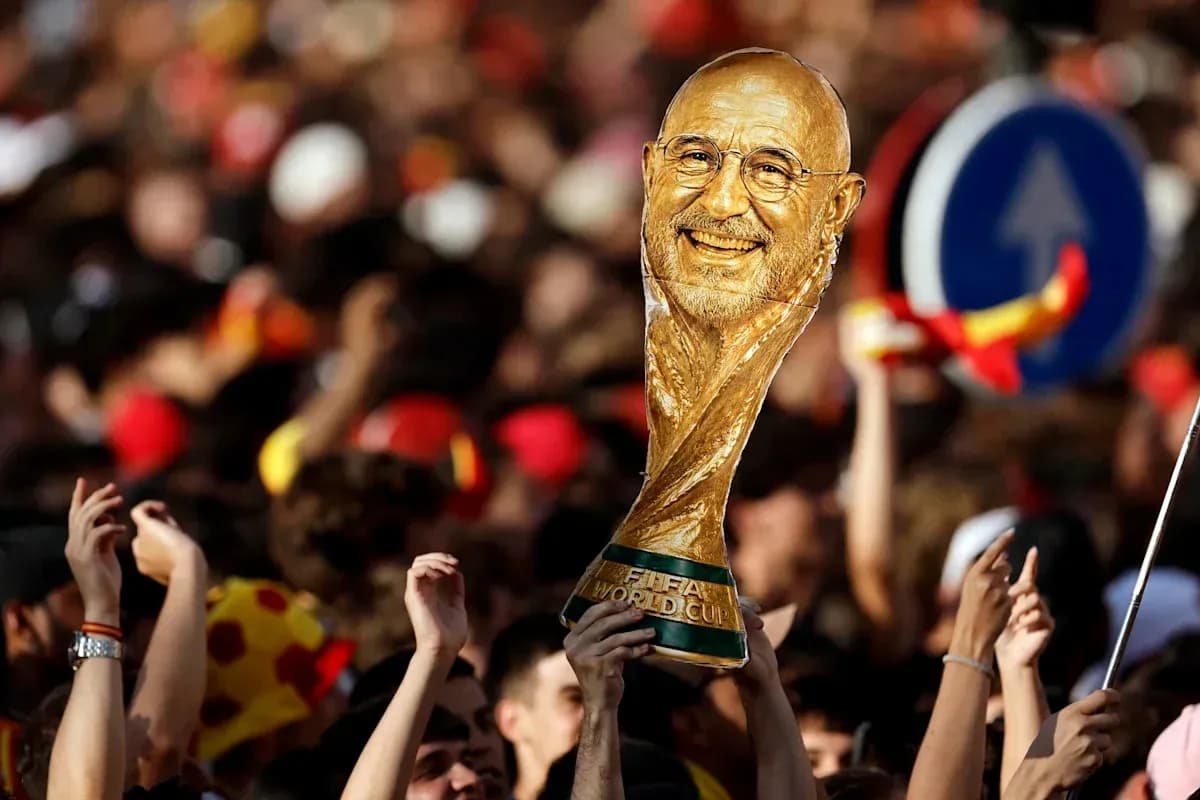
- Luis de la Fuente (Spain national team)
- Unai Emery (Aston Villa)
- Luis Enrique (Paris Saint-Germain)
The outlier? Vincent Kompany (Bayern Munich), the lone Belgian in a sea of Spanish thinkers.
This is not a quirk of the list. It’s a snapshot of where coaching power currently lies. From Premier League benches to Champions League finals, from national team glory to domestic rebuilds, Spanish coaches have pushed their ideas to the very top of the game.
Arteta’s Arsenal finally crossed the line in England, delivering a Premier League title and driving the club all the way to a Champions League final. That’s not just progress; that’s a transformation of a club’s modern identity.
Luis Enrique, long seen as one of the game’s sharpest tactical minds, did the one thing harder than winning the Champions League with Paris Saint-Germain: he did it again. Back-to-back European crowns with a club that spent years tripping over its own ambition is the kind of achievement that defines a career.
Emery, the eternal European specialist, put Aston Villa back on the continental map with a UEFA Europa League triumph. Another European trophy, another reminder that give him a knockout tie and he will find a way through it.
And then there is Luis de la Fuente. The man who took Spain to the summit by winning the biggest prize of all at international level. In a field full of serial winners, a major international title still carries a different weight. He will arrive in London as a clear favourite, the coach who turned a nation’s potential into a tangible, glittering payoff.
Kompany, though, refuses to be a footnote. At Bayern Munich he delivered the domestic double, taking the Bundesliga and DFB Pokal with authority and adding a layer of attacking, high-tempo football that thrilled neutrals and restored Bayern’s swagger. His football carries the imprint of Pep Guardiola’s influence, but the courage to impose that philosophy in Munich, and to win while doing it, makes him a genuine contender rather than a token name on a Spanish-dominated list.
Look across this group and a question lingers: how did Spain build this coaching machine? Federations and clubs worldwide will be studying the answer.
A New Name Guaranteed in Women’s Coaching History
On the women’s side, the script is different but just as compelling.
Every nominee is chasing a first coach’s Ballon d’Or. Whoever wins will carve a new name into the trophy:
- Jonatan Giráldez Costas (OL Lyonnes)
- Andrée Jeglertz (Manchester City)
- Nils Nielsen (Japan national team)
- Pere Romeu (FC Barcelona)
- Elena Sadiku (BK Häcken)
No past winners. No defending champion. Just five coaches with serious silverware behind them.
Giráldez has turned OL Lyonnes into a domestic wrecking ball, sweeping the French Championship, the French Cup, and the French League Cup. A clean sweep at home is never routine in France, not with the pressure and expectation that surrounds Lyon’s women’s side, but he made it look almost inevitable.
Jeglertz answered that with English steel. The WSL and FA Cup double with Manchester City is a statement in a league where the margins tighten every year and the competition for talent is relentless. To hold your nerve across a season and then again in a domestic cup run says plenty about his control of the big moments.
Nielsen took a different route. Without a club job at present, his candidacy rests on international success: the Asian Cup with Japan. Continental titles still matter deeply in the women’s game, shaping cycles and identities. Lifting that trophy with a national side that prides itself on technical precision and tactical clarity underlines his credentials.
Sadiku’s year with BK Häcken brought a Europa Cup triumph, proof that a well-drilled, ambitious side from outside the traditional giants can still muscle in on Europe’s honours. It’s the kind of achievement that often sways voters who value impact over brand.
Then there is Pere Romeu and the Barcelona juggernaut. UEFA Women’s Champions League. Spanish Cup. La Liga. Spanish Super Cup. Four trophies, one season, and a level of sustained excellence that has turned Barça’s women into the standard-bearers of the modern game. This is not just winning; it is domination across every front available.
When the envelope opens, the Ballon d’Or for women’s coaching will belong to a first-time winner. The only question is which brand of success the voters value more: total domestic and European control, or targeted, high-impact triumphs.
The men’s award feels like a referendum on Spanish coaching supremacy. The women’s trophy promises a new member in the elite club of era-defining managers.
In London, the players will still shine under the lights. But this year, the loudest statement might come from the ones standing just outside the white lines.