Srikkanth Critiques India’s Fear-Driven Selection for Afghanistan T20Is
The selectors have gone back to the comfort of experience. Kris Srikkanth is not impressed.
India’s decision to name a full-strength squad for the three-match T20I series against Afghanistan in New Delhi has triggered a sharp rebuke from the former opener, who branded the move a “mistake” and a product of fear after recent overseas failures.
India were beaten 0-2 in Ireland and then swept 0-4 in England in July. Those bruises, Srikkanth believes, have pushed the panel into retreat mode.
“After the series losses in Ireland and England, the selectors have decided not to take a chance and picked a full-strength squad for Afghanistan. They are going all guns blazing, but this is a mistake,” he said on his YouTube channel, accusing the think-tank of abandoning the bolder path. “It’s against teams like Afghanistan that you should try out youngsters. Instead, you’ve picked a full-strength squad out of fear.”
From Experiment in Zimbabwe to Safety Net at Home
What really jars for Srikkanth is the sudden change of course. India used the recent Zimbabwe tour to blood newer faces, to test the edges of their T20 pool. Now, with three games in familiar conditions at the Arun Jaitley Stadium on September 13, 15 and 17, the experimentation has been dialled back.
“It feels like a desperation move after the Ireland and England losses. But this squad is almost the same as the one they picked for England,” he said.
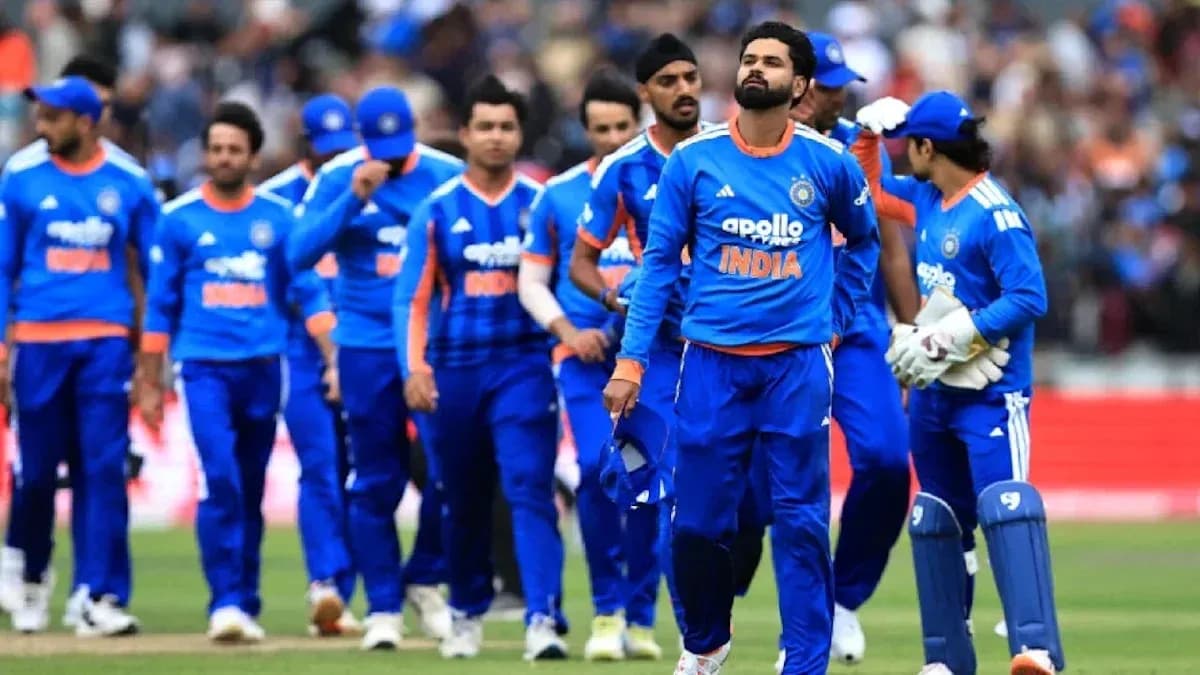
The 15-man group has a distinctly established core. Shreyas Iyer continues as captain, with Tilak Varma as his deputy. Around them, the selectors have stacked the side with experience: Jasprit Bumrah, Sanju Samson, Ishan Kishan, Axar Patel, Arshdeep Singh, Shivam Dube and Varun Chakaravarthy all return.
There is one notable nod to the future. Fifteen-year-old Vaibhav Sooryavanshi, who impressed in Zimbabwe, keeps his place. For Srikkanth, that single inclusion doesn’t balance what he sees as a missed strategic opening.
Three home T20Is against Afghanistan, in his view, were tailor-made for fringe players to be given a proper run, not just a cameo series.
Fitness Questions Cloud the Big Names
The selection has another layer Srikkanth finds troubling: the reliance on players yet to prove their match readiness.
Bumrah’s comeback hinges on fitness clearance, as do those of Nitish Kumar Reddy, Washington Sundar and Harshit Rana. All four have been named with an asterisk, their participation still subject to the medical green light. Hardik Pandya, meanwhile, has missed out after another setback during rehabilitation.
Srikkanth is unconvinced by the process.
“These four have not proved match-fitness. So on what basis are they subject to fitness? Just because you prove your fitness at the Bengaluru CoE, are you fit?” he asked, pointing to Harshit Rana’s recent struggles. “That’s how Harshit Rana went to England, and then what happened to him there? So match fitness is important.”
His criticism cuts at the heart of India’s current juggling act: balancing reputations and recovery timelines against the demands of international intensity.
Opportunity Lost, or Statement of Intent?
Strip away the names and the noise, and Srikkanth’s central argument is stark. India, he feels, have allowed short-term scars to dictate long-term planning.
Rather than doubling down on the youth-first approach seen in Zimbabwe, the selectors have reacted to the Ireland and England defeats by reverting to the familiar. The Afghanistan series, which could have served as a live audition for emerging talent, now looks more like a reset for senior pros and established white-ball specialists.
The squad in full underlines that tilt towards continuity:
Shreyas Iyer (C), Abhishek Sharma, Vaibhav Sooryavanshi, Sanju Samson (WK), Ishan Kishan (WK), Tilak Varma (VC), Shivam Dube, Nitish Kumar Reddy*, Axar Patel, Washington Sundar*, Varun Chakaravarthy, Ravi Bishnoi, Jasprit Bumrah*, Arshdeep Singh, Harshit Rana* (*Subject to fitness clearance)
The games in New Delhi will reveal whether this “all guns blazing” approach restores confidence or deepens the debate. If the seniors deliver, the move will look like a hard-nosed response to overseas defeats. If they don’t, the question will linger: how long can India afford to delay the next generation’s real test?