Taylor Fritz's US Open Exit: A Missed Opportunity
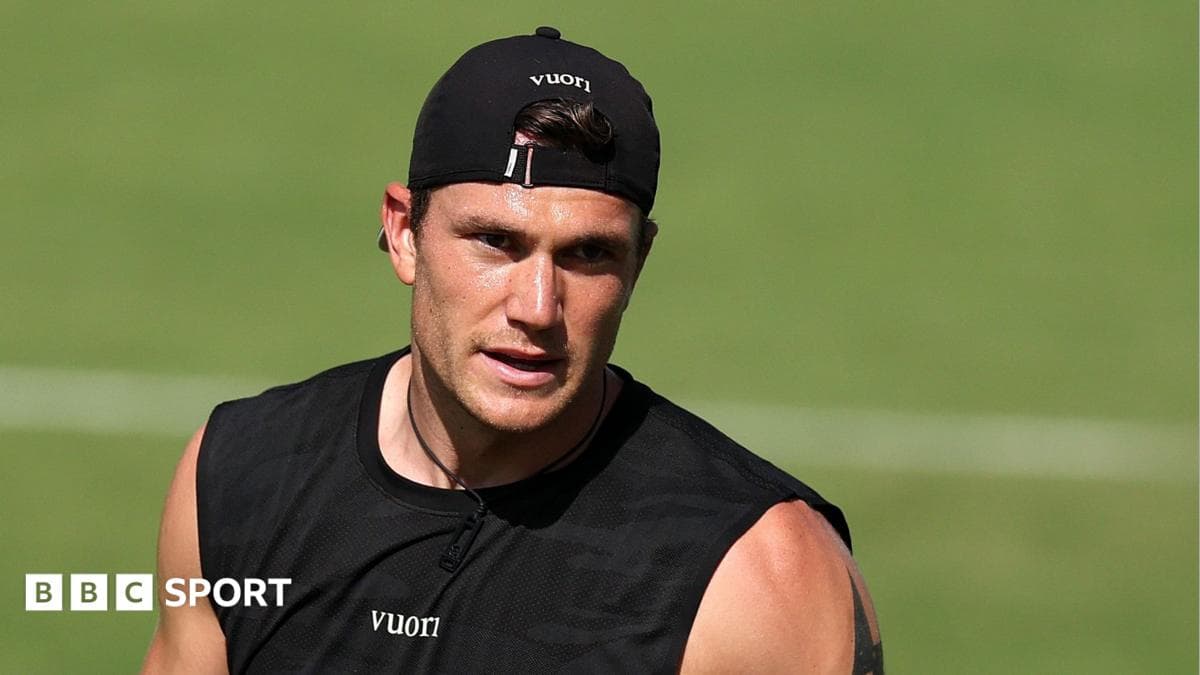
Taylor Fritz stood frozen on Arthur Ashe, his final backhand sailing long, his hands clamping over his face before the ball had even landed. He knew. Everyone inside the stadium knew. A golden chance at his home major had just slipped through his fingers.
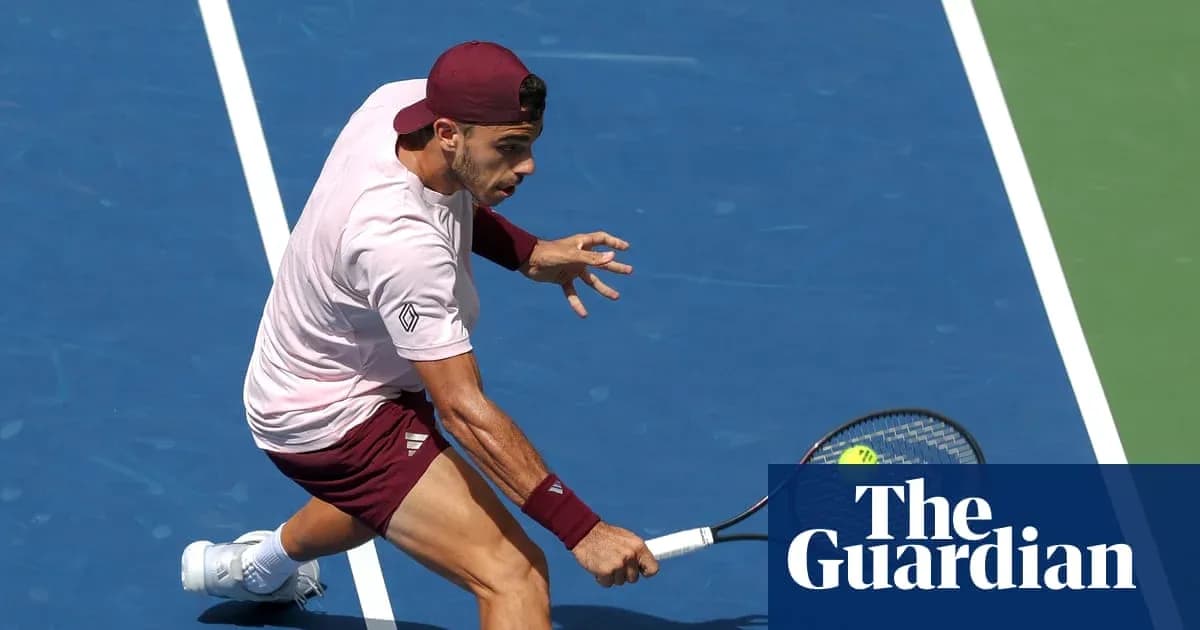
For two sets, Fritz looked every inch the man ready to own this wide‑open US Open. He bullied Francisco Cerundolo from the baseline, took the first two sets 6-3, 6-4, then broke to start the third. He had the match in a headlock.
Then came one loose service game. One lapse, and with it, the air shifted.
Cerundolo grabbed the break, the crowd grew restless, and Fritz never really got the momentum back. Over the next two hours, the match turned into a slow, painful unraveling for the American as Cerundolo surged to a 3-6, 4-6, 6-3, 6-4, 6-4 victory and a place in the fourth round. Fritz, the No 1 American and the standard-bearer of his generation, walked off having lost not just a match, but a rare window in his career.
This wasn’t just any early exit. The timing cut deep.
Ranked as high as No 4 last year, Fritz has been the most consistent American man of his era, squeezing every ounce out of a game built more on discipline and resilience than explosive athleticism. He finally cracked a major final here in 2024, the first US Open finalist from the United States since Andy Roddick in 2006, flanked by quarter-final runs in 2023 and 2025 that both ended against Novak Djokovic.
There has always been someone in his way. Djokovic. Carlos Alcaraz. Jannik Sinner. The all‑time greats and the ones on their way there.
Not this fortnight.
Sinner, world No 1 and a four-time grand slam champion, is out with injury. Djokovic, now 39, crashed out in the first round. Alcaraz, a seven-time major winner and the defending champion, is only just returning from a four-month layoff and still feeling his way into form.
The draw has rarely looked so inviting. No runaway favourite. No dominant force in full flight. A grand slam there for the taking for anyone bold enough, tough enough, to step through the gap.
Fritz knew it. He was one of the leading names tipped to seize the moment. Which is why, when he stood on the brink again in the fifth set and failed to close, the frustration burned so visibly.
Serving at 4-3 down, Cerundolo wobbled. Fritz carved out three break points for a 5-3 lead and a chance to serve for the match. The stadium roared, sensing a late escape. Each time, Cerundolo held firm. Fritz could not land the final punch. Minutes later, it was the American who was shaking hands as the loser.
“I don’t even know what to say,” Fritz admitted afterwards. “I don’t really want to talk to anybody, see anybody. I kind of just need to get out for a couple days and then just get back to work. I don’t know how I let that happen today.”
On a day that began with seven American men still alive in the singles draw – Ben Shelton, Fritz, Frances Tiafoe, Learner Tien, Tommy Paul, Alex Michelsen and Michael Zheng – his collapse felt like a flare in the sky. A warning.
In the bottom half of the draw, an American occupies a place in each of the four fourth-round matches. The path is there for someone to become the first US man since Roddick in 2003 to win a major. But as Fritz’s defeat underlined, opportunity doesn’t just bring hope. It brings weight. The next week will show who can carry it.
The strain was not confined to the men.
On Thursday, Madison Keys had produced one of the great escapes of her career, saving five match points in a dramatic three-set win over Anna Bondar. Two days later, she lived through the opposite.
Keys tore through the opening set against Zheng Qinwen 6-1 and then built a 5-0 lead in the deciding set. The match seemed over. The crowd had settled on the script.
Then the bottom fell out.
Zheng tightened up her game, Keys’ level plummeted, and the scoreboard started to tilt in a way that felt almost surreal. Games slipped away. So did the certainty in Keys’ shots. By the time Zheng completed a 1-6, 7-6 (3), 7-5 win, Keys had gone from cruising to suffering one of the most brutal reversals of her career.
“I think she started playing better; I started playing poorly,” Keys said. “Then I felt like I couldn’t play tennis any more, and it just was – it just felt like it was a much bigger deal than just playing a tennis match all of a sudden.”
The 2025 Australian Open champion didn’t try to sugarcoat it. She spoke of a longer struggle, a sense that this kind of result had been lurking.
“I just feel like I’ve been struggling for a while now and I feel like I was able to kind of play through it for a bit,” she said. “I’m sure everyone could kind of see that I was struggling a little bit, but inside it felt probably even bigger than that. Some weeks are easier than others, and this week is obviously one of the harder ones just because you care so much. Yeah, I’m going to have to make some changes.”
If Keys’ collapse stung the home crowd, Zheng’s reaction underlined how much this win meant from the other side of the net.
The 23-year-old Chinese player stood on top of the sport in 2024, with Olympic gold and a top-10 ranking to her name. Elbow surgery then stalled her rise. She arrived in New York this year not as a seeded contender, but as a qualifier, forced to grind through the preliminary rounds just to reach the main draw.
Now she leaves the third round with one of the biggest comebacks of the tournament and a reminder of how unforgiving, and unpredictable, this sport can be.
“Tennis sometimes feels like a rollercoaster,” Zheng said. “You see many times that people have a match point, but at the end [their opponent] makes a comeback. Like today was just happening. So this also gives me a lesson that in a tennis match you always have to be there. It doesn’t matter if you are winning or losing, you have a match point or you don’t have a match point – you just need to be concentrated for every single point as long as you can.”
Elsewhere, Amanda Anisimova’s difficult stretch continued. The American, who lit up the 2025 summer with runner-up finishes at Wimbledon and the US Open and climbed to a career-high No 3, went out meekly 6-2, 7-5 to 24th seed Anastasia Potapova. The loss will drop Anisimova out of the top 10, a stark marker of how quickly momentum can drain away at the top of the game.
At the very top, Iga Swiatek again showed why she remains the player everyone measures themselves against. The world No 1 stared down three set points in the second set against Marie Bouzkova, absorbed the pressure, then methodically turned the screws. She edged through 7-6 (3), 7-6 (3), not spectacular, but brutally efficient when it mattered.
Her reward is a fourth-round meeting with Zheng on Sunday – the reigning queen of the sport against a resurgent Olympic champion who just reminded the field that no lead is safe and no script is fixed.
On a day when American hopes frayed and big chances were wasted, that might be the sharpest lesson of all.