Team USA vs. Hungary: FIBA Women’s World Cup Quarterfinal Showdown
Team USA’s hunt for yet another FIBA Women’s Basketball World Cup crown rolls into Berlin, where the defending champions now face a Hungary side chasing its own piece of history.
The quarterfinal is set for Thursday, September 10, at Berlin Arena, with a 9:30 a.m. local tipoff. That’s 8:30 a.m. in the UK, 3:30 a.m. Eastern and 12:30 a.m. Pacific — a breakfast-time test for American fans, but a pivotal step in a tournament that is about to tighten dramatically.
A rested giant vs. a team on a roll
The bracket has already tilted slightly in the United States’ favor. By winning Group D, Team USA skipped the cutthroat qualification round and moved straight into the last eight. Hungary had no such luxury. It had to play its way in, winning its qualification game to book this shot at the world’s dominant force.
That gap matters. The Americans have enjoyed extra days to study, recover and reset. Under the 2026 format, group winners advanced directly to the quarterfinals, while second- and third-place teams were thrown into single-elimination qualifiers. It’s a reward for early excellence, and the USA cashed it in.
Hungary arrives battle-hardened. The United States arrives fresh.
A dynasty with something still to prove
The weight of history sits squarely on the American bench. The United States has won the last four Women’s World Cups, including the 2022 edition in Sydney, where it brushed aside China 83-61 in the final. In total, FIBA credits the USA with 11 Women’s World Cup titles — a number that dwarfs every other nation in the competition’s history.
Yet this is not a simple rerun of past glories. The 2026 roster marks a clear changing of the guard.
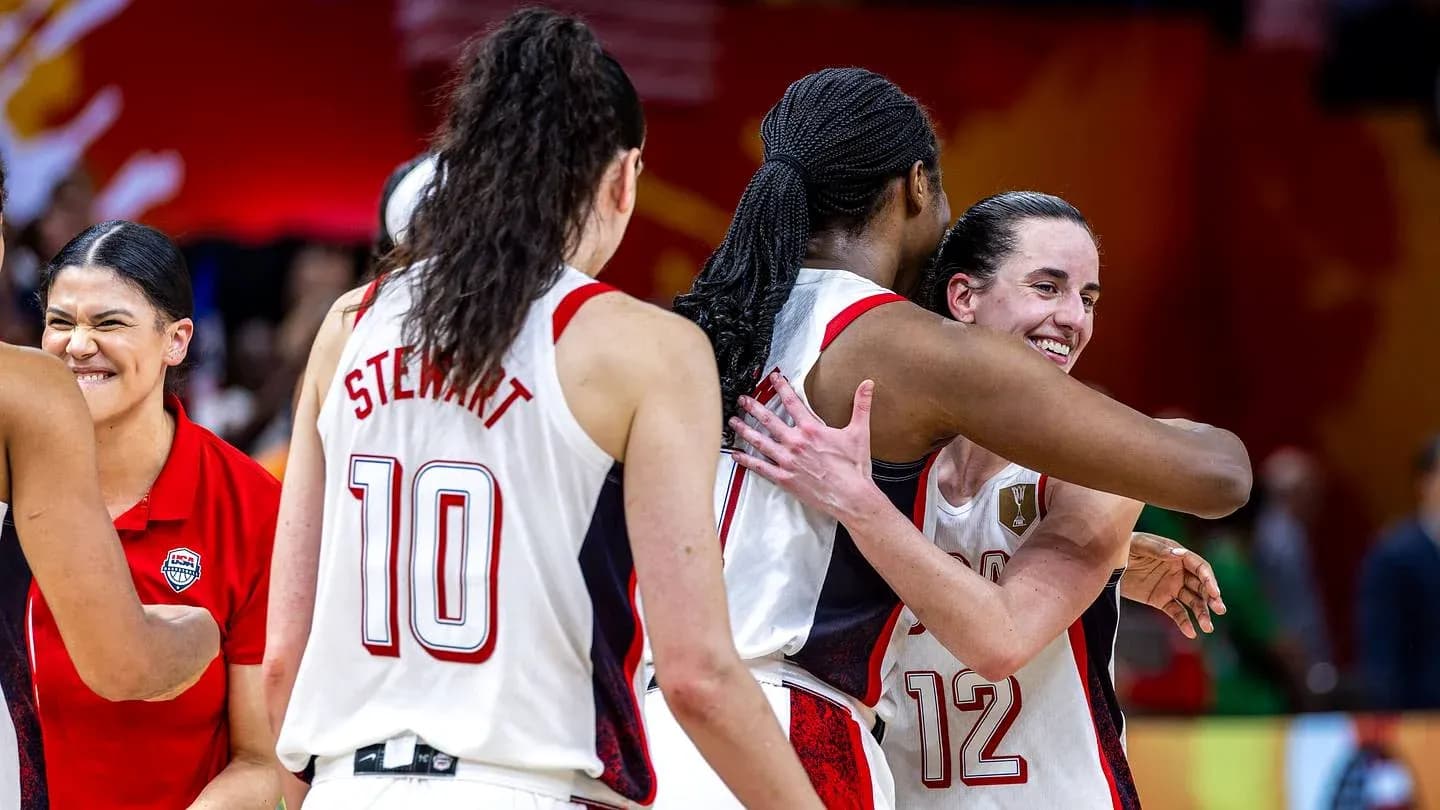
A’ja Wilson and Breanna Stewart remain the pillars, proven winners with medals and trophies stacked behind their names. Around them, though, the backcourt and wings carry a new edge and a different kind of spotlight. Caitlin Clark, Paige Bueckers and Angel Reese are all making their senior World Cup debuts, arriving with college stardom and massive expectations but without a World Cup résumé.
That blend of old guard and rising stars has turned Team USA into one of the tournament’s main attractions. It’s not just about whether they win. It’s about how this new generation handles the pressure of extending a dynasty that has almost forgotten what failure looks like.
Group stage: fireworks and a warning shot
The group phase offered a snapshot of both sides of this American team.
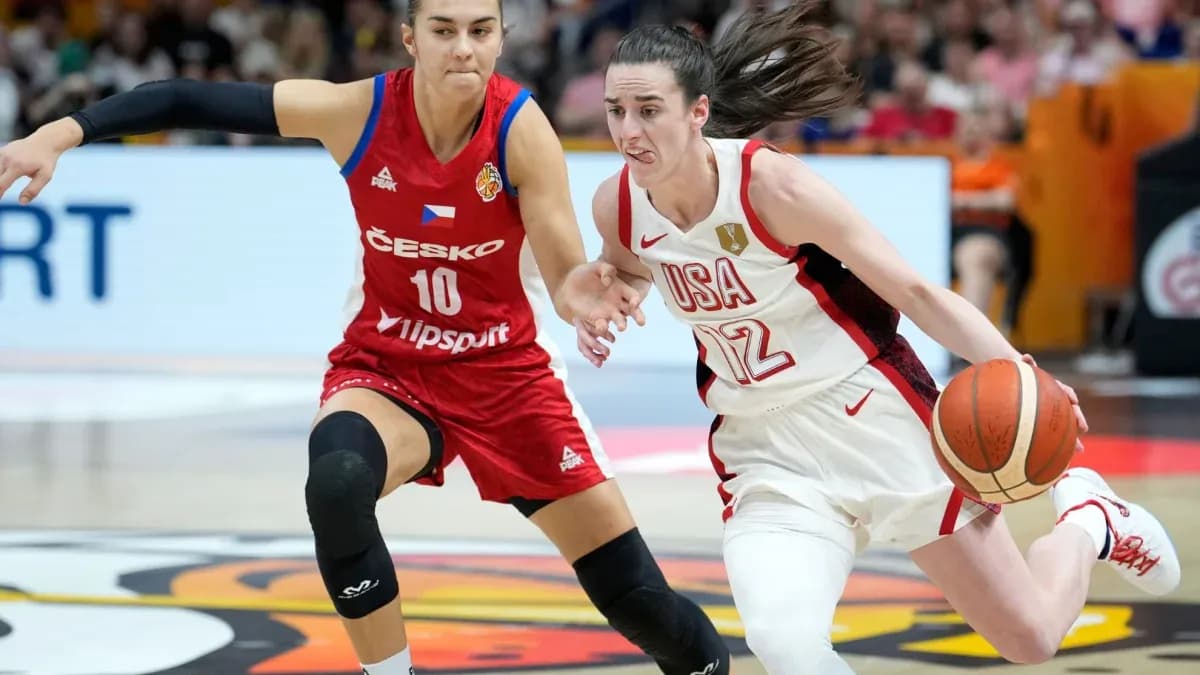
When the offense flowed, it was ruthless. The USA opened with a dominant win over China, then overpowered Czechia, flexing depth, size and scoring in waves. Those games looked familiar: the United States running downhill, opponents struggling to breathe.
Then came Italy.
In a grind of a game that refused to open up, the Americans had to fight for every possession and every point. Shots didn’t fall with their usual regularity. The margin never felt safe. In the end, Team USA edged out a 55-52 victory — a narrow escape that still secured top spot in Group D and a direct path to the quarterfinals.
That scare might be the most valuable thing to happen to them all tournament. It served as a blunt reminder that reputation doesn’t win knockout games, and that even the defending champions can be dragged into a street fight when the stakes rise.
Hungary’s inside punch and a shot at history
Across the bracket, Hungary has emerged as one of the more intriguing stories of the last eight.
FIBA’s own preview paints a picture of a confident team anchored by EuroLeague MVP Dorka Juhasz and Virag Takacs-Kiss. Both operate in the interior, and together they give Hungary a serious presence around the rim — on the glass, in the paint, and in the physical battles that often decide tournament games.
They are not just here to make up the numbers. Hungary is chasing its first Women’s World Cup semifinal appearance since its landmark run in 1998. For a program that rarely gets this close to the sport’s summit, this quarterfinal is loaded with opportunity.
The challenge could hardly be tougher. The USA is the clear favorite, deeper at almost every position and armed with layers of scoring and defensive schemes. Yet Hungary carries something the Americans do not: the sense of a once-in-a-generation opening, a chance to break a 28-year ceiling in a single 40-minute burst.
Berlin stage, shrinking margins
Every angle points to the same conclusion: this is the moment the tournament changes character for Team USA.
The early tip, the neutral floor at Berlin Arena, the knockout stakes — they all strip away the comfort of the group stage. One poor quarter, one cold shooting spell, one stretch of careless turnovers, and the four-time defending champions could suddenly feel the ground move beneath them.
A win on Thursday sends the United States into Saturday’s semifinals, with the medal games — third-place and the championship final — set for September 13. The path is clear. The expectations are, too.
For now, it comes down to one matchup: USA vs. Hungary, September 10, 9:30 a.m. in Berlin.
The dynasty is intact, the next generation is on the floor, and from this point on, Team USA’s margin for error all but disappears.