Team USA Dominates in World Cup Opener Against China
Team USA did not just start their 2026 FIBA Women's Basketball World Cup with a win. They issued a reminder.
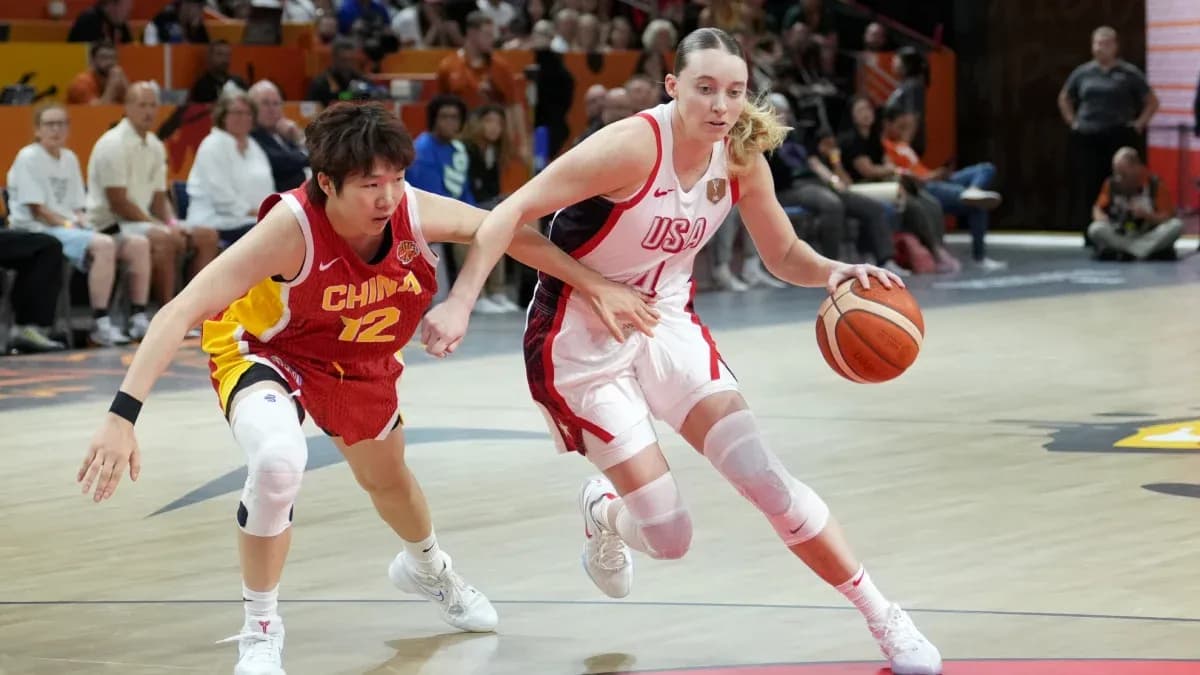
A 94-61 dismantling of China in Berlin on Friday set the tone for Group D and, quite possibly, for the entire tournament. The scoreline flattered no one. The United States controlled the game, the tempo and the narrative from the moment the ball went up.
This is a team chasing a fifth consecutive World Cup gold. Anything less than the title would feel like a rupture in a dynasty that has defined the sport for more than a decade. They arrived in Germany as the No. 1-ranked side in the world and the clear favorite. They played like it.
Group D: dominance with a purpose
On paper, the equation in this new-look World Cup is simple. Sixteen teams, four groups, three games each. Top spot in every group jumps straight to the quarterfinals. Second and third? They get dragged into a single-elimination qualification game just to reach the last eight.
One slip. One bad night. One hot opponent. And a giant can go home early.
That is why first place matters so much more than just “getting through.” It’s not only about survival; it’s about control.
Team USA share Group D with China, Italy and Czechia. After one round, the table already leans heavily in their favor. The Americans sit at 1-0 with a huge point differential thanks to that 33-point win. Italy also opened with a victory over Czechia, leaving both at 1-0 but on very different terms.
Next up for the U.S.: Italy on Sunday, then Czechia on Monday to close group play.
From a qualification standpoint, the math is kind. One more win and the Americans are guaranteed a place in the knockout phase. A 2-1 record in a four-team group locks in a top-three finish. That’s the floor.
The ceiling is where this team’s eyes are fixed.
Win both remaining games, finish 3-0, and the group is theirs without argument. That sends them straight into the quarterfinals, skips the extra qualification game and buys a precious recovery day in a long, physical tournament. Even at 2-1, they could still top the group depending on results and tiebreakers, but they don’t need help from anyone. Beat Italy. Beat Czechia. Job done.
A revamped roster wastes no time
The opening win did more than secure two competition points. It offered a clear look at what this retooled American roster can become.
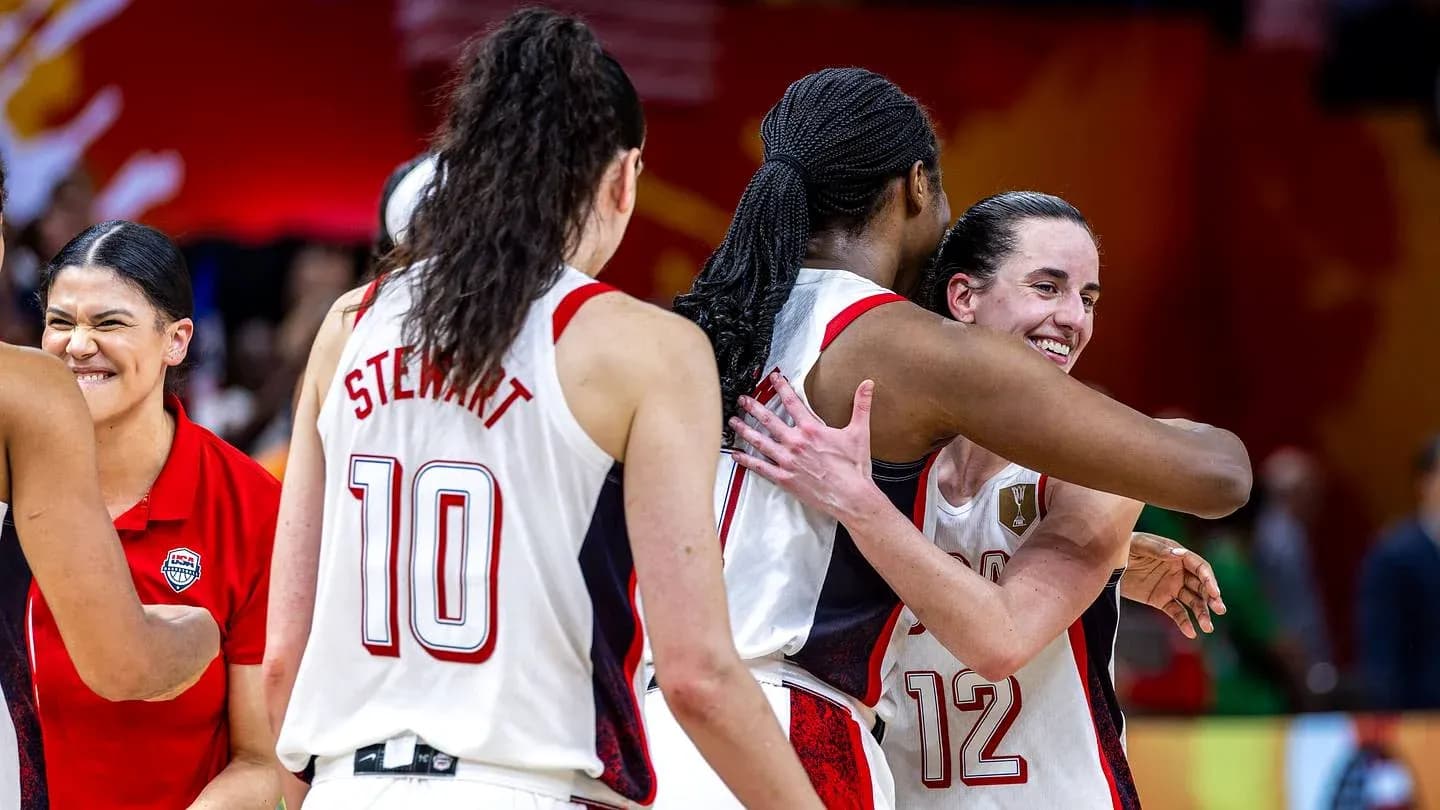
Caitlin Clark, on World Cup debut, looked like she’d been here for years. Fourteen points. Eleven assists. The numbers tell part of the story; the way she orchestrated the offense told the rest. She stretched China’s defense, picked out shooters and turned the perimeter into her stage.
Rhyne Howard matched her with 14 points of her own. Paige Bueckers added another 14. Three different guards, three different angles of attack, one relentless perimeter threat. When the U.S. spread the floor, China’s defense simply ran out of answers.
All of this came with a roster that is not exactly the one many anticipated when preparations started.
A'ja Wilson and Kelsey Plum, central figures in recent American dominance, withdrew before the tournament because of health and injury concerns. Those absences could have opened the door to uncertainty. Instead, they opened opportunities.
Sonia Citron and Kiki Iriafen stepped into the group, while the onus on veterans like Breanna Stewart and Napheesa Collier only grew heavier. The hierarchy shifted, but the standard did not. The United States still looked deeper, quicker and sharper than their first opponent.
China, for their part, reminded everyone why they remain a problem for any contender. Their towering frontcourt caused issues, even in a lopsided defeat, and they will trouble others in this group. But they never truly threatened to derail the American opener.
Why Group D really matters
On the surface, the path is laid out neatly: group stage, then quarterfinals, semifinals, medal games. But the trap lies in that extra qualification round for second and third.
One extra game is one more chance for something to go wrong. A cold shooting night. Foul trouble. An inspired opponent with nothing to lose. The kind of one-off upset that has haunted giants in every sport.
Winning Group D removes that risk. It also buys the U.S. that extra day to reset, rehab and refine. In a tournament this condensed, that rest day can be worth as much as any tactical adjustment.
And this year, there are real threats waiting beyond the group.
France pushed the United States to the brink in the 2024 Olympic final, losing by a single point. They arrive here widely viewed as the most dangerous challenger again. Belgium and Australia sit in that next tier of contenders, capable of stringing together the kind of week that wrecks brackets and reputations.
China’s size, France’s cohesion, Belgium’s craft, Australia’s toughness – none of it will matter if the Americans stumble before the quarterfinals. That is why Group D is not just a formality. It is the foundation.
The prediction writes itself – but the tournament won’t
After one game, the picture at the top of Group D looks exactly as many predicted. Team USA, 1-0, with a statement win and a point differential that already feels like a tiebreaker in waiting.
They should win this group. They should march straight into the quarterfinals. They should, on paper, remain on track for a fifth consecutive World Cup crown.
Italy and Czechia still have to navigate not only each other but a U.S. team that, even without Wilson and Plum, still overwhelms opponents with experience, athleticism, playmaking and depth. ESPN tagged the Americans and France as leading contenders before a ball was tipped. Nothing in Berlin on opening day suggested otherwise.
For now, the assignment could not be clearer. Beat Italy or Czechia and the Americans are safely through. Beat both, and they take the cleanest, safest route into the last eight.
They opened this World Cup by cruising. The real question is whether anyone, once the knockout rounds begin, can force them out of cruise control at all.