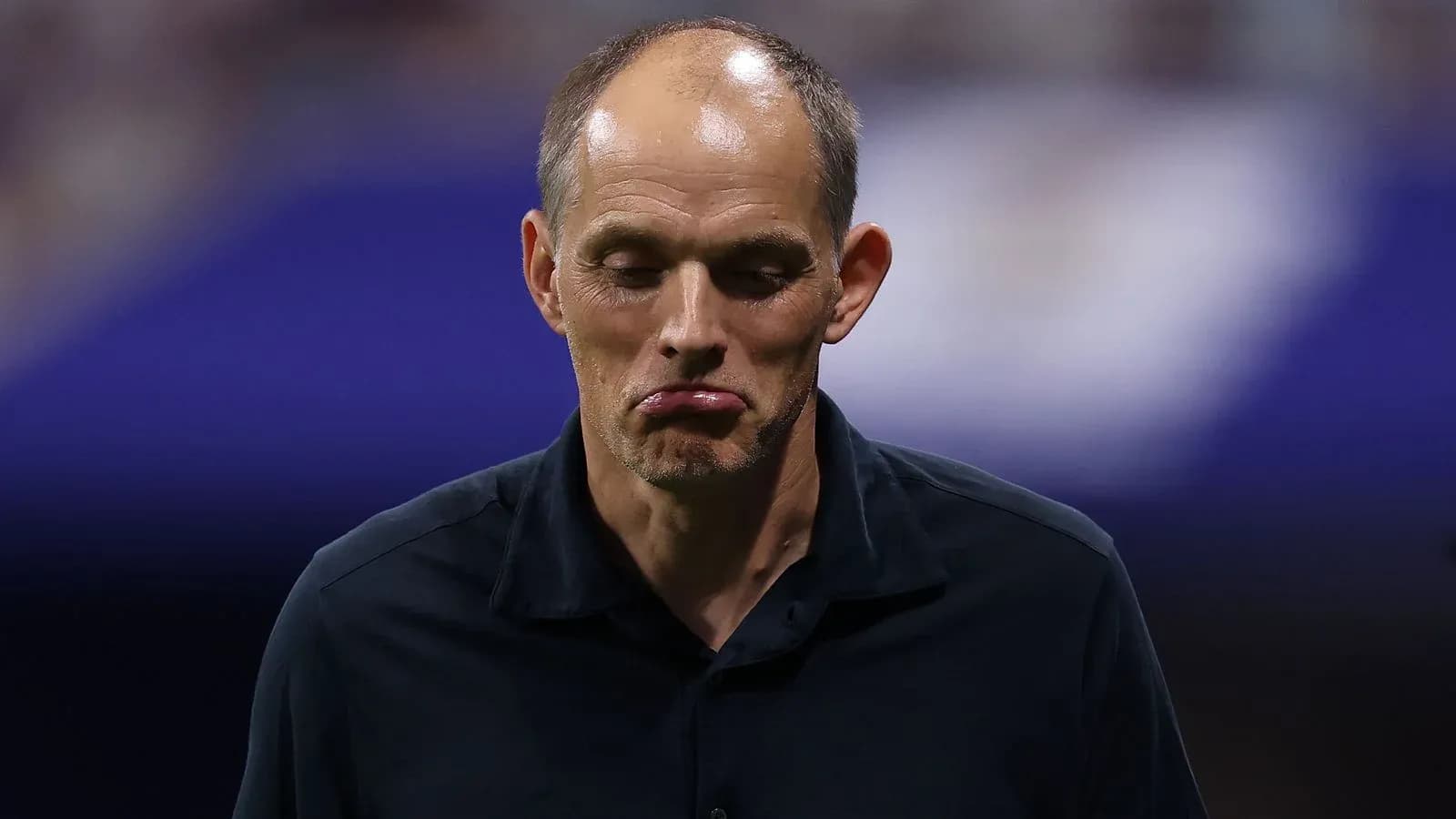
Thomas Tuchel Reflects on England's World Cup Journey
Thomas Tuchel insists that when England fans look back on the World Cup, they are not reliving his substitutions against Argentina.
They are talking about where they watched Mexico. How their nerves shredded against DR Congo. The surge of energy after half-time versus Croatia. The shared memories, not the tactical diagrams.
Or so he says.
Speaking ahead of England’s latest squad announcement, the Three Lions head coach pushed back against the narrative that his World Cup will forever be defined by the final half-hour of that 2-1 semi-final defeat to Argentina.
“99.9 per cent of the fans don't talk about substitutions, tactical tweaks or tactical details,” Tuchel told reporters.
“They speak about where they watched the Mexico game, and they speak about the second-half energy of the Croatia match.
“They speak about how nerve-racking it was to watch our match against Congo and where they celebrated. This is the feedback I get. This is what we created, and how it should be.
“This is what a World Cup is for: to connect with people and give them experiences they do not forget.
“It makes me proud, it makes me happy. Even if it's just in a cab, at a coffee shop or in the supermarket, you share these little moments and understand that it actually meant something.
“It showed that what the players built was transmitted, and it's what we want to build on.”
The substitutions that won’t go away
The problem for Tuchel is simple: for many, that semi-final is all they can think about.
England led through Anthony Gordon in the second half, had Argentina wobbling, and looked close to the final. Then came the shift. Tuchel turned to his bench and loaded his team with defenders, trying to lock the game down.
Instead, England retreated. Argentina advanced.
Wave after wave of pressure followed. Enzo Fernandez finally smashed in the equaliser late on, and Lautaro Martinez completed the turnaround, punishing an England side that had sunk too deep and surrendered the initiative.
Those changes have stalked Tuchel ever since. The decision to invite Lionel Messi and company onto England remains the central charge sheet for a fanbase that has seen this film before: control, caution, and then heartbreak.
Tuchel, though, has tried to frame the tournament through a different lens. He has spoken of “beautiful” moments in his review with the FA. Of the brotherhood inside the squad. Of the performance in the bronze-medal match against France, a game he described as coming against “maybe the strongest squad in the world” – even if, for many, that third-place play-off felt like a dead rubber.
He wants the wider picture in focus: England’s best World Cup finish since 1966, a podium place, a summer that reconnected the team with the public.
Plenty of supporters see it differently. For them, the headline is stark: Tuchel, hired on big money to take England that one final step after Gareth Southgate’s near-misses, did not get them over the line. The semi-final collapse is the defining image.
A coach backed to the end – and beyond
Tuchel also revealed that his future was settled long before that Argentina defeat, and even before the group stage had properly taken shape.
“I felt the full support from all my bosses through the whole tournament,” he said. “Before the Mexico game they told me we know anything can happen in a football match but don't worry, we can see what's going on.
“I felt this kind of freedom to take my choices and coach freely. There was never a doubt in my mind we'd continue together and there was clearly never a doubt in their mind. Reflection is sometimes necessary to get better and experience is a crucial part.”
That assurance, given before England faced Mexico, underlined the FA’s commitment to Tuchel’s project. He was not coaching for his job. He was coaching with a long-term mandate, empowered to make bold calls – including the defensive substitutions that backfired so dramatically against Argentina.
The FA now stand at an intriguing crossroads. On paper, they have progress: a third-place finish, a squad that appears united, a coach who believes the team has laid foundations to build on. On the terraces and online, the conversation sounds very different: why did England repeat old mistakes, and why should anyone believe the outcome will change next time?
Tuchel is adamant that the World Cup gave England more than a painful semi-final. The question that lingers is whether those memories of Mexico, Croatia and DR Congo can ever drown out the echo of that collapse against Argentina – or whether the next tournament will finally answer it.