Tilak Varma's Role in India's T20I Lineup Against Afghanistan
India’s search for something more than just fleeting brilliance in T20I cricket moves into its next chapter against Afghanistan, and once again the conversation circles back to the same uneasy question: where, exactly, does Tilak Varma fit?
This is not a squad short on options. It is a squad short on certainty.
India still chasing a settled script
Since lifting a second successive T20 World Cup earlier this year, India’s form in the format has lurched from one extreme to the other. Under Shreyas Iyer, they slumped to six straight defeats against Ireland and England, then immediately flipped the narrative with a 3-0 sweep of Zimbabwe.
The Afghanistan series, starting September 13, is supposed to be the bridge from chaos to clarity. It might instead expose just how many moving parts still exist in India’s batting order.
Iyer leads a group loaded with top-order and middle-order options: Ishan Kishan, Sanju Samson, Abhishek Sharma, Vaibhav Sooryavanshi. Then come the all-rounders. And somewhere in that crowded room stands the vice-captain, Tilak Varma, still waiting for a role that feels truly his.
AB de Villiers spots the fault line
From the outside, the problem is obvious enough. AB de Villiers, speaking on his YouTube channel, cut straight to it. He listed the names — Shreyas, Kishan, Samson, Sooryavanshi, the all-rounders — and then paused on the one that complicates the balance.
Tilak Varma.
“I think that’s where the balance is quite tricky. Where will he bat?” de Villiers asked, framing the dilemma that has followed India into this series.
On paper, Tilak’s recent numbers glow. Since the 2026 T20 World Cup, the left-hander has piled up 255 runs from 10 innings at a strike rate of 159.36, with three fifties. Those are the kind of figures that usually shut down debate, not fuel it.
But context bites.
One of those half-centuries came in the recent Zimbabwe series, another arrived in the fifth T20I against England, a dead rubber after India had already surrendered the series. His returns look powerful in isolation; stretched across the entire period, they feel less convincing. The highs are loud, the gaps between them louder.
Tilak’s tour of the UK underlined that inconsistency. A few eye-catching strokes, the odd substantial score, then long passages where he never quite imposed himself. For a player earmarked as a pillar of India’s T20 future, that lack of rhythm keeps dragging his name back into the spotlight.
A crowded order, a narrow window
The Afghanistan series will not be kind to indecision. Rashid Khan’s side might not have India’s depth, but they bring enough menace — especially with the ball — to punish a batting order still experimenting with itself.
India’s selectors and think-tank face a simple but awkward choice: either Tilak is treated as a central piece and given a clearly defined slot, or he becomes another floating part in a line-up already full of them.
Shreyas Iyer anchors one spot. Kishan and Samson both demand time at the top or in the engine room at No. 3 or 4. Abhishek Sharma offers powerplay aggression. Sooryavanshi adds another top-order option. Then come the all-rounders, each of whom expects overs and balls, not just a jersey.
De Villiers sees the quality. He called it a “really, really strong squad” and he is right. India can rotate, shuffle, and test combinations across three games. T20 allows that kind of tinkering.
But his warning cut through the optimism: role clarity will decide how dangerous this group truly becomes.
Clarity or confusion?
Against Afghanistan, India have the talent to win even without getting everything right. That is not the point anymore. This series leads straight into a historic T20I against Japan and then the Asian Games 2026 — a stretch where the format stops being a laboratory and starts becoming a statement.
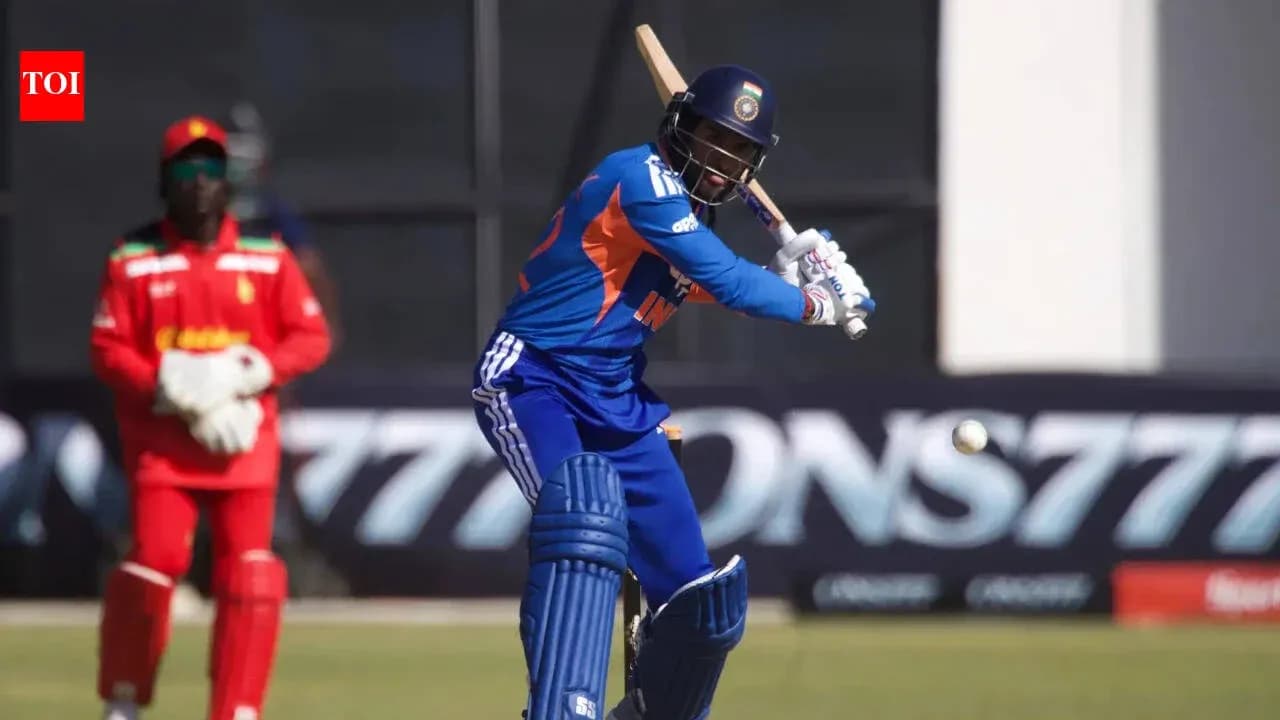
Tilak Varma stands at the heart of that statement. Is he a powerplay aggressor? A stabilising No. 4? A finisher who walks in with 30 balls left? India have flirted with all versions without committing fully to any.
The numbers say he can hurt attacks. The performances say he still needs a role that suits his tempo and temperament. The presence of so many competing batters means India cannot afford to carry a vice-captain whose place or position feels negotiable.
The three matches against Afghanistan will not just test India’s skills. They will test their conviction.
Does Tilak Varma walk out knowing exactly what kind of innings India expect from him — or does he walk out still trying to work it out for himself?