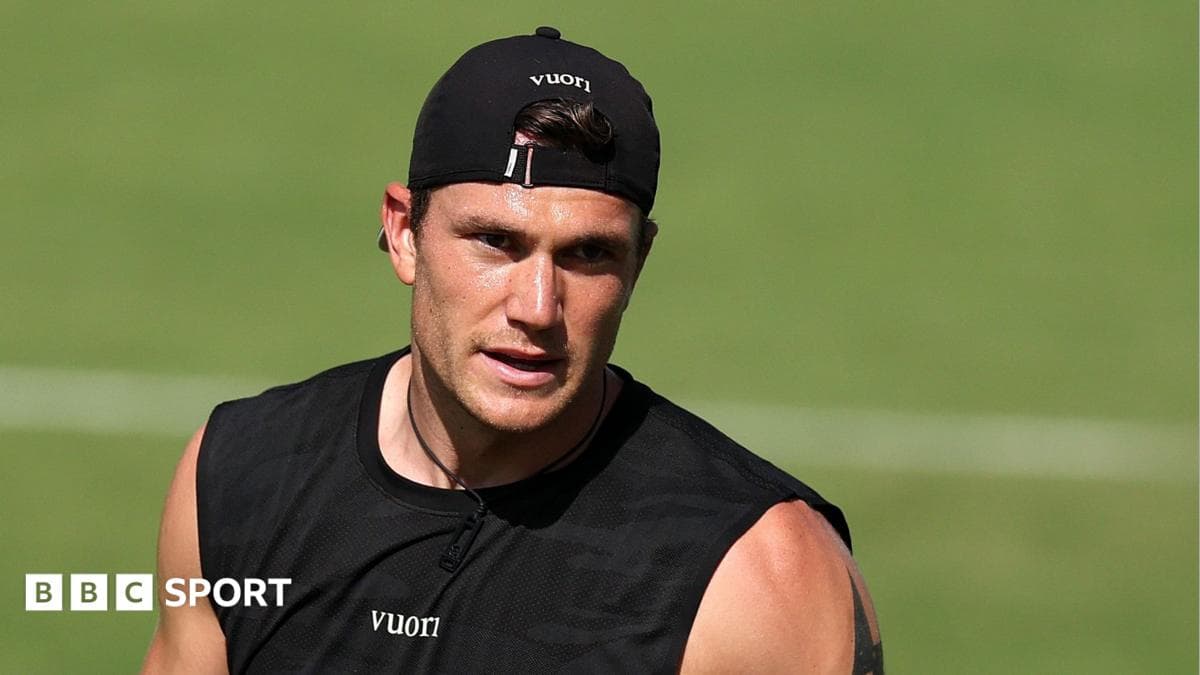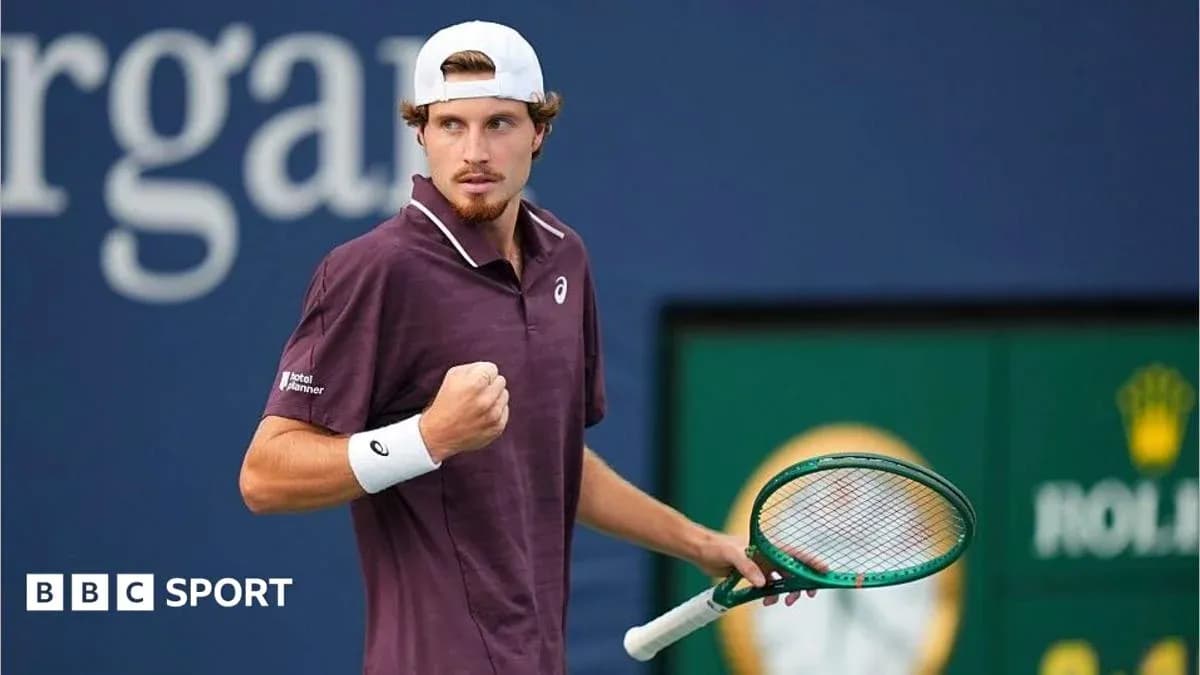
Toby Samuel's Journey to the Davis Cup
Toby Samuel was wandering the streets of New York when his phone rang. On the other end was Leon Smith, the Great Britain Davis Cup captain, with the kind of call every British tennis player dreams of.
“Congratulations, you’ve been selected.”
In an instant, a year that had already felt like fast‑forward lurched into something else entirely.
From Challengers to the Davis Cup cauldron
Eight or nine months ago, Samuel was simply hoping to get into more Challenger events. Now, at 23, he is in Great Britain’s Davis Cup squad to face Ecuador, joining Arthur Fery, Cameron Norrie, Henry Patten and Lloyd Glasspool as the fifth man in a team suddenly looking to the future as much as the present.
“It’s surreal being in this position now from where I was eight, nine months ago, [when I was] hopefully trying to play some Challengers, and now I’m sat here ready to play the Davis Cup – it’s crazy,” he told BBC Points West.
Surreal is one word. Ruthless is another. Samuel has sliced through the past 12 months with the kind of momentum that turns a promising player into a genuine tour presence. He has climbed into the world’s top 100, made his debut at three Grand Slams and, crucially, proved he belongs there.
The moment in New York crystallised it. He had just made his US Open debut when Smith’s call came through.
“I was out in New York walking around when I got a call up from Leon the captain saying, ‘congratulations, you’ve been selected,’” Samuel said. “It was unbelievable, it was one of the best moments of my tennis life, to get called up to that, it’s what every British player wants, to represent their country and play for their country.”
A year of firsts
The US Open gave him more than a phone call. It gave him his first Grand Slam main-draw win, a statement performance against Tomas Machac in which he dominated from the start before bowing out to 18th seed Jiri Lehecka in the next round. No shame in that. Just another marker laid down.
Roland Garros offered a different kind of examination. On clay, grinding through three rounds of qualifying, he earned his place in the French Open main draw, only to run into world number eight Alex de Minaur in the first round. The result went as expected. The experience mattered more.
Then came Wimbledon, where the story sharpened again. Handed a wildcard into the main draw, Samuel dragged Czech 15th seed and French Open semi-finalist Jakub Mensik into a five-set battle. Centre stage, home Slam, big seed on the other side of the net – and Samuel took him the distance.
“At first it was a completely new experience, I was pretty nervous going to those tournaments, seeing the top guys there in the locker rooms and playing against them – I was sort of shaking a little bit on court,” he admitted.
Those nerves didn’t last.
“But after the second or third time I did it I got more used to it and I felt like I was a lot calmer on the court which helped me to go deep.”
The awe has given way to assurance. The locker room no longer feels like a museum; it feels like his workplace.
Learning to live with the demands
This season has dragged Samuel into the harsh light of top-tier tennis. The physical and mental demands are different, the margins slimmer, the punishment for lapses more severe.
On the Challenger Tour, three-set matches are the norm. At the Slams, he’s had to learn to live with the possibility of three, four, even five hours on court. That’s a different sport in all but name.
Being able to sustain that level, to keep his legs and his mind firing through a fifth set, is, as he puts it, a “new thing”. But he hasn’t come empty-handed to this new level. His serve and forehand, once solid, have hardened into genuine weapons.
“Before they were good but they weren’t really scaring people,” he said. “Now they’re my biggest weapons and I can take matches with them.”
That shift matters. On the tour, tools become threats, and threats change how opponents approach you. Samuel is now in that bracket where players know they cannot afford to give him a look at a forehand or a cheap second serve.
A new face in a familiar shirt
For Great Britain, Samuel’s rise offers something valuable: energy, form and a player on the up at a time when the Davis Cup team is evolving again. He joins a group that blends experience and emerging talent, and while his role this weekend against Ecuador is still to be defined, the symbolism of his selection is clear.
From Winchester, training in Bath, to the noise and expectation of Davis Cup tennis, the leap is enormous. Yet his past year suggests he has grown used to taking those leaps and landing on his feet.
This time, he won’t be strolling through New York when the news drops. He’ll be in team colours, in the thick of it, with a chance to show that this “surreal” rise is only the start.