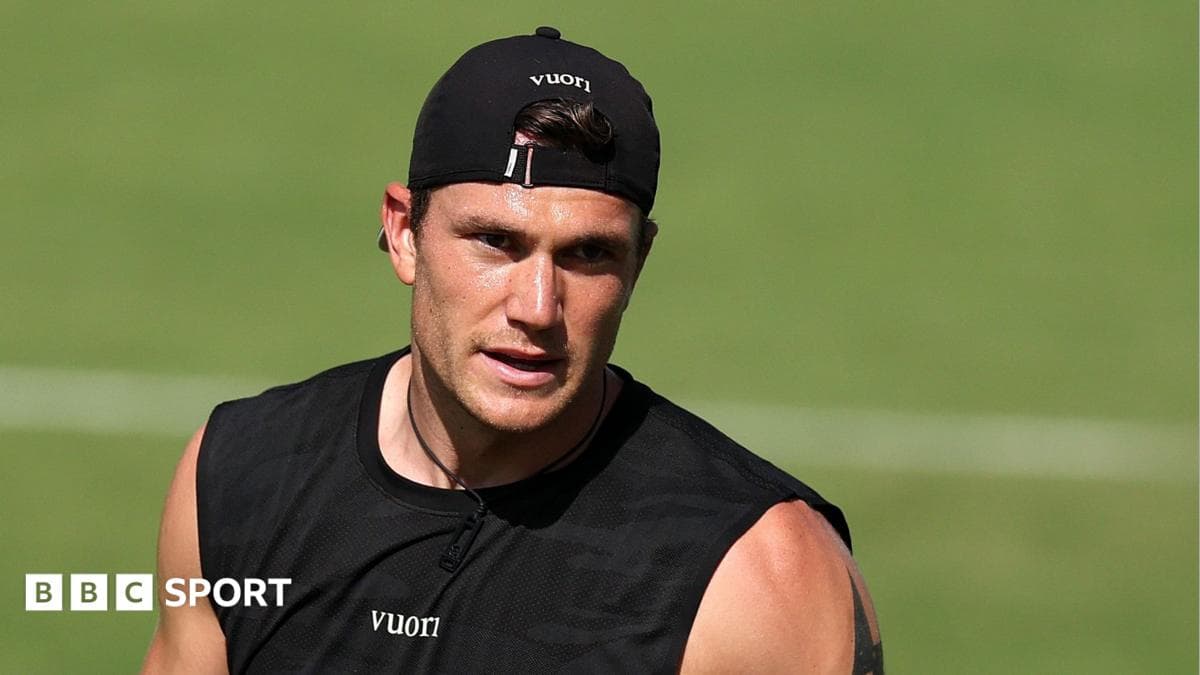
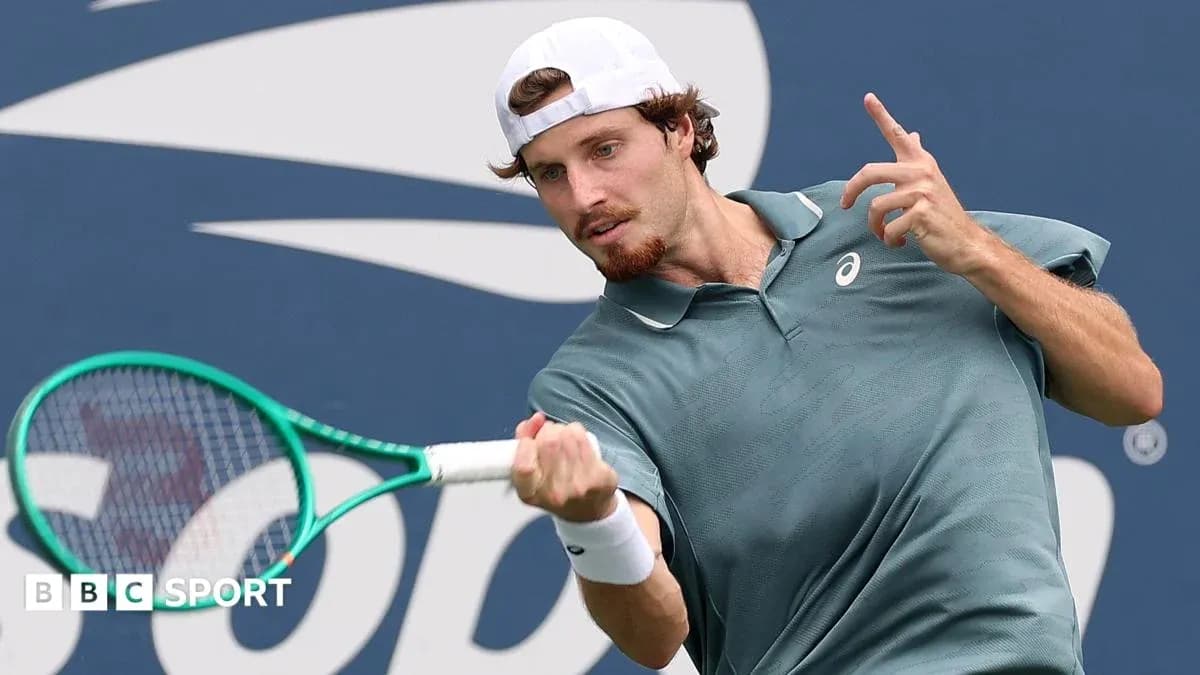
Toby Samuel Claims First Grand Slam Victory at US Open
Toby Samuel walked into his first US Open main draw match with the scars of three draining qualifiers still fresh. He walked off Arthur Ashe’s outer courts looking like he’d been here all his life.
The 23-year-old Briton, who had to come from a set down in each of his three qualifying wins this week, tore through Tomas Machac 6-2 6-3 6-2 in just over 90 minutes to claim his first Grand Slam main-draw victory. No drama this time. No rescue act. Just control.
“It means everything to me. It’s what I dreamt of as a kid watching these big tournaments,” he told BBC Radio 5 Live, the emotion obvious. “Being able to win my first Grand Slam match is unbelievable.”
Two years ago, this would have sounded far-fetched. Samuel had sunk towards 2,000 in the rankings, his 2024 season wrecked by bone bruising in his right arm. He barely played. The sport moved on without him.
Now he sits inside the top 100 in the live ATP standings, with $140,000 in prize money from this run alone – the biggest cheque of his career and a marker of how far, and how fast, he has come.
The climb started away from the spotlight. Last year he ripped through the ATP Challenger Tour, winning 36 of 39 matches to drag himself back into the top 300. That surge has turned into something more serious in 2026.
He qualified for Roland Garros to make his Grand Slam debut, having never played a single match on the ATP Tour before that. From there, the results began to stack up: a semi-final run on the grass at Eastbourne, a Wimbledon wildcard, and a third Challenger title of the year on the hard courts of Winnipeg.
The ranking that performance has built now looks set to deliver automatic entry to next January’s Australian Open. If that holds, Samuel will have played all four majors just a year after cracking the top 250 for the first time.
On Monday in New York, he looked like he belonged.
Against Machac, a former world number 20, Samuel was clinical from the start. In the opening two sets he dropped just five points on serve across nine service games. Three of those holds came to love, part of a seven-game streak that suffocated any Czech resistance.
The only wobble came early in the third. Trailing 2-0, he faced two break points that might have let Machac back into the contest. He wiped them away, tightened his grip, and reeled off six straight games to close it out with authority.
Next up is another Czech, 18th seed Jiri Lehecka, in the second round. A different level. A different test. But this is exactly the company Samuel has been preparing himself to keep.
At Roland Garros he admitted he was starstruck in the locker room, surrounded by the likes of Alexander Zverev. That wide-eyed awe is starting to fade.
“I’m still a little bit but I’m definitely more comfortable being around those top guys because I could be playing them the next day,” he said. “I have to start thinking of them not as stars but people I can play against.”
He is not the only Briton moving forward in New York. Katie Boulter also reached the second round, coming through a testing three-setter against American wildcard Carol Young Suh Lee 6-4 3-6 6-0. For British tennis, it was a productive day.
For Samuel, the foundations of this breakthrough were laid far from the tour, in college tennis. Like Arthur Fery – his partner in the 2019 Wimbledon boys’ doubles and a surprise semi-finalist at SW19 this year – Samuel used the American collegiate system as his launchpad.
Encouraged by his parents, the former junior world number 57 headed to the University of South Carolina, picked up an All American doubles title and learned to thrive in front of “super lively” crowds. Those environments hardened him for days like this.
Several of his Carolina team-mates were in the stands for his US Open main-draw debut, their noise and familiarity cutting through the chaos of a Grand Slam. Samuel credited their “fighting energy” with helping him “get the job done” against Machac.
His parents, who had followed every step of his qualifying run in New York, missed this one. They were across the country, helping his brother settle into his own US college journey.
“My brother’s just started university in America so they flew out to help him settle in, and I think my dad will fly back out for the second round,” Samuel said.
By then, if the trajectory holds, they won’t just be watching a qualifier chasing a dream. They’ll be watching a fully-fledged top-100 player trying to kick down another door.