Tuchel’s New England: Embracing Chaos After World Cup Success
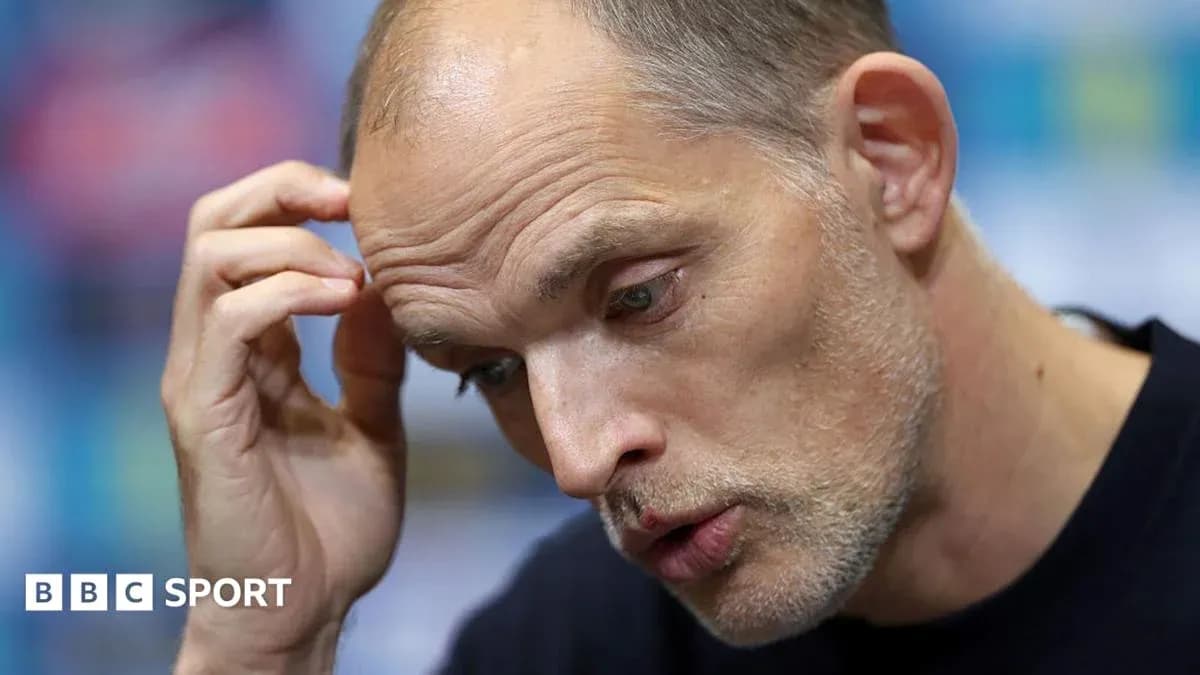
Thomas Tuchel flew out of the United States in July obsessed with one word: control. Two months on, at his first England squad announcement since that World Cup run, he reached for a very different phrase.
“Embrace the chaos.”
For a coach who has built his reputation on structure, detail and order, it sounded almost rebellious. Yet it also felt like the natural next step for a team that has just delivered its best World Cup performance since 1966 and still walked away with regret.
England finished third in the US. On paper, a triumph. In the mind, that semi-final defeat to Argentina still gnaws away.
They led through Anthony Gordon. They had a foothold. Then the game slipped away from them. Tuchel, in the raw aftermath, pointed at England’s inability to reassert control once they were in front. The collapse, in his eyes, came from that loss of grip.
Now, as he prepares for four Nations League games, the message has shifted. Not a U-turn, but a recalibration.
“Football is about adapting to situations and football without any control is sometimes hard to digest for a coach, if you look at the 6-4 against France,” he said of the wild bronze-medal match. It was a scoreline that made analysts wince and neutrals grin. “But people talk about it like it's one of their nicest experiences ever, to watch a football match, so maybe I have to compromise in my wish for control, for a little bit more chaos, embrace the chaos, and maybe it brings out the best.”
It sounds like mixed messaging. In reality, it’s closer to evolution. The best sides do not live at one extreme. They change tempo, change tone, change personality within a game. Tuchel appears ready to push England in that direction.
A Squad That Says “Control” More Than “Chaos”
For all the talk of embracing volatility, his latest squad for Spain, the Czech Republic and Croatia does not look like the work of a coach throwing the handbrake out of the window.
The recall of Trent Alexander-Arnold and Cole Palmer screams the opposite. These are players who slow a game down when it needs slowing, speed it up when it needs a spark, and almost always keep the ball. They bring clarity to a pitch that can quickly turn frantic.
The same applies to Bournemouth midfielder Alex Scott and Newcastle left-back Lewis Hall. Both are comfortable in tight areas, both secure in possession. If Tuchel is inviting chaos, he is doing so with some of the country’s most technically assured footballers around to police it.
The balance is deliberate. That is his ideal: not a wild swing towards recklessness, but a team that can live in turbulence without losing its head.
Then comes the wildcard.
Rio Ngumoha, 18, receives his first senior call-up. The Liverpool winger has lit up the early weeks of the season for Andoni Iraola’s side, tormenting full-backs on either flank with his invention and trickery. He represents the kind of unpredictability Tuchel knows he needs if England are to unsettle the very best.
Tuchel also revealed Fulham attacker Josh King is close to a first senior call-up. Another signpost. He wants fresh legs and fresh ideas in his forward line, not just for this Nations League campaign but as a longer-term shift.
So no, this is not a manager abandoning his principles. It is a manager trying to widen them.
Between Spain’s Patience and the Premier League’s Frenzy
Tuchel was asked whether England could mirror the high-octane feel of a Premier League side while still playing with control. His answer cut to the heart of his current dilemma.
“That would be the wish, that we become for 10 minutes a little bit more like Spain, here and there,” he said.
He pointed back to the World Cup itself for the blueprint. More minutes like the second half against Croatia. More minutes like the first half against France. Those spells, in his mind, showed England at their truest: aggressive, front-foot, emotionally plugged into the crowd, but not entirely reckless.
“We are maybe not the most economical team to play football but this is maybe also a characteristic of the Premier League,” Tuchel admitted. In that league, you cannot coast. You have to “max out every single match otherwise you cannot compete for the title.”
That, he argued, is “something more beautiful”. It is also where he believes his players naturally sit – and where his own thinking is drifting. He accepts that leaves him “still a bit ambiguous”, torn between total control and the full-blooded chaos that defines English domestic football.
But ambiguity does not mean confusion. Not when it comes to his players.
No Doubt Over His Core Group
Tuchel was firm when challenged on whether bringing back Palmer and Alexander-Arnold amounted to an admission he had misjudged his World Cup squad. He rejected that idea outright.
He suggested that, had injuries not intervened, this camp would have looked very similar to the group that went to the US.
“Before we did the nomination in the last month, I thought we had more of a continuation of the World Cup squad but then a lot of members of our World Cup squad - Reece [James], Dan [Burn], Dean [Henderson], [John] Stones, [Jordan] Henderson, Djed Spence - can't be with us due to injuries, so it is not like a full continuation.”
Those names, he stressed, mattered for more than their minutes. They were central to “building the brotherhood, in building the spirit and taking care of the mentality that took us the long way in the tournament”.
On that point he was uncompromising. “We will not negotiate on that, we will not give in on that. So other players will step up, this is basically how I see this camp.”
Tactically, he does not plan sweeping changes either. “My mindset at the moment is not to change too much within the formations,” he said. The framework will stay familiar. The personalities inside it may shift.
A Brutal Run, A Clear Test
England’s schedule offers no gentle easing back into competition. Spain, the world champions, arrive at Wembley on Saturday, 26 September. Then comes a trip to the Czech Republic on Tuesday, 29 September, followed by a visit to Croatia on Saturday, 3 October. The Czechs then come to England on Tuesday, 6 October.
It is a run that will quickly expose any fault lines between Tuchel’s desire for control and his new willingness to live with disorder. Spain will punish loose possession. Croatia will test mentality. The Czechs will challenge England’s ability to break down stubborn resistance twice in quick succession.
Tuchel wanted more control when he left America. Now he is talking about chaos, about compromise, about leaning into the very energy that makes English football what it is.
The question is simple and brutal: can this England side learn to thrive in that storm without losing the thing that finally made them contenders again?