Uefa Accuses Infantino of Criminal Mismanagement in Fifa Forward Scheme
The words leap off the page like a charge sheet.
“Criminal mismanagement.”
“A stunning dereliction of duty.”
“A fraudulently off-market price promoted by Infantino for his own benefit.”
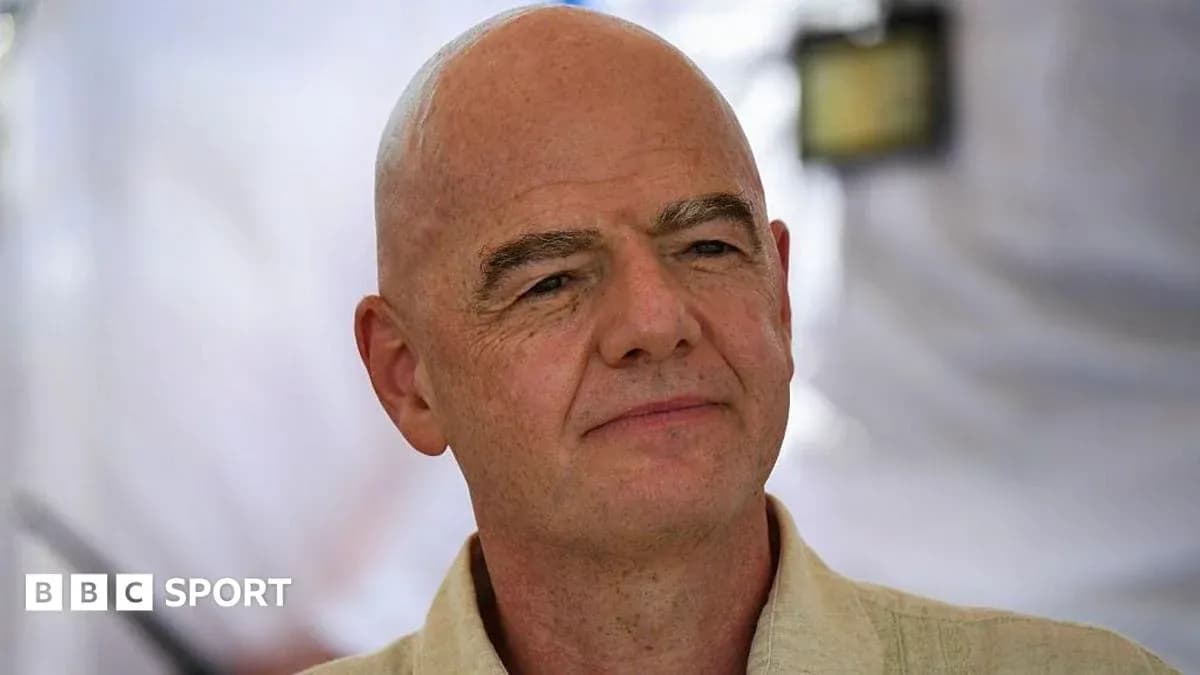
This is not a political pamphlet or a late-night rant on social media. It is the language Uefa’s lawyers have chosen to deploy in formal legal filings in the United States, aimed squarely at Fifa president Gianni Infantino and his now-abandoned Fifa Forward Enterprise (FFE) scheme.
In Uefa’s telling, FFE was no bold commercial innovation. It was a secretive carve‑up.
A civil war laid bare
The documents accuse Infantino of presiding over a plan that handed the World Cup an “absurdly low enterprise value” of around £15bn – a figure Uefa says was neither tested by an independent valuer nor exposed to a genuine auction. The transaction, it claims, “inflicted direct and concrete injury… to the detriment of Fifa as well as its 211 members” and was carried out “under a veil of secrecy”.
The language is incendiary. Infantino’s “cronies.” His “co‑conspirators.” An entire chapter devoted to “the enduring history of corruption among Fifa officials.”
But this is more than rhetoric. Uefa is asking US courts to unlock evidence and documents on American soil for use in potential criminal proceedings in Switzerland against the Fifa president. The European body is seeking material from Fifa itself, from venture capital firm Thrive Capital – earmarked as the lead investor in FFE – its founder Josh Kushner, and former Formula 1 boss Greg Maffei, described as “the key commercial adviser” on the deal.
For Thrive and Kushner, Uefa’s lawyers want subpoenas compelling “the production of documents and communications and for deposition testimony”. Kushner, brother of Jared Kushner, has kept his counsel so far. Legal observers suggest he may fight any subpoena on the grounds of commercial confidentiality, particularly with his recent record £9.3bn agreement to buy the Los Angeles Lakers under the microscope.
This is where the battle now sits: in the procedural trenches of disclosure and jurisdiction. Yet the political war above ground is no less fierce.
Infantino’s best week in his worst crisis
The irony is hard to miss. Just as Uefa moved to escalate, Infantino enjoyed perhaps his most comfortable week since the FFE storm broke.
He received qualified backing from the Saudi Arabian Football Federation, which declared that “at this time [it] supports the continued efforts of Gianni Infantino to restore unity”. Uefa, after threatening a boycott of Fifa competitions, stepped back once it had been assured there would be no resurrection of the FFE project. For Infantino, who has resisted calls from three confederations and a range of stakeholders to step aside, that retreat looked like another win.
All this against a backdrop of mounting personal pressure. There have been sharply worded statements from former players, politicians and supporter groups. There was even a leaked claim – branded “categorically untrue” by Infantino – that an alleged lover received a severance payment during his time at Uefa.
The Fifa president has responded by going on the road. Fresh from visits to the Dominican Republic and Paris, he surfaced in Vietnam, posting video of what he called a “wonderful” trip. His itinerary now resembles a global campaign tour, aimed at reinforcing support in regions where his political base remains solid.
Inside Fifa, officials insist their focus is elsewhere: on delivering the U20 Women’s World Cup, which kicks off in Poland next week. Publicly at least, there is no appetite to be drawn into Uefa’s latest offensive.
The legal gambit
Uefa signalled its intent almost a month ago, instructing Fifa to preserve all “relevant materials” linked to FFE. Infantino will not have been surprised by the next step.
The key question now is whether US courts will grant Uefa the disclosure it is seeking. If they do, a flood of internal communications, valuation reports and advisory memos could emerge into the light. If they do not, Uefa’s attempt to build a criminal case in Switzerland becomes far harder.
Nick De Marco KC, one of the leading sports lawyers in the UK, frames the hurdle clearly. “What Uefa have to show is that they have an arguable case for criminal proceedings to be brought against Infantino,” he says. “If they can show that… then they ought to be given disclosure of a lot of the documents.”
He believes Uefa has “a high” chance of success at this first stage. After that, the matter would sit with Swiss prosecutors, who would have to decide whether the evidence justifies charges. That, he warns, will take time.
History offers reasons for caution. In 2002, amid another period of turmoil, several Fifa executive committee members lodged a criminal complaint against then president Sepp Blatter in Zurich. The public prosecutor declined to act, and Blatter denied wrongdoing. More recently, the long-running Swiss case against Blatter and former Uefa president Michel Platini ended with both men cleared of corruption.
So Uefa knows the path it has chosen is uncertain, and potentially slow. It has responded by broadening the battlefield.
Reform or rupture?
Alongside its legal manoeuvres, Uefa has set out a political agenda: “fundamental reform”, “proper limits on presidential authority” and a Fifa “governed as an institution – not around one individual”. It wants a “genuinely independent external review” of FFE and has promised to push for structural change.
The stakes are obvious. Infantino retains strong backing in South America, Africa and parts of Asia. He has ridden out weeks of European hostility and still looks well placed to stand for a fourth term next spring. Uefa has warned that, if he does, it will “join forces with its partner confederations” to ensure that national associations have a “credible alternative – one committed to integrity, accountability, development and genuine institutional change”.
That, though, raises a blunt question: who?
Uefa vice‑president Laura McAllister, speaking in Monaco, sketched the profile rather than the name. Football, she argued, already understands the reforms needed to modernise governance and make it accountable to its “most important stakeholders”. The task now is to find a candidate who will “champion that agenda”, unite the reformist camp and command enough credibility across continents to be taken seriously.
“We need to make the governance itself rooted on the principles that are so important like transparency and independence and critical challenge and due diligence,” she said. Change, she admitted, was never going to come “overnight”.
The calendar is unforgiving. In October, Infantino is due to sit across the table from some of his loudest critics at the first Fifa Council meeting since the FFE rebellion. Presidential candidates must be nominated in November. The election follows in March – an appointment that could shape the direction of the global game for a generation.
A fractured future
For now, the sport lives with a split screen. On one side, a Fifa president touring the world, collecting endorsements and talking up tournaments. On the other, Uefa lawyers in US courtrooms, painting a picture of “criminal mismanagement” and an “absurdly low” World Cup valuation stitched together behind closed doors.
The process of disclosure could drag on. The Swiss authorities may yet decide there is no case to answer. A challenger to Infantino might fail to materialise, or might emerge too late to build a coalition strong enough to win.
What is certain is the mood. Division. Suspicion. A governing structure once again accused of bending around a single man.
In March, the members will choose what kind of Fifa they want. The real question is whether football can fix itself before the next crisis arrives.