US Open 2026 Quarterfinals: Key Matches and Viewing Options
The US Open has hit the sharp end of the draw, and today in Queens the quarterfinals begin to look and feel like a Grand Slam in full roar. Big names, late-night sessions, and a schedule that barely lets you breathe.
On court, it’s a heavyweight day. Off court, it’s a maze of channels, streams, and time zones. Here’s how it all lines up.
Quarterfinals take center stage
Play at the USTA Billie Jean King National Tennis Center starts at 11:30 a.m. ET, and the day wastes no time getting serious.
In the women’s singles, top seed Aryna Sabalenka opens the show against Linda Noskova at 11:30 a.m. Sabalenka’s power against Noskova’s clean, early ball-striking should light up the day session.
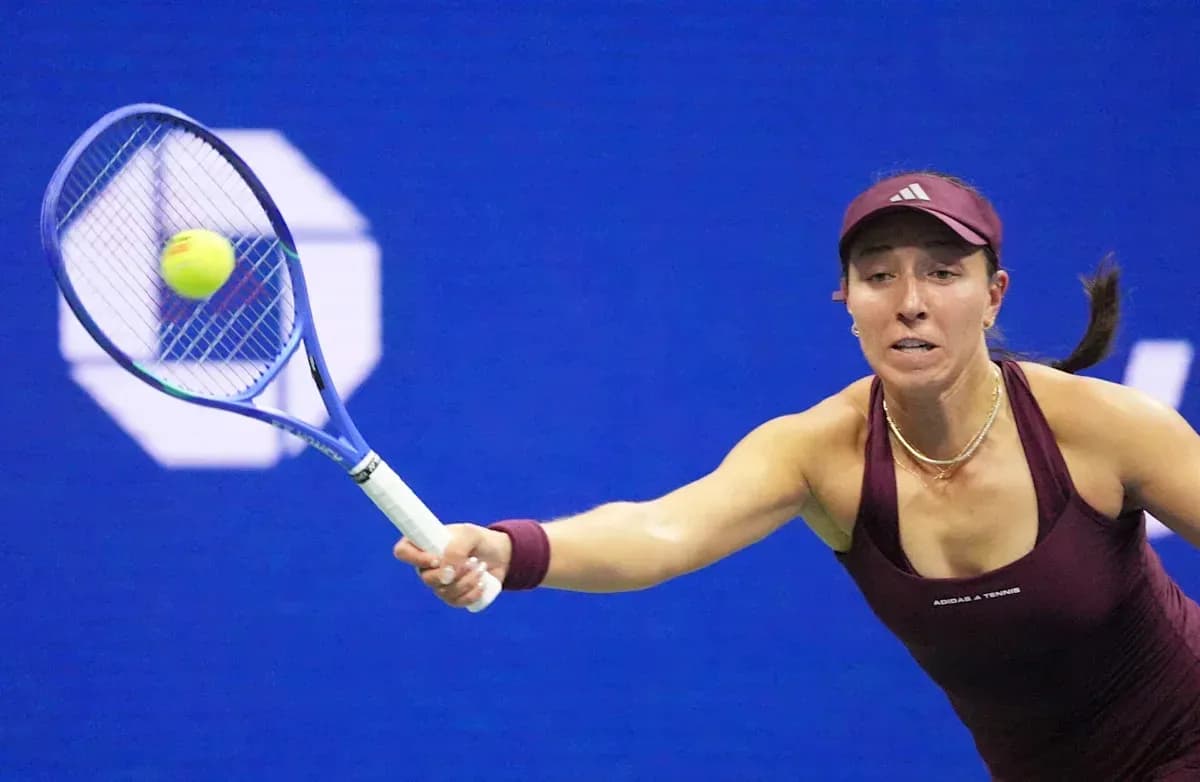
The night belongs to American hopes. At 7 p.m. ET, Jessica Pegula faces Emma Navarro in an all-U.S. clash that pits Pegula’s consistency and experience against Navarro’s surge through the ranks. It’s the kind of match that can tilt a home Slam’s mood in a single evening.
The men’s draw is no quieter.
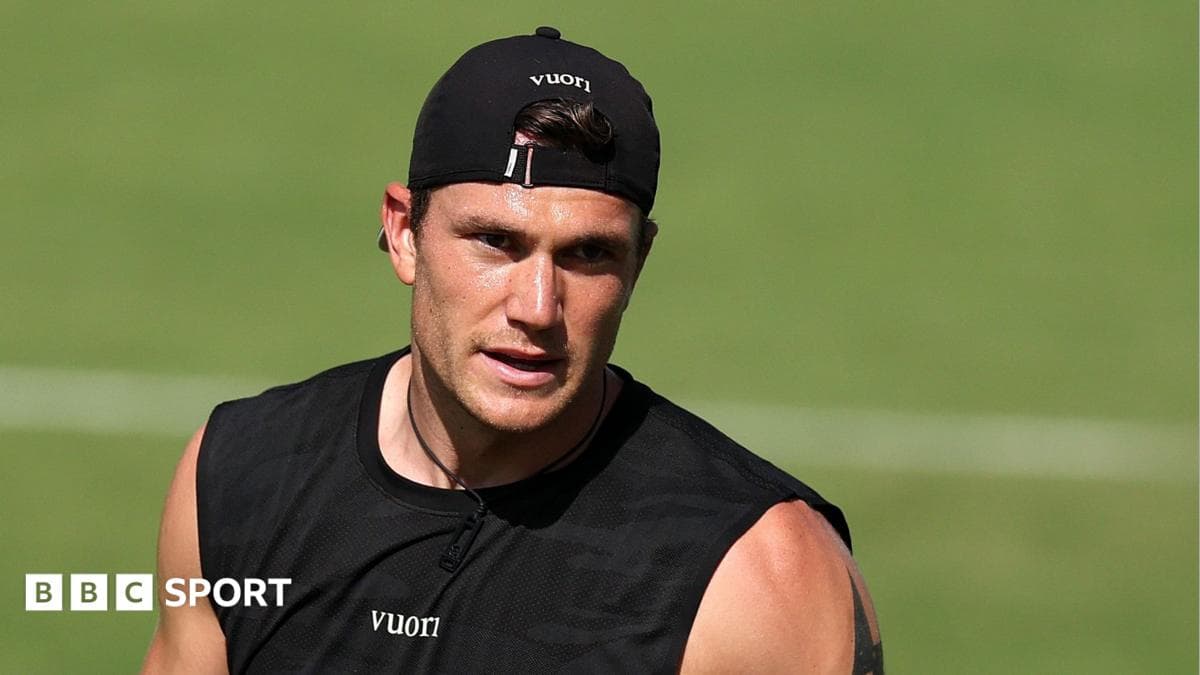
At 11:30 a.m. ET, Frances Tiafoe meets Alex Michelsen in a battle of American generations. Tiafoe, already a New York crowd favorite, faces the rising Michelsen, who has powered his way into the latter stages with fearless shot-making.
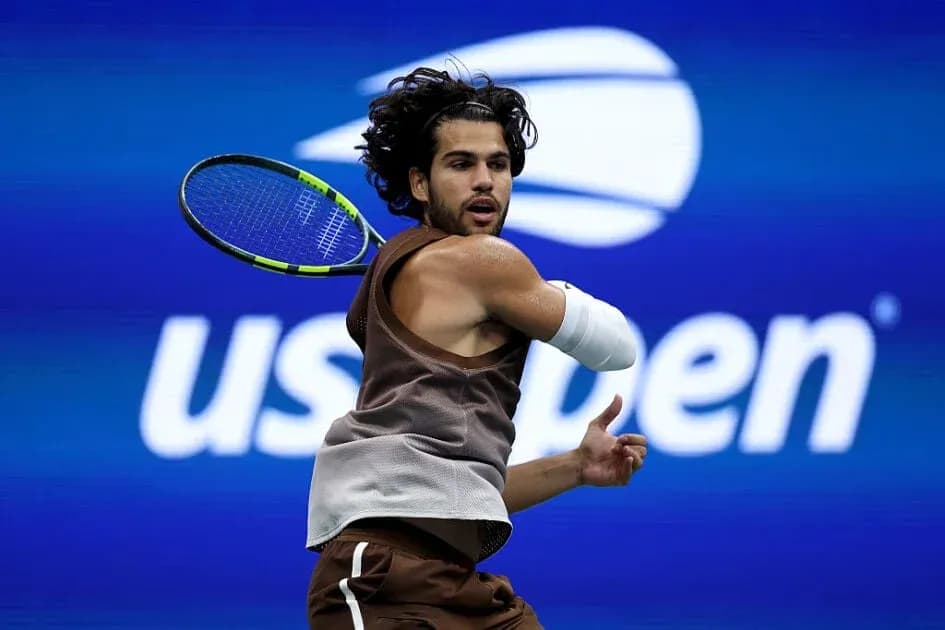
Then comes the blockbuster: Ben Shelton vs. Carlos Alcaraz at 7 p.m. ET. Shelton’s huge lefty serve and raw aggression against Alcaraz’s all-court genius. It’s a quarterfinal that feels like a preview of future finals.
Alongside the singles, the grounds are busy with men’s and women’s doubles, mixed doubles, juniors, and wheelchair events. The tournament is deep into its three-week run, and every court has something riding on it.
Where to watch in the US
For viewers in the United States, ESPN holds exclusive broadcast rights to the US Open, much like it does for Wimbledon. Matches appear across ESPN, ESPN2, ABC, and the ESPN app, so the official schedule is crucial if you’re targeting specific sessions or players.
If you’ve cut the cord, several live TV and streaming options still carry the key channels:
- DirecTV: The base package starts at $59.99 for the first month and includes ABC and ESPN+.
- ESPN Unlimited: Offers live sports and archived ESPN programming from $29.99 per month.
- Fubo: Its Sports plan, at $65.99 per month, includes ABC, ESPN, and ESPN2, with a quarterly payment option available.
- Sling: The Essentials plan carries ESPN and ESPN2 for $19.99 per month. There’s also a Sling TV Day Pass for $4.99 if you only want to drop in for specific matches.
- YouTube TV: The Sports Plan includes ABC, ESPN, and ESPN2 for $64.99 per month.
With the right package, you can follow every ball from the first qualifying round to championship point.
How to watch for free in the US
If you don’t currently pay for a streaming service, there’s still a path into Flushing Meadows without opening your wallet.
Several providers offer free trials that can cover a chunk of the tournament. DirecTV, FuboTV, and YouTube TV all have trial periods that, if timed correctly, let you watch the US Open at no cost for a limited window. Once the trial ends, standard subscription fees kick in, but the early rounds and even some of the second week can be yours for free.
Tapping into Australia’s free stream with a VPN
Outside the US, the most attractive deal sits in Australia. Broadcaster 9Now will stream the 2026 US Open free of charge.
If you’re in the US, the UK, or another region where that stream is geo-locked, a virtual private network (VPN) can open the door. Many VPN services allow you to connect to servers in different countries and access content restricted to those locations.
ExpressVPN, with servers spread widely across the globe, is one such option for location spoofing. To watch the US Open via 9Now using a VPN, the steps are straightforward:
- Subscribe to a streaming-friendly VPN service such as ExpressVPN.
- Download and install the VPN app on your chosen device.
- Connect to a server based in Australia.
- Visit 9Now and start streaming the US Open coverage.
Most of the better VPNs are paid services, but many offer free trials or money-back guarantees for first-time users. Time that correctly, and you can watch the tournament without paying a cent for the broadcast itself.
Fine-tuning your viewing setup
Once you’re in, one small tweak can change how the tennis looks on your screen. Many modern TVs have a motion-smoothing setting designed to make fast action appear smoother.
Turn it on for live sport and the ball tracks more cleanly across the screen, especially in high-speed exchanges. Turn it off when you go back to movies or TV dramas, or you’ll be stuck with the glossy “soap opera” effect that directors hate and viewers rarely enjoy.
The shape of the 2026 US Open
This edition of the US Open stretches over three weeks, running from Sunday, August 23, to Sunday, September 13, at the USTA Billie Jean King National Tennis Center in Queens, New York.
The schedule breaks down as follows:
- Qualifying events: August 24–27
- Men’s and women’s singles main draw: August 30–September 13
- Mixed doubles: August 24–26
- Men’s and women’s doubles: September 3–12
- Junior events: September 3–12
- Wheelchair events: September 8–12
The business end of the tournament is tightly packed:
- Women’s Doubles Final: Friday, September 11
- Women’s Singles Final and Men’s Doubles Final: Saturday, September 12
- Men’s Singles Final: Sunday, September 13
First staged in 1881, the US Open is the second-oldest Grand Slam event, behind only Wimbledon. The history hangs over every night session, every tie-break, every upset.
Who’s in the hunt?
The 2026 field is loaded with pedigree: 17 former Grand Slam singles champions, 10 of them past US Open winners. It’s a draw stacked with experience and scar tissue.
On the men’s side, Jannik Sinner is out through injury, a significant absence that reshapes the top of the draw. With Sinner sidelined, Alexander Zverev holds the No. 1 seed and Carlos Alcaraz the No. 2, setting up the possibility of a heavyweight collision deep into the second week.
The women’s draw is led by Aryna Sabalenka as top seed, with Elena Rybakina at No. 2 and American Jessica Pegula seeded third. Sabalenka’s power, Rybakina’s precision, and Pegula’s tactical clarity give the tournament three clear pillars at the top.
No nation is more heavily represented than the United States. With 28 players in the main draw, the home contingent is the largest in the field. Beyond Pegula and Navarro on the women’s side, Coco Gauff remains a central figure in the singles race. In the men’s singles, Frances Tiafoe, Alex Michelsen, and Ben Shelton are all still alive, driving a strong American presence deep into the tournament.
For fans, it means something simple: no matter which session you tune into—day or night, singles or doubles—there’s a storyline waiting. The question now is which of these names will still be standing when the lights go down on the final Sunday in New York.