US Open's Night Matches: A Test for Players
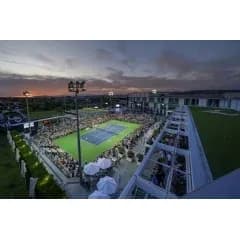
New York never sleeps. This year’s US Open seems determined to prove it.
Under the lights at Flushing Meadows, matches have been starting when most of the city is thinking about bed and finishing when the first trains rattle into Manhattan. It makes for great theatre. It also leaves a trail of exhausted players and a growing debate about whether the sport is asking too much of its stars.
Alexander Zverev knows the feeling better than most.
Zverev’s night shift
The top seed has spent more time under the Ashe floodlights than in the New York sunshine. Three of his five matches have finished after 1am. On some nights, his body clock has been pushed to breaking point.
"I've been to bed as late as 6:45am in the past week so I'm kind of a bit jet-lagged," he said. "I feel like I'm playing the Australian Open in New York right now."
For a player chasing a first US Open title, that is a brutal schedule. Friday’s semi-final against Karen Khachanov – not before 15:00 local time – will be the first time Zverev has played in daylight at this tournament.
Khachanov, unseeded and quietly efficient, has lived a very different fortnight. He has not been kept on court beyond midnight. His quarter-final against Alexander Blockx wrapped up shortly before 19:00 on Wednesday. He has slept at normal hours, eaten at normal hours, and will walk into the semi-final with a far more conventional preparation.
In a sport where margins are tiny, that matters.
Shelton and Tiafoe on the graveyard shift
On the other side of the men’s draw, the schedule has been just as unforgiving.
American eighth seed Ben Shelton did not finish his quarter-final win over Carlos Alcaraz until 3:34am on Wednesday – the latest finish in US Open history. By the time he left the grounds, New Yorkers were already eyeing the next working day.
Shelton now faces 11th seed Frances Tiafoe in Friday’s night session, starting at 19:00 local time. Tiafoe’s route has been demanding in a different way – a five-set epic against compatriot Alex Michelsen – but crucially, he closed that match around 19:00 on Tuesday. He slept. Properly.
The contrast is stark.
"The advantage of the opponent who has played earlier in the day will be big - they've had that full evening's rest and a good night's sleep," said Matt Little, Andy Murray's long-time former strength and conditioning coach, speaking to BBC Sport.
"We can all relate to it - if you have one really bad night's sleep, you have the knock-on effect of that for the coming days."
Little has seen the consequences up close. Murray’s infamous 4am finish at the 2023 Australian Open left the former world number one with just three hours of sleep before he had to be back at Melbourne Park around 11am. The physical and mental toll was obvious.
Shelton at least has a small cushion: two days off court before facing Tiafoe. He insists he will be “all right”. The sports science, though, is clear. There is catching up to do.
"He'll have to be napping to catch up some sleep," Little said. On top of that, the American will be loading up on carbs and protein, working hard to re-establish some kind of routine. Hydration, nutrition, sleep – everything has to be optimised without slipping into the kind of deep, disorienting slumber that wrecks the next day.
When spectacle becomes strain
Tennis has been here before. Murray called his Melbourne ordeal a “farce”. Few disagreed.
Tournament organisers have tried to respond. After that match, the Australian Open cut the number of day-session matches on its main courts from three to two, hoping to prevent night sessions from being shoved deep into the early hours.
The tours have acted as well. Early in 2024, the ATP and WTA introduced rules preventing regular tour matches – best-of-three, not best-of-five – from starting after 23:00. Grand Slams, with their five-set marathons and sprawling schedules, sit outside those protections.
So New York rolls on into the night.
Last week, Venus Williams and Sofia Kenin walked onto court for their first-round match at 12:13am – the latest start in US Open history. It was one of three matches in the first seven nights that finished after 2am. Three more ended after 1am.
Shelton’s win over Alcaraz pushed the limits even further, setting that new record finish at 3:34am.
"Something has got to give," said 18-time Grand Slam singles champion Martina Navratilova. "This is not OK and it is not normal."
Her words hang over this fortnight. The late nights are part of the New York mythology, part of what many fans love about the US Open. The roars, the music, the restless energy of a city that refuses to wind down. For some, those early-morning epics are the soul of Flushing Meadows.
But the volume has gone up this year.
A perfect storm on Ashe
Tuesday’s chaos on Arthur Ashe Stadium was a case study in how quickly a schedule can unravel.
Aryna Sabalenka needed three sets to get past Linda Noskova. Jessica Pegula and Emma Navarro went the distance. Tiafoe’s five-setter against Michelsen sat in the middle. Every match stretched, every set contested, every changeover eating into the night.
By the time Shelton and Alcaraz stepped on court, the clock was already against them. They still produced a classic. The price was that 3:34am handshake at the net.
Zverev, even on his night off, stayed awake to watch it. He did not get to bed until after 5am following each of his opening three wins. Those are not the habits of a world-class athlete in peak condition; they are the patterns of a man trapped by the calendar.
The US Open loves its late shows. The question now is whether the sport can keep selling the romance of the night without burning out the very players who make it worth watching.