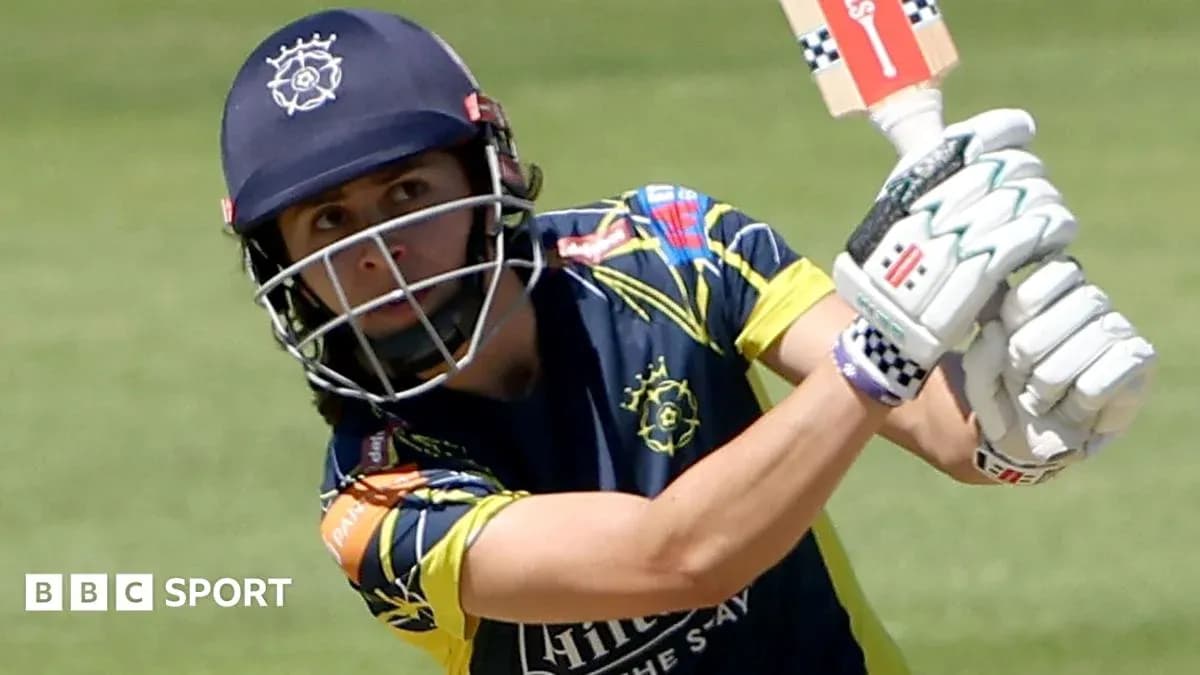
Vaibhav Sooryavanshi: A New Captaincy Challenge in Duleep Trophy Semi-Final
The first sign that East Zone’s semi-final might veer off script came with a sharp crack of leather on flesh.
Ishan Kishan, crouched behind the stumps, took a blow on his right wrist while keeping and immediately called for the physios. A quick assessment on the field wasn’t enough. He walked off for further treatment, hand already starting to swell, leaving Jharkhand teammate Kumar Kushagra to slip on the gloves.
When Kishan eventually returned, his wrist heavily strapped, his role had changed. He was no longer the on-field leader. That responsibility had already passed to Vaibhav Sooryavanshi.
A captaincy call under the spotlight
For Sooryavanshi, this was no routine toss of the armband. This was his first time captaining a senior men’s side, thrust into the role mid-match in a Duleep Trophy semi-final, barely months into his first-class career.
The timing carried its own edge. Less than a week earlier, his appointment as East Zone’s vice-captain had stirred debate across domestic circles. Why him? Why now? Was it reward, projection, or a gamble?
The selectors did not blink.
“We are not thinking about the present alone,” Jharkhand selector Manish Vardhan, also part of the East Zone selection committee, had told Cricinfo, framing the decision as an investment in Sooryavanshi’s long-term growth rather than a quick fix for the current campaign.
On this evidence, that investment is being tested early. The semi-final against Central Zone is only Sooryavanshi’s second Duleep Trophy outing. He has played just nine first-class matches since his Ranji Trophy debut in early 2024. Now, he suddenly finds himself steering a zonal side in a knockout match with Kishan, the senior India international, temporarily sidelined.
A raw record, a fast track
Strip away the IPL fireworks and the international headlines, and Sooryavanshi’s red-ball numbers still look very much like a work in progress.
Across those nine first-class games, he has scored 215 runs at an average of 16.53, with just one half-century to his name. In East Zone’s opening-round win over North East Zone, his first Duleep Trophy innings yielded only eight runs.
He did leave a mark with the ball, though, taking two wickets as East Zone romped to an innings victory. It was a reminder that, at this stage, he offers more than just top-order promise; he is a cricketer still being shaped, not yet defined.
That is precisely why his elevation feels so striking. This is not a player with a mountain of domestic runs behind him being handed the reins late in his career. This is a 2024 Ranji debutant, fast-tracked into leadership while his first-class résumé is still being written.
Early blows, early control
Before Kishan’s injury reshuffled the script, East Zone had already seized the early initiative with the ball.
Having won the toss, Kishan sent Central Zone in. Tripura seamer Abhijit Sarkar quickly justified that call. He removed Aman Mokhade for 8 and then Kunal Chandela for 6, slicing through the top order and leaving Rajat Patidar’s side wobbling at 36 for two.
It was the kind of start captains crave in a knockout match: scoreboard pressure, new-ball bite, and the opposition’s plans dented before lunch. Then came the hit on Kishan’s wrist, the physios, the change of gloves, and with it, a change of authority.
Suddenly, Sooryavanshi, still finding his feet in the long format, had to manage fields, bowlers, and tempo in a high-stakes contest.
From IPL sensation to red-ball responsibility
None of this happens in a vacuum. Sooryavanshi’s rise has been powered by a white-ball surge that has made him one of the most talked-about batters in the country.
He made his international debut earlier this year against England, riding the wave of a blistering IPL campaign in which he piled up 776 runs for Rajasthan Royals. Those runs were not quiet contributions; they were season-defining, the sort that bend matches and force selectors’ hands.
That form travelled. In a three-match series against Zimbabwe, he was named Player of the Series after scoring more than 200 runs, stamping his authority at the international level almost as soon as he arrived.
Those performances have clearly shaped how decision-makers view him. To them, he is not just a promising batter; he is a potential long-term pillar, someone to be groomed for bigger responsibilities across formats. Handing him the East Zone vice-captaincy—and now, in Kishan’s absence, the captaincy—fits that vision.
The contrast, though, is stark. In T20s and ODIs, he looks fully formed, a player in command of his game. In first-class cricket, he is still learning to grind, to absorb pressure, to build days rather than overs. Now he must also learn to lead while he learns to bat in whites.
That is the bet East Zone’s selectors have placed. With Kishan strapped up and the semi-final in the balance, we are about to find out how quickly that bet can start to pay off.