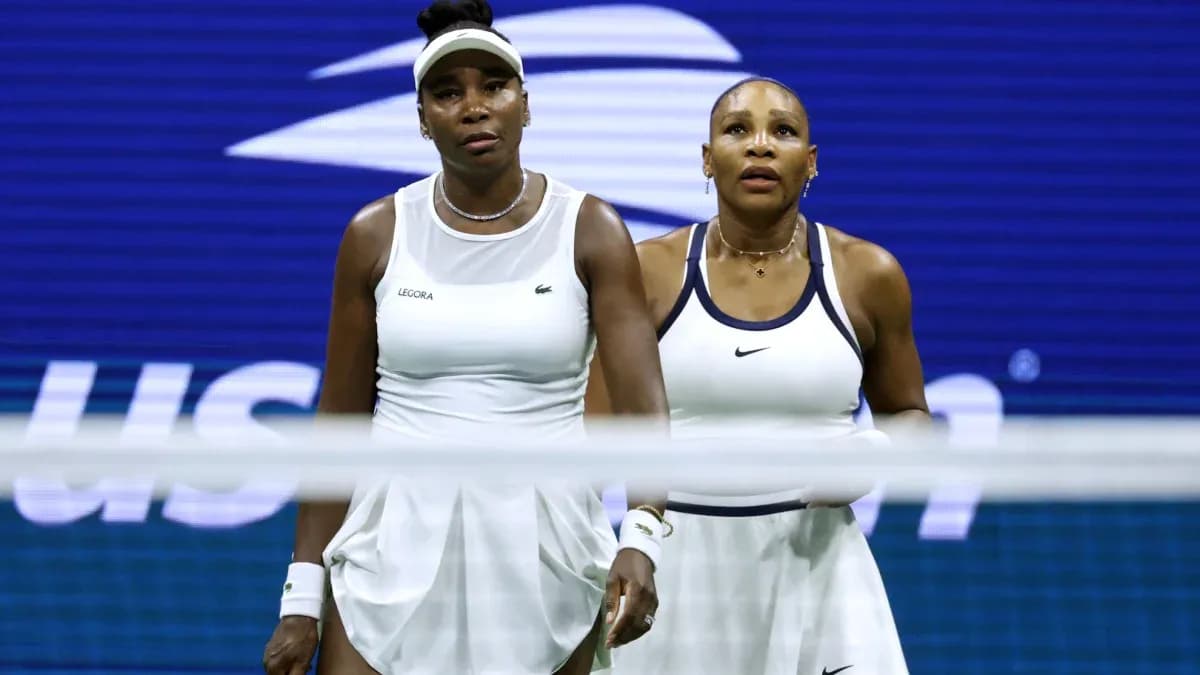
Williams Sisters Shine in Epic US Open Doubles Clash
Arthur Ashe Stadium did not so much host a doubles match as stage an event.
Smoke curled across the court. Lights cut through the haze. For a few moments before first ball, tennis’s biggest arena felt closer to Las Vegas than Flushing Meadows. Then Serena and Venus Williams walked out, side by side again at the US Open, and 23,000 people rose as if on cue.
Phones shot up. Applause crashed down. The Williams sisters, 44 and 46, were back in the doubles draw, back on the court where they have so often bent the sport to their will. This time, they walked into something different: a generational collision with the 14th seeds, 32‑year‑old Hao-Ching Chan of Taiwan and 20‑year‑old Australian Maya Joint.
The scoreline said the future edged the past: 6-3, 6-7(6), 7-6(7) to Chan and Joint. The night said something else entirely.
A show before a shot
The theatre began even before the warm-up. The pre-match coin toss went not to a former champion or a dignitary, but to YouTuber MrBeast — Jimmy Donaldson, a man with 515 million followers and a reach that speaks to where modern sport now lives. He flipped the coin. The crowd roared. The spectacle felt fully curated, but the emotion that followed was anything but.
Chan and Joint, the seeded pair with younger legs and sharper match rhythm, came out clean and composed. They took the opening set 6-3, punishing any short ball and dragging the sisters wide with crisp, modern doubles patterns. The Williamses misfired, searching for timing, still feeling out the geometry of the court together after so long apart.
When the set ended, something unusual happened. The noise went up.
The New York crowd stood and applauded as if the sisters had just clinched a title, not lost a set. It was a salute, not to the score, but to the history standing on the baseline.
Arthur Ashe finds its voice
The second set turned into a contest that felt far more familiar. Venus stepped in on returns. Serena’s serve began to crack like it used to, dragging gasps from the stands every time she found the line. Each hold from the American pair landed like a body shot; each point they won brought a surge of sound.
“Come on, Williams sisters!” rang out from the upper tiers, then the lower bowl, then from somewhere near the court itself. The atmosphere swelled so intensely that the stadium announcer had to ask for silence over the loudspeakers during points. It barely held.
The set tightened, point by point, until it spilled into a long, nervous tiebreak. Every mini-break for Serena and Venus drew a roar. Every error from Chan or Joint felt like the start of something. The sisters edged it 7-6(6), and Arthur Ashe erupted, not just with nostalgia but with belief. For a few minutes, it felt like time had folded in on itself.
This is where the Williamses have always been most dangerous: when a crowd senses a story and drags them toward it.
A final push against the clock
The match moved into its third hour and into a deciding set that tested not just skill, but endurance. Chan and Joint did not blink. They tightened their patterns, went after second serves, and began to pull away on the scoreboard.
With every point that slipped, a different sound rolled around the stadium. Not boos, not frustration. A collective “oh!” — a sound of tension, of a crowd watching the clock and fighting it.
At 5-5, the place shook again. The sisters, in matching white sneakers, skirts, and tops, leaned on every ounce of experience to stay in touch. They traded holds with the 14th seeds until the scoreboard read 6-6 and the match narrowed to a super tiebreak.
The tension then felt almost physical. Each serve toss seemed to hang a fraction longer. Every return was met with a sharp intake of breath. Chan and Joint, to their credit, held their nerve. They closed the breaker 7-6(7), closing out a three-set win that will look, on paper, like a straightforward upset of two veterans.
It was nothing of the sort.
When the final point landed against them, Serena and Venus walked to the net, offered handshakes, and then turned to the stands. The entire stadium rose. No one waited for a cue. The ovation rolled and rolled, a full-house standing tribute to two players who have defined eras, not just tournaments.
The sisters answered in their own understated way — a shared fist bump, a flash of knowing laughter, the kind that only comes from a lifetime spent side by side in the fiercest spotlight.
A personal edge, a wider stage
For Serena, this night carried an extra thread. Just weeks earlier, in her singles comeback at Wimbledon after four years away, she had lost to Joint. Facing the Australian again offered a quiet chance at personal revenge, even if no one around her framed it that way. The script didn’t bend for her this time either, but the edge to the contest was unmistakable.
This doubles run followed their brief reunion in Cincinnati in August, where they fell in their opening match to Marta Kostyuk and Peyton Stearns. The rhythm has not fully returned. The instincts are still there.
Both have already left their mark on this US Open in different ways. Venus exited the singles draw on Sunday, beaten by fellow American Sofia Kenin. Serena has remained a gravitational force in New York, not only with a racquet in hand but in the corridors and corporate suites, fronting campaigns with brands such as Heineken 0.0 and speaking candidly about weight-loss medications and the stigma that surrounds them.
On court, though, the message was simpler. Two sisters, 14 Grand Slam doubles titles between them, back under the lights of Arthur Ashe, still willing to chase balls into the corners and still able to make the biggest stadium in tennis feel small and intimate for a few hours.
The result will fade into the archive of their careers. The sound of that standing ovation as they walked off, heads high after a 6-3, 6-7(6), 7-6(7) defeat, will linger a lot longer.
The question now is not what they have left to prove, but how many more nights like this New York will get.