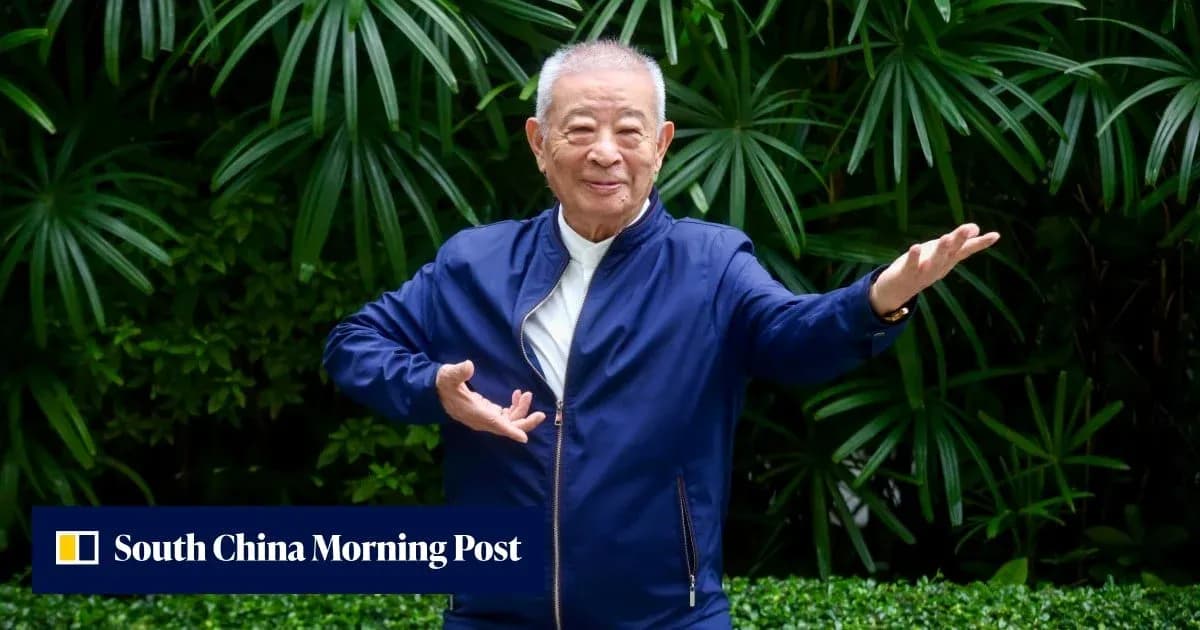
Wu Bin: The Legacy of a Wushu Pioneer at 89
At 89, Wu Bin still laces up his boots.
No glasses. No hearing aids. Just an early run, a football game, and the kind of stride that makes his age sound like a misprint. The man who helped turn Jet Li from a wiry eight-year-old into a global action icon moves through the world with the same quiet sharpness that once scanned Beijing schoolyards for talent.
Wu is living proof of his own philosophy: discipline is not just for the young chasing medals, it is the scaffolding that holds up a long life.
He built that belief on the training grounds of the Beijing Wushu Team, which he helped found. In the early 1970s, when wushu was still seen largely as a traditional art, Wu treated it like an elite sport. He drilled, refined, modernised. He watched closely. That watchfulness changed film history in 1971, when an eight-year-old boy caught his eye.
The boy was Li Lianjie, known to the world as Jet Li.
Wu saw what others missed: balance, focus, a rare feel for movement. Under his guidance, Li rose through the ranks, mastering Chinese martial arts with a precision and flair that carried him to championship podiums. Those same routines, those same explosive lines of movement, would later be framed by cameras and projected onto cinema screens across the globe.
Wu’s influence did not stop when the lights went up and the film credits rolled. His coaching tree kept growing. Students became champions, then coaches, then parents of the next wave. The sport evolved, but his standards did not.
That is why, instead of settling into a quiet retirement, he is still on the road.
Recently, Wu presided over the 18th Hong Kong International Wushu Competition, a fitting stage for a man who helped push the sport onto the world map. He watched as Dragon He, son of one of his former students, Jaden He Jingde, stepped onto the mat. A third generation, standing under the gaze of the original architect.
The scene captured the arc of Wu’s life’s work. What began with a handful of young athletes in Beijing now stretches across decades and borders. Former pupils send their children into the same discipline that shaped them. Wu shows up in person, not as a nostalgic relic, but as an active presence, still offering corrections, encouragement, and example.
His message has grown broader with time. The same habits that forged champions, he argues, protect the body in old age. Regular movement. Consistent training. A mind that refuses to drift into complacency. He embodies it each morning when he runs, each time he joins a football game instead of watching from the sidelines.
For many, ageing narrows the world. For Wu Bin, it has done the opposite. The arenas have changed, the faces are younger, but the mission is the same: build strong foundations early, so they last when the spotlight fades.
On the mats in Hong Kong, with Dragon He performing under his watch, that philosophy looked less like theory and more like legacy in motion.