
Young Lou Reclaims Missing Runs with a Century
Six runs went missing in Windhoek on Tuesday. They sat there in the dust at the Namibia Cricket Ground, abandoned when Lhuanre Pretorius, on 94, stepped miles across his stumps and was bowled around his legs. A first senior international hundred vanished with them.
On Friday, he went back and collected every one.
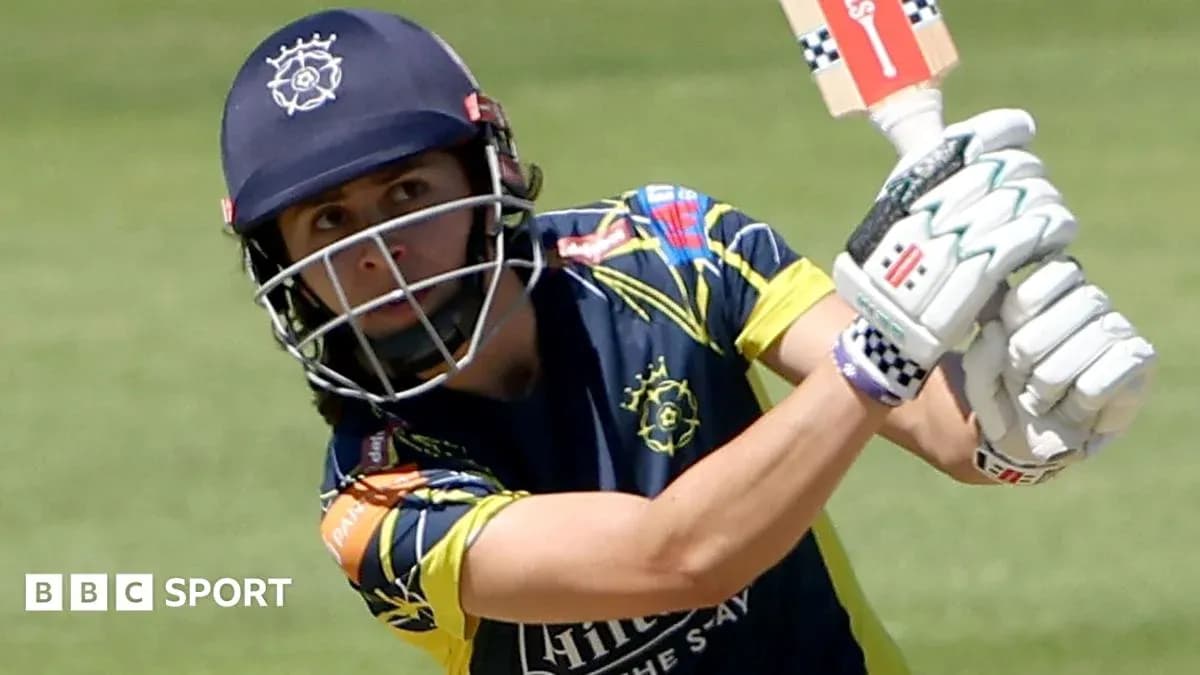
Pretorius thumped 101 off 53 balls against Namibia, reclaiming those lost runs and adding one more for good measure. It was a hundred built on violence rather than varnish: more than two-thirds of his runs came in boundaries, with eight sixes and a stream of fours that carved the ground into segments.
Seven of those sixes soared straight, in the V, where he plundered 60 off just 19 deliveries. When he wasn’t hitting back over the bowler’s head, he was flogging the ball square. Nothing subtle. Everything emphatic.
The old myth says left-handers are supposed to be easy on the eye, all gliding cover drives and liquid wrists. David Gower and Brian Lara gave that theory its poetry. Graeme Pollock and Graeme Smith gave it a different kind of truth — heavy, blunt, unstoppable.
Pretorius belongs with the blacksmiths. There is no pretense of elegance, no illusion of effortless grace. He looks like a regular bloke trying to hit the leather off the ball, and yet he keeps doing things regular blokes can’t.
Quinton de Kock dubbed him “Young Lou”, and the nickname has stuck. The kid bats like he’s doing it for every club cricketer who’s ever dreamt of a day like this.
Esterhuizen Lights the Fuse
On Friday, though, he wasn’t even the most fluent batter at the crease.
That honour belonged to Connor Esterhuizen, a right-hander who tore into Namibia with 88 off 40 balls. His strike rate of 220.00 left even Pretorius trailing by almost 30 points. While the left-hander built a hundred, Esterhuizen detonated the innings.
The pair rattled up 156 off 70 balls for the first wicket, a stand that set South Africa’s total on a different plane to anything seen in the tournament so far. The partnership ended in the 12th over when Esterhuizen, having dominated the bowling, lost his shape against Jan Balt and had his leg stump uprooted. Pretorius knew that feeling all too well.
At a press conference, Esterhuizen painted a contrast between the two. Pretorius, he said, was “super laser-focused and always looking to get at the opposition”. He described himself, in comparison, as “sometimes a bit of a nervous wreck out there”.
Pretorius saw it differently. “Connor made it a lot easier for me, and when he lost his wicket I could take charge as the leader in the middle and try to capitalise,” he told the host broadcaster.
He spoke like a player who understands how thin the margins are in this format. “T20 is a game of fine margins and high-risk cricket shots. So when you’re in form you have to ride that wave as long as you can because it can change very quickly. I came with the same approach [as on Tuesday]: try to get to that 15-balls [faced] mark. I knew the rest would take care of itself.”
For a while, it looked like it might not.
Namibia Refuse to Fold
South Africa’s 228/4 was the first 200-plus total of the tournament, a score that felt like a statement as much as a target. On most days, in most conditions, it ends the contest before the chase begins.
Namibia didn’t get that memo.
Louren Steenkamp and Jan Frylinck launched a reply that crackled with intent, their opening stand of 119 off 65 balls dragging the home side into a contest they had no right to dominate. Frylinck, another left-hander with a taste for the bruising option, hammered 72 off 36 and made the chase feel unnervingly plausible.
The turning point came in the 11th over. Frylinck pulled Andile Simelane towards the square-leg boundary, picking out Tony de Zorzi. De Zorzi danced with the rope, hopping and skipping to keep his balance and the ball in play, completing a catch that finally checked Namibia’s charge.
The pressure didn’t disappear. It shifted.
Gerhard Erasmus took responsibility for the rest of the innings, compiling an unbeaten 30 off 26. He found some late help from Ruben Trumpelmann, whose 21 off 10 balls kept South Africa honest and the crowd engaged. Namibia closed on 217/3, just 11 runs short of what had once looked an unreachable mountain.
Lessons in a Narrow Escape
South Africa had their win. They also had their warning.
“It was a bit closer than we wanted, but we’ve learnt to not take anything for granted in this game,” Bjorn Fortuin told the host broadcaster. “A win’s a win and we did some good things, but there’s a lot to work on going into that last game.”
For Pretorius, the story will be the hundred — the runs he left behind on Tuesday, retrieved with interest on Friday. For South Africa, the story might be different: a reminder that even on nights when their young star batters scorch the outfield, this format leaves no room for comfort.
The batters have announced themselves. The question now is whether the rest of the side can keep pace when the margins get even tighter.