Zheng Qinwen's Remarkable Comeback at the US Open
If this US Open has taught the locker room anything, it is this: do not, under any circumstances, go 5-0 up on Zheng Qinwen and relax. That scoreline has become the most dangerous lead in New York.
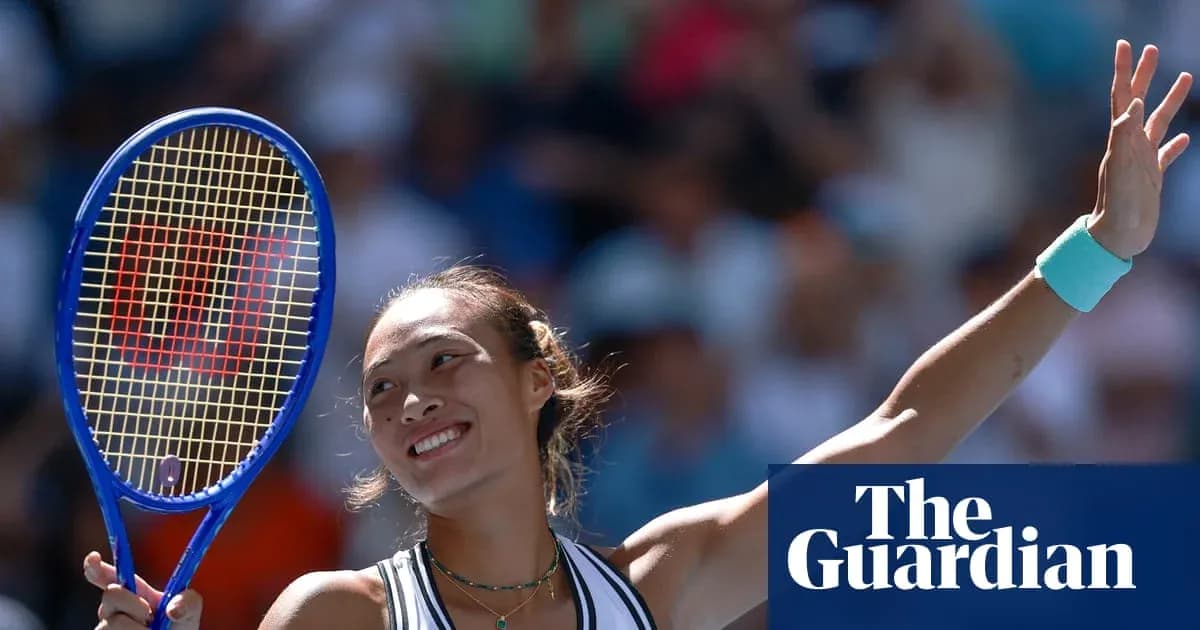
Two days after tearing Madison Keys’ heart out from 0-5 down in a deciding set, the Olympic champion did it again. Same script, bigger stage. Facing Iga Swiatek, a six-time grand slam winner and one of the tournament favourites, Zheng trailed 5-0 in the opening set of their fourth‑round clash. Then she shut the door, tightened every screw in her game and ripped through seven straight games to steal the set.
She never gave it back. Zheng marched into the quarter‑finals with a 7-5, 6-3 win that felt like a turning point not just in her fortnight, but in the arc of her career.
Zheng flips the script on Swiatek
The raw numbers are staggering. Coming from 0-5 down to win seven games in a row is rare enough at this level. Doing it in consecutive matches is almost unheard of. Doing it against two different grand slam champions? That had never happened before.
Zheng barely seemed to notice the absurdity of it in the moment.
“In one moment, I even forgot the score in the first set at 4-5,” she said afterwards. “That shows how I am focused. I guess, to come back 0-5 [again] is not lucky, that’s [what] I can say.”
Swiatek had arrived in New York with momentum. She had just lifted her first title of the season at the Canadian Open in Toronto and looked to be rebuilding the aura that has defined her as the dominant player of her generation. For five games, that version of Swiatek was on court: heavy forehand, early breaks, scoreboard control.
Then the grip loosened. The errors crept in, at first as a murmur and then as a roar. Once Zheng wrestled back one hold, then a break, the match turned into a contest of clarity. Zheng’s grew sharper. Swiatek’s deserted her.
“I wouldn’t say it had anything to do with mentality. It was more that I started making mistakes from easy balls and Qinwen stopped doing mistakes,” Swiatek said.
She never truly recovered. The first set vanished in a blur of mishits and frustration, and the second followed the same pattern as Zheng held her nerve, her serve and the baseline.
From surgery and struggle to seven wins in New York
This result lands differently because of everything that came before it. Zheng walked on court with a 1-7 record against Swiatek, the lone win coming in the semi‑finals of the 2024 Paris Olympics at Roland Garros, a defeat that stung the Pole deeply just weeks after she had claimed a third straight French Open.
That Olympic gold medal catapulted Zheng into the mainstream in China, but it was not a one-off flash. She had already reached the 2024 Australian Open final and climbed to a career‑high No 4 last year. Then her body intervened. Elbow surgery halted her rise, and the rankings punished her absence.
The drop was brutal. By June she had fallen to No 160, shorn of rhythm, short of wins and chasing her old level. She arrived at this US Open with an 11-13 record for 2026 and no guarantees. Pride had to be swallowed at the entry list: she needed the qualifying draw just to get into the main event.
Seven matches later, qualifying feels like a different lifetime. Seven wins in New York have restored not only her ranking prospects but her status. This is no outsider’s run; it is the re-emergence of a player who always looked built for the sport’s biggest stages.
Rybakina closes in on No 1
Standing between Zheng and a first US Open semi-final is Elena Rybakina, the second seed, who is now one win away from becoming world No 1 for the first time.
Rybakina barely broke stride in dismissing Naomi Osaka 6-1, 6-4 on Louis Armstrong Stadium. In 66 brisk minutes she produced 29 winners against just 17 unforced errors and faced only one break point, which she snuffed out. Osaka, a two-time US Open champion, needed her highest gear simply to stay in touch. It never arrived.
Hampered by achilles pain and struggling to find her usual pop on serve, Osaka could not generate enough free points to unsettle Rybakina, who dictated with icy efficiency from the back of the court.
The contrast sets up an intriguing quarter-final. Rybakina, methodical and metronomic when she finds her range. Zheng, streaky in the most dangerous way, capable of turning matches upside down in a handful of games. For Rybakina, the prize is the No 1 ranking. For Zheng, it is proof that her comeback has real teeth.
Andreeva breaks new ground, Blockx steps up
On the women’s side of the draw, Mirra Andreeva continues to make Flushing Meadows her next playground. The fifth seed and reigning French Open champion reached her first US Open quarter-final with a 5-7, 6-4, 6-3 victory over Austria’s Anastasia Potapova, another sign that her clay-court success is translating onto hard courts.
The men’s event had its own milestone. Alexander Blockx, seeded 28th, booked a maiden grand slam quarter-final by taking out the 24th seed Francisco Cerundolo 6-3, 4-6, 7-5, 7-5. It was the kind of tight, four-set win that hints at a player learning how to close on the sport’s biggest stages.
But this day belonged to Zheng. From elbow surgery to qualifying, from No 160 to dismantling a six-time major champion, she has turned the US Open into a personal reclamation project.
Now the question hangs over the rest of the draw: if 5-0 isn’t enough against her, what is?