Alex Eala's Fookelya Serve: A Strength in Disguise
Alex Eala knows the joke. She just doesn’t love the punchline.
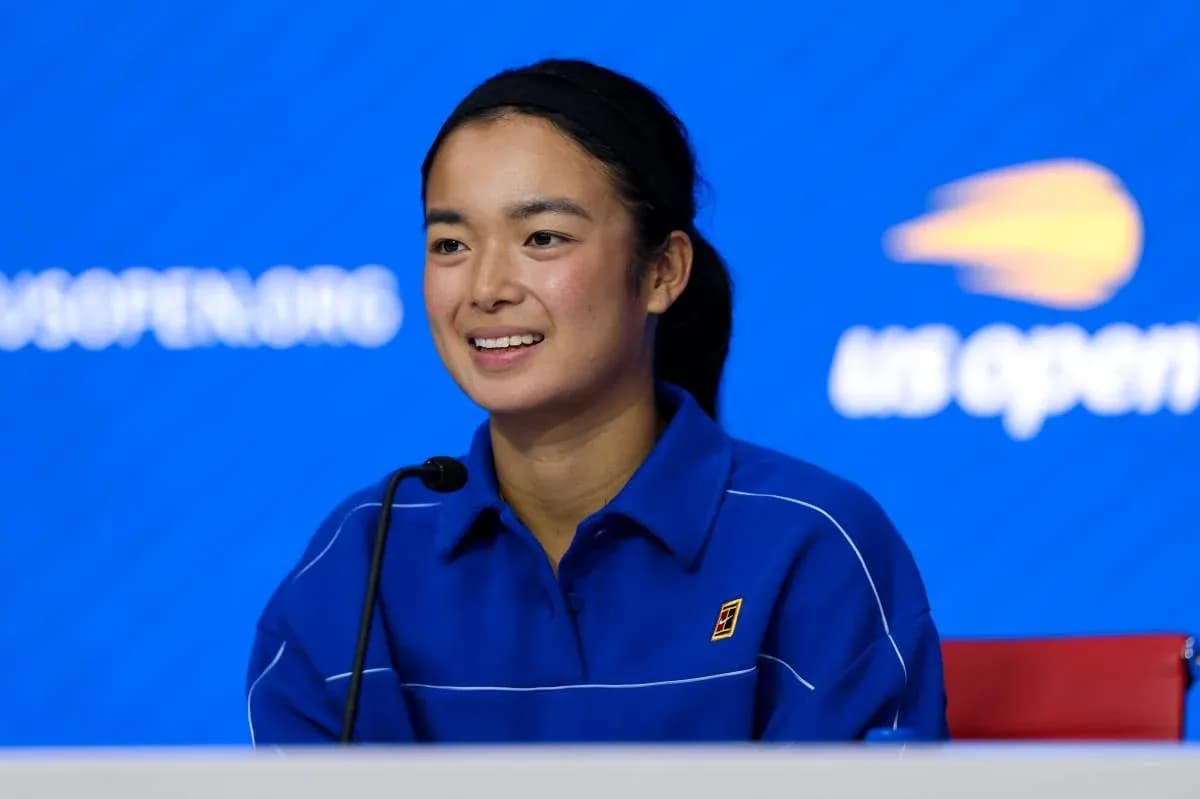
In the run‑up to the US Open, the 19-year-old Filipino star found herself fielding a question that had nothing to do with rankings, draw projections or practice blocks. It was about “Fookelya” – the irreverent, viral nickname Filipino fans have given her slower second serve.
She understands where it comes from. She understands why it stuck. She still wishes it sounded a little kinder.
A Meme Meets Its Subject
The term “Fookelya” comes from Filipino gay slang and carries a vulgar reference to female genitalia. On social media, though, it has taken on a different life. Among Eala’s supporters, it has become a term of endearment for a serve that looks like a liability on paper yet keeps fooling some of the best returners in the world.
A Filipino reporter at her US Open media day press conference laid it out for her: fans were trying to flip a perceived weakness into a secret weapon. The nickname had gone from niche online joke to T-shirts to international tennis discourse.
Eala laughed at first and asked for a proper explanation. When it came, her smile tightened.
“Hindi siya masyadong positibong salita ’yon,” she said, pointing out that the word itself hardly radiates positivity.
She listened as the reporter stressed the affectionate intent. She accepted that. She still couldn’t quite shake the discomfort.
“Hindi ko alam kung ano ’yung pakiramdam ko sa salitang ’yon kasi it’s not a very positive term,” she added, before switching to English to explain that the word hits a nerve because of how much she has struggled with the serve, and how many hours she has poured into improving it.
“And I love my serve,” she said, drawing a clear line. This isn’t a gimmick to her. It’s work. It’s pride.
From Local Slang to Global Airwaves
The meme had already been doing the rounds in Filipino tennis circles long before New York. Clips of her looping, low‑pace second serve, paired with the “Fookelya” tag, bounced around social feeds as she climbed the rankings and collected scalps.
Then it broke out of that bubble.
Broadcaster Blair Henley brought the nickname to a wider audience on the Love All Podcast, describing Eala’s delivery as unconventional but effective. Henley’s point was simple and sharp: “It doesn’t have to look like Serena Williams’ serve to be effective.”
Suddenly, what started as an in‑joke was being dissected on an international platform. The serve, and the slang around it, had gone global.
Eala could have bristled. She didn’t. She addressed it with a mix of honesty and restraint.
“I think I would appreciate a more positive term,” she said. “But I don’t think they mean it in a bad way.”
There was no scolding, no accusation that fans were mocking her. Just a request: keep the love, tweak the language.
The “Little Brother” of Her Game
Inside her camp, the serve has a very different nickname.
Her coach at the Rafa Nadal Academy, Joan Bosch, has asked her to think of it as a younger sibling – a part of her game that needs patience, guidance and protection. In that metaphor, Eala is the “ate,” the Filipino word for older sister.
“Like my coach says, it’s like my little brother,” Eala explained. “Parang ate ako sa serve ko.”
That framing matters. It explains why a crude, jokey label lands where it does. To Eala, the serve is not a meme. It’s family. A flawed, developing, occasionally exasperating relative she refuses to give up on.
She doesn’t see a punchline. She sees a work in progress that she has learned to shelter and slowly strengthen.
Why a Slower Serve Bothers the Best
The debate around that serve isn’t just cultural. It’s tactical, and it intensified the moment it began to bother the elite.
Before the Washington final, world No. 5 Jessica Pegula reportedly told a practice partner to take pace off his serve to mimic Eala’s delivery. Pegula understood the trap: players who feast on pace can suddenly look ordinary when asked to generate their own.
At Wimbledon, Iga Swiatek ran into the same problem in her loss to Eala. Swiatek noted that Eala started serving “slower and slower,” dragging her into a rhythm she almost never sees on tour, far removed from the heavier, more predictable power serves that dominate the WTA.
Former world No. 1 Andy Roddick later broke down why Eala can “get away” with that speed. Her serve doesn’t need to be a hammer. It just has to start the point.
Once the ball lands, her real weapons take over. If the returner misjudges the timing or fails to strike the ball cleanly, Eala steps in and lets her groundstrokes speak. She redirects the first shot with pace, takes time away, and suddenly the “weakness” looks like a trap.
Rick Macci, the renowned coach who helped shape Serena and Venus Williams, took a harder line in his own assessment before Eala’s US Open opener. He praised her movement and her ability to take the ball early, but he didn’t sugarcoat the technical side.
For Eala to reach another level, Macci wrote, the serve “biomechanically has to be rewired.”
He also warned of a different kind of pressure: nerves. With her fan base swelling and expectations rising, Macci predicted an “Eala Earthquake” around her first-round match, a surge of attention that would shake every service game.
The two views don’t clash. Roddick sees how the serve functions now, within the architecture of her game. Macci sees what it might become if the mechanics catch up with her ambition.
Under the Lights in New York
Eala arrives in New York with a career-high ranking of No. 18 and the No. 17 seed in women’s singles. She opens against American qualifier Mary Stoiana, a familiar face she beat 7-5, 6-2 at the W100 event in Landisville, Pennsylvania, earlier this year.
The stakes are higher this time. So is the scrutiny.
Every delivery in New York will be studied: the speed gun readings, the placement patterns, the slightly offbeat tempo that has unsettled players more decorated than Stoiana. Cameras will linger a little longer. Analysts will freeze frames. Social media will wait, ready to pounce on every double fault and every ace with the same three-syllable tag.
The nickname will almost certainly trail her through the gates and onto the practice courts. It will echo in comment sections and, occasionally, in the stands.
Eala isn’t asking for silence. She isn’t asking fans to stop enjoying the quirks of her game or the tension of her service games. She is asking for something more precise.
Keep the affection. Keep the belief that a so-called weakness can be a weapon. Just let the “little brother” of her game grow under a name that reflects the same care she gives it.
The next time she steps up to the line in Arthur Ashe Stadium, the question won’t be what her serve is called. It will be how far this much-discussed, much-debated delivery can carry her in the biggest tournament of her life.