Alexandra Eala's Tokyo Exit: A Battle, Not a Collapse
Alexandra Eala’s Tokyo run ended with a grimace, not a collapse.
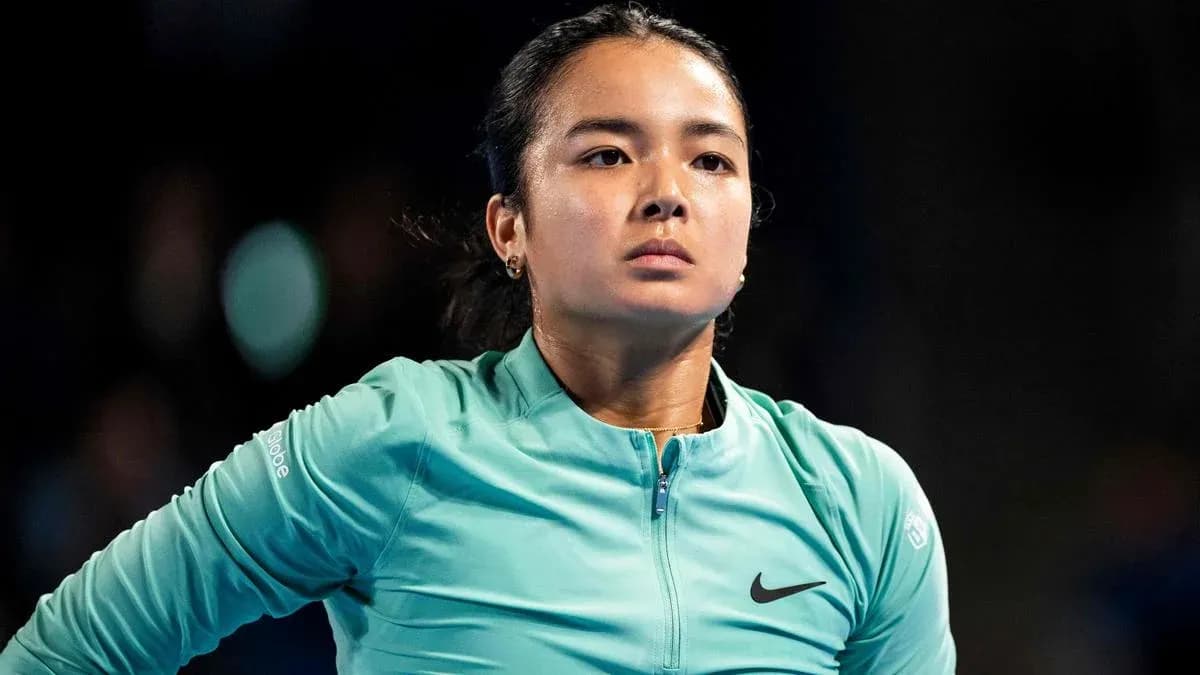
The 21-year-old from the Philippines bowed out of the Pan Pacific Open in the quarterfinals on Friday, edged 2-6, 7-6 (7/5), 6-4 by third seed Diana Shnaider, but she walked off court sounding more hungry than heartbroken.
She has one more stop this year. And she wants to finish like a player who has just redrawn the map for Philippine tennis.
A breakthrough season, not quite done
This has already been the season that changed everything for Eala. In August, in Washington, she became the first player from the Philippines to win a WTA Tour title, a landmark that pushed her into the sport’s wider consciousness and up to world No. 19.
Tokyo was her first appearance at the Pan Pacific Open. It did not end in a trophy, yet it underlined why she now travels as a contender.
“I’m super excited, and I’m going in with high motivation,” she said, already looking toward next week’s event in Hong Kong, where she is expected to be among the title favourites.
The reflections on this breakthrough year can wait.
“I’m trying to put my reflections off for one more week because of said motivation. Check back in a week.”
A match that turned on a knife edge
For a set, Eala looked like she might run away with it. After a solid start from both players, she ripped through five straight games to claim the opener 6-2, striking cleanly and dictating with authority off both wings.
The second set turned into a test of nerve. Service games held firm on both sides. Neither woman blinked on serve, and rallies hardened into trench warfare from the baseline. World No. 13 Shnaider finally carved out the difference in the tie-break, edging it 7-5 to drag the contest into a decider.
The pressure finally told early in the third. Shnaider grabbed an early break and never handed it back. Eala needed treatment on her right foot as the set wore on, a small but telling interruption in a match that had been played at a ferocious physical level. Shnaider closed the door with an ace, sealing her place in the semifinals.
Eala called it “a huge battle”.
“Both of us could take the match to a really, really high level,” she said. “I’m proud of that despite the loss, but I do think I had my chances. Next time, hopefully do better in those moments.”
Backed by a travelling crowd
If Eala’s ranking now guarantees attention, her passport guarantees something else: noise. Once again, a large and passionate group of Philippines supporters followed her in Tokyo, turning another far-flung court into something that sounded like a home fixture.
“To be in front of the crowd and to play in this atmosphere is always super special,” she said.
It was her second competitive trip to Japan in two months, after a semifinal run at the Asian Games in Nagoya. The bond is growing.
“I love Japan as a whole, whether I’m here for tennis or not, so I really had fun.”
Fun, but not satisfaction. Not yet.
Shnaider marches on, Hong Kong awaits
Shnaider’s reward is a semifinal against Slovakia’s 18-year-old Mia Pohankova, who took out American Alycia Parks 7-6 (7/3), 6-3. On the other side of the draw, Uzbekistan’s Kamilla Rakhimova will face Canada’s Leylah Fernandez, who advanced when world No. 1 Elena Rybakina withdrew with a neck injury.
Eala’s route now leads to Hong Kong, the final chapter of a year in which she has moved from promise to proof. She leaves Tokyo with a sore foot, a narrow defeat, and the sense that the margins at the very top are shrinking fast in her favour.
One more week, she says, before she looks back. The way she is playing, it is the next step, not the last one, that demands attention.