Alice Capsey Takes on Wicketkeeping for England in ODI Series
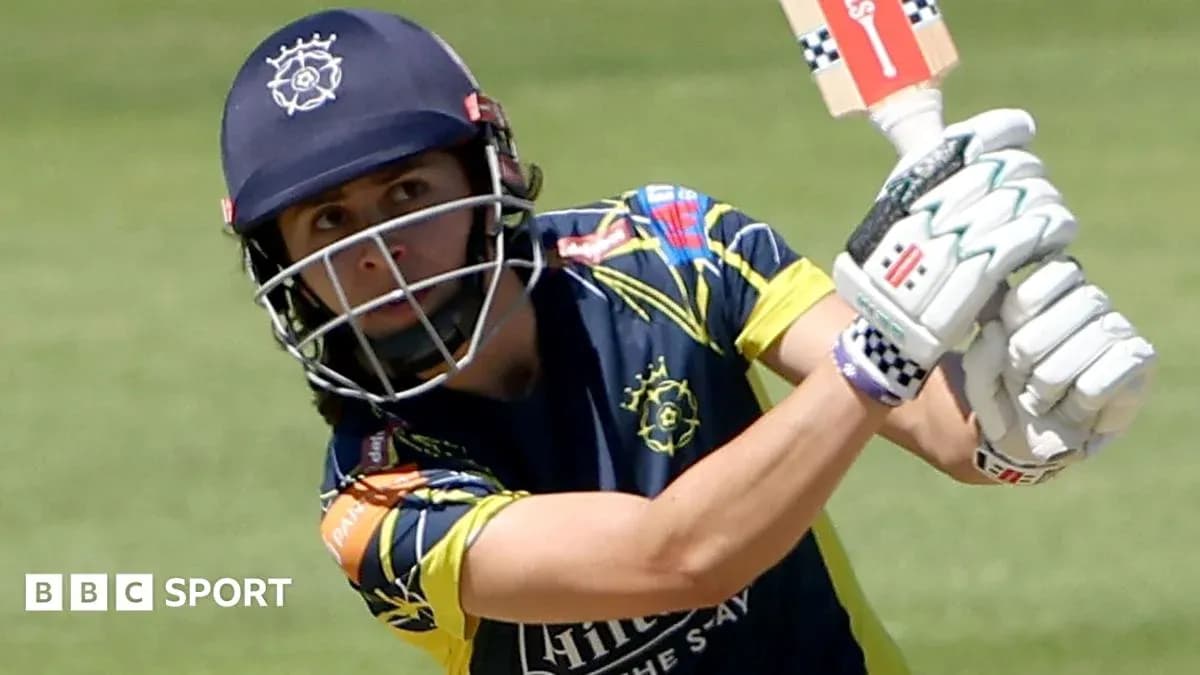
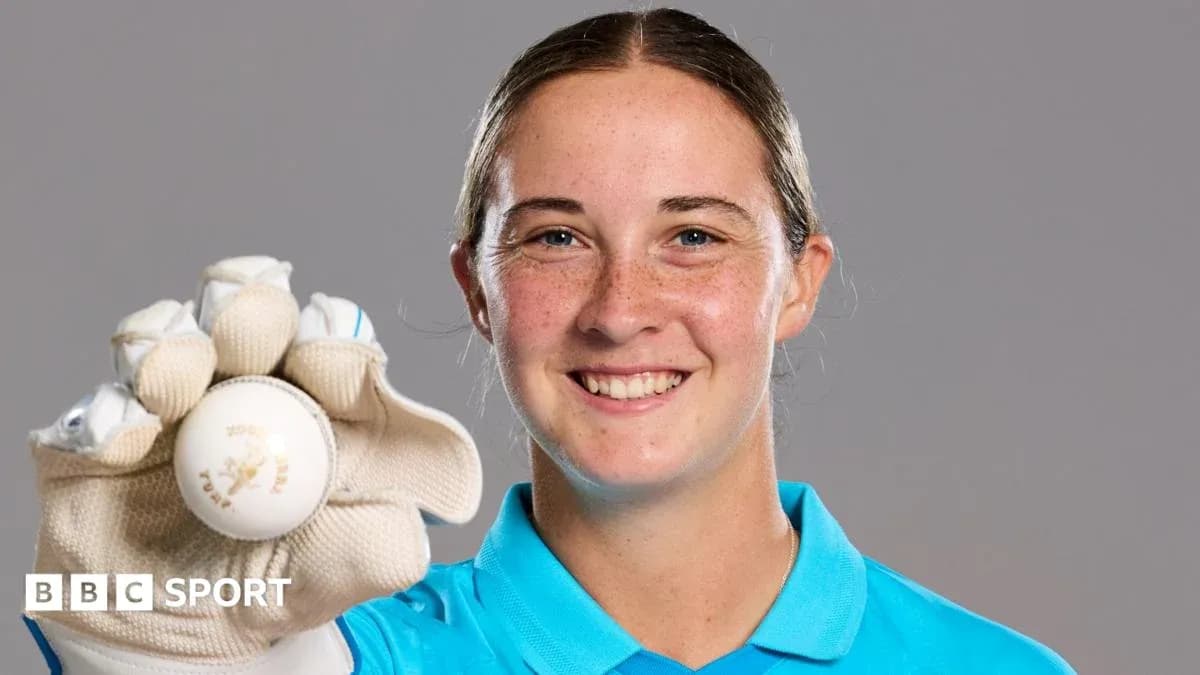
Alice Capsey lined up for England’s pre-series photo on Monday with one more item than usual in her kit bag. Bat, pads, helmet… and a pair of wicketkeeping gloves.
The all-rounder has already become one of England’s most dependable outfielders, a middle-order pillar, and a bowler trusted in tight moments. At 22, she is also widely tipped as a future captain. This week against Ireland, she adds another job title: England’s wicketkeeper in a one-day international series, despite only one previous professional outing with the gloves, for South East Stars back in 2020.
“Realistically, it is a bit of an unknown,” she admits. She has barely done it in matches. But she has done the work. Long, unseen hours. Enough, she says, to give her “a lot of confidence”. This is no wild gamble from coach Charlotte Edwards. She does not deal in those.
Back to her roots
The idea first surfaced in pre-season, during England’s camp in South Africa. Capsey kept regularly through her Surrey academy days and was viewed as a genuine option again when the staff assessed their resources. With few alternatives and some early technical work under her belt, she was quietly pencilled in as back-up to Amy Jones for the T20 World Cup.
Jones played every game. Capsey’s gloves stayed in the bag. But the debate behind closed doors was real. When Nat Sciver-Brunt returned from injury for the semi-final, one scenario had Sophia Dunkley staying in the XI, Jones missing out, and Capsey taking the gloves. In the end, the status quo held.
It has not been a seamless emotional journey for Capsey.
“At the beginning of the summer, I was pretty nervous to do it,” she says. She retreated into herself, went quiet. The dressing room pulled her back out. Personalities like Sophie Ecclestone kept the mood light, the jokes flowing, the environment relaxed. Over time, the sight of Capsey in keeping drills became normal. Routine. “Second nature,” as she puts it.
She also happens to relish the messier side of the job. The bruised fingers. The ones that whistle past down the leg side. The inevitable mistake. “Those are the bits you enjoy,” she says. The grind. The constant chase to get “better and better”.
This is not a new skill bolted on late in her career. Capsey grew up as a keeper, only giving it up when she jumped age groups and her side suddenly needed an off-spinner more than a glovework specialist. She filled the gap and the gloves went away.
“Who knows if I hadn’t played up whether I would have just kept on keeping,” she reflects. Now, she calls it “really cool going back to the roots and where I started”.
A hero in the same corridor
Those roots run through Bede’s School in Sussex, where Capsey’s time overlapped with that of Sarah Taylor. The former England keeper worked there as a coach before returning to the professional game and now helps with England’s men.
For a young Capsey, Taylor was not just a name on a highlights reel. She was a presence in the nets. A World Cup winner at Lord’s in 2017, where a 12-year-old Capsey watched from the stands.
Taylor, widely regarded as one of the finest keepers the game has seen, became the model. “The way she went about it, did it her way and brought an X-factor to it was really cool,” Capsey says.
Taylor has nudged her for years to pick up the gloves again. “She has been on my shoulder for the last four or five years saying I need to get back to keeping.” This summer, Capsey could finally send the message she had been waiting to write: “I am back.”
Building a keeper’s body
The comeback has not just been about technique. It has been physical. Capsey ramped up her keeping work at the start of the summer, fitting glovework around her existing schedule as batter, bowler and outfielder. The gym had to change too. More leg strength. More focus on abductors. More squats, more time in that familiar crouch behind the stumps.
“I have pulled up, touch wood, after all of it so far,” she says. Then the wry add-on: “Come back to me at the end of the week.”
There has been at least one semi-secret dress rehearsal. Behind closed doors, in a T20 World Cup warm-up against India, Capsey kept for England. She stood up to seamer Dani Gibson and took a sharp, rising catch. She claimed a stumping off spinner Linsey Smith. She did not concede a bye.
“It was awesome,” she says. “I loved the experience.” Standing up to Gibson was “a really nice challenge”. The highlight might have been the catch, but the little wins mattered just as much: the clean take in the first over to Lauren Filer from back on the 30-yard circle, the leg-side takes that keep bowlers calm.
This week, in training, she has gone one step further, standing up to Issy Wong, one of the quickest in the England set-up. It is the kind of task that separates hobbyists from specialists.
The bigger picture for England
The experiment could have significant consequences if it works.
At the simplest level, England gain a ready-made deputy for Jones, who is 33 and rested for this Ireland series. They also add genuine competition for the gloves, something every squad claims to want but few actually possess.
There is another angle. Jones struggled with the bat at the T20 World Cup, five single-figure scores in seven innings. If Capsey can keep well enough to be trusted long-term, England might feel bold enough to use that slot for another destructive batter, knowing their incumbent No. 3 already commands a place through her batting alone.
Capsey knows the stakes. She also knows where the pressure really comes from.
“There is going to be nerves and pressure around, but more internal pressure than anything,” she says. This is England. An international series. ICC points on the line. “As a professional athlete you don’t want to do it badly and you are representing England.”
Being handed the gloves, though, brings its own kind of reassurance. “To be trusted to have the gloves for England has got to give you confidence as well,” she says.
She is honest about the journey. “I am not the finished article by any means,” she adds. But she did this for a long time growing up. The stance, the rhythm, the constant involvement. It is in there.
“Regardless of the challenges presented this week I know I have a bit of experience to fall back on which is nice.”
Now she finds out if that childhood keeper can handle the glare of international cricket, and whether one extra piece of kit can quietly reshape England’s future.