Anderson’s Craft and Middlesex's Control Over Lancashire
At a school ground in Northwood, the past and future of English seam bowling shared the same strip of turf and tore through two batting line-ups.
By stumps on day two at Merchant Taylors’ School, Middlesex were 116-2 in their second innings, 212 ahead of Lancashire, after 398 runs and 22 wickets had flown by in a breathless, old‑fashioned county scrap.
Anderson’s craft, Lancashire’s fightback
James Anderson almost didn’t bowl at all. A nagging calf problem had left Lancashire wondering how much they would get from their 41-year-old great. They got plenty.
From the Benham End, down the slope, Anderson settled into a long spell that felt like a highlight reel from a career already carved into folklore. The ball seemed attached to a piece of string only he could see. Middlesex batters groped, prodded, and missed. For more than an hour he dictated terms, beating the bat with that familiar late movement, forcing them to play when they wanted to leave and leaving them when they wanted to play.
Ironically, his only wicket of the morning owed nothing to artistry. Luke Hollman, 54 overnight and still on that score, saw one scuttle along the floor and sneak under his bat. A grubber, not a gem, finally gave Anderson his reward.
The pressure he created, though, was priceless. At the other end, George Balderson and Ben Walkden cashed in. Middlesex’s middle order caved in a hurry. Ben Geddes, who had hinted at something substantial, fell lbw to the first ball of Balderson’s spell. Walkden then ripped out the middle stumps of Harry Duke and Zafar Gohar in the space of three deliveries, a classic county burst that turned a solid platform into a scramble.
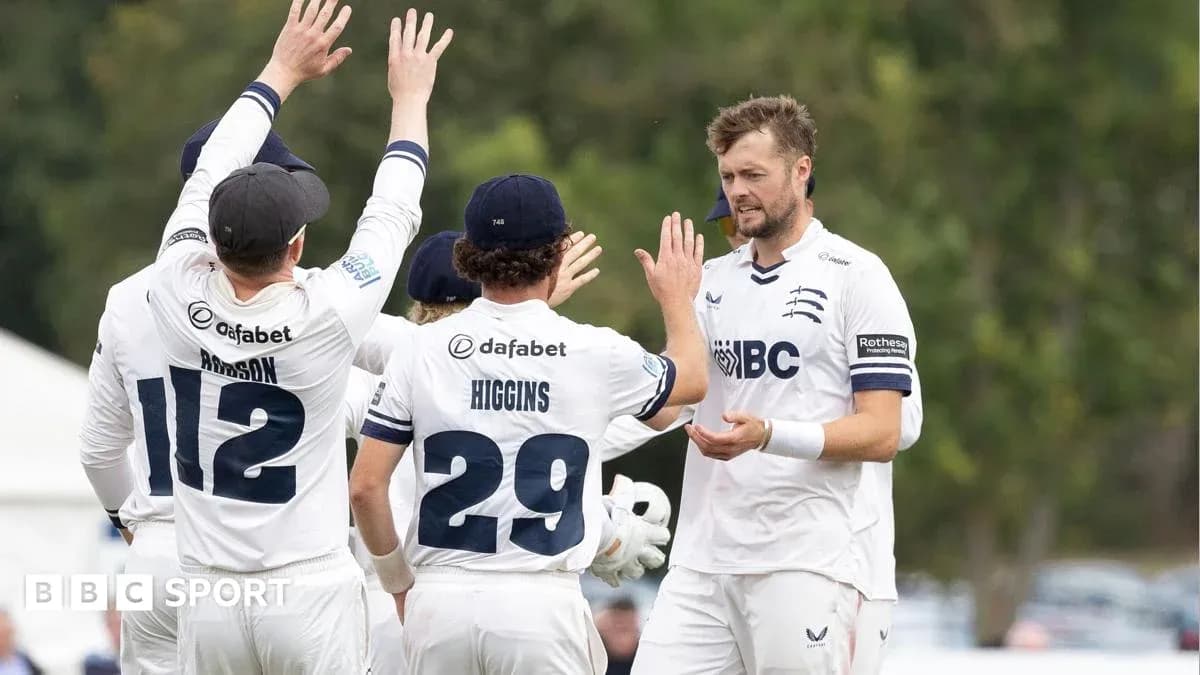
Ryan Higgins, dropped at slip on six, refused to go quietly. He drove with authority and even ramped Walkden over Matty Hurst’s head, improvising his way to a crucial 44. Toby Roland-Jones joined the counter-attack, thumping three boundaries straight back over the bowler, while Tom Helm launched the only six of the innings. It was lively, defiant stuff, but not enough to drag Middlesex to a batting point. They were bowled out for 247 on the stroke of lunch, Anderson, Balderson and Walkden sharing three wickets apiece.
Helm and Sharma turn the game
If Lancashire sensed an opening, Middlesex’s seamers slammed it shut.
Helm set the tone immediately. Keaton Jennings, so often the anchor, lasted just long enough to see his leg stump threatened and his pad struck. One. Gone. Harry Singh then received a brute: short of a length, leaping at him, edged behind. The scoreboard read 0 for one, then 10 for two, and suddenly the ball looked twice as big in Middlesex hands as it had in Lancashire’s.
Marcus Harris became the fifth lbw victim of the match, another trapped in front as Middlesex hunted relentlessly. When Naavya Sharma uprooted Rocky Flintoff’s off stump, Lancashire were 35-4 and wilting badly.
Sharma, already an England Lions seamer, bowled with a snarl and rhythm that will have caught plenty of eyes. He moved the ball late, hit the pitch hard, and looked every inch a man being groomed for bigger stages – perhaps even the role Anderson has occupied for a generation.
Lancashire needed resistance and found it in an unlikely opener. Hurst, not a natural at the top of the order, dug in. He survived an early appeal for a catch behind and a nasty blow on the helmet grille from a Helm bouncer, then began to stitch together something more substantial.
Arav Shetty gave him brief support, even lifting Helm over long leg and into the beer tent in the shot of the afternoon. The reprieve didn’t last; Helm hit back, finding the edge and sending Shetty on his way. Walkden, fresh from his morning exploits with the ball, added a crisp 28, peppered with boundaries and intent. But Sharma found movement again, straightening one to remove him and then producing another beauty to castle Hurst for 46, the innings’ top score.
From there, Balderson tried to coax what he could from the tail, but Helm and Higgins tidied up clinically. Lancashire were bowled out for 151, giving Middlesex a first-innings lead of 96 and control of a match that had looked precarious at lunchtime.
Holden’s late surge tightens the screw
Middlesex’s second innings began with a wobble. Sam Robson’s lean run stretched on when Tom Bailey uprooted his off stump. Hollman, their first-innings half-centurion, saw his stumps spreadeagled by Balderson. Two down, the lead not yet daunting, Lancashire sniffed an opening.
Max Holden slammed it shut.
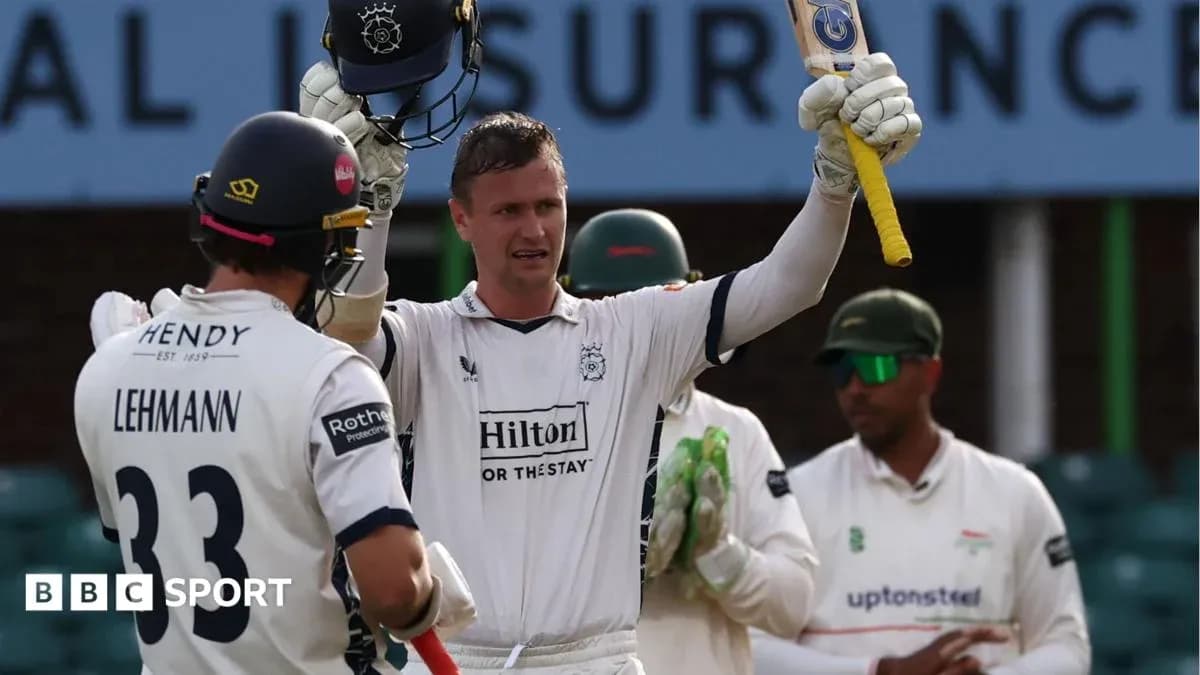
On a pair when he walked out, he batted as if affronted by the very idea of it. He went hard, scoring at better than a run a ball, turning a tricky little session into a statement. Drives flashed through the covers, anything short disappeared, and Lancashire’s seamers suddenly looked as weary as the fielders chasing leather towards the ropes.
By the final over of the day, Holden had raced to a thrilling fifty, raising his bat as the shadows stretched across the outfield. Middlesex closed on 116-2, their advantage swelling to 212 and the mood in the home dressing room transformed.
Two days remain, but the shape of this contest feels clear. Anderson has already shown he can still bend a game to his will. Sharma has hinted he might be the one to do it for the next decade. Somewhere between the old master and the rising pretender, this match will decide whether Lancashire can escape or Middlesex can drive home a win that would echo far beyond a quiet school ground in Northwood.