BRM P351: The Lost Le Mans Prototype Returns
British Racing Motors has always lived slightly out of step with time. Born in 1949 from the ambition of Raymond Mays and Peter Berthon, it became Britain’s first Formula 1 team, a standard-bearer long before the country’s modern giants took shape. By 1962, Graham Hill had carried BRM to both the Constructors’ and Drivers’ titles, proof that the small outfit from Lincolnshire could bully its way to the very top of world motorsport.
But BRM never wanted to be just a Formula 1 team. It wanted to build racing cars, full stop.
The Wild Child: P351
That instinct led it into endurance racing and rallying, and eventually to one of the most intriguing cul-de-sacs in prototype history: the BRM P351.
A one-off Group C sports prototype, the P351 was conceived as BRM’s ticket back to the global stage in 1992. The target was clear and unapologetic – the World Sportscar Championship and, towering above everything else, the 24 Hours of Le Mans.
On paper, it looked the part. A carbon-composite monocoque, a closed cockpit, and at its heart an in-house naturally aspirated 3.5‑litre V12. It was a proper BRM, right down to the engine note.
On track, it had flashes of menace. At Le Mans, before its race collapsed with transmission failure, the P351 hurled itself down the Mulsanne Straight at 216 mph (348 kph), running with the heavy hitters from Peugeot and Toyota. For a car built by a team trading on history rather than budget, that was no small statement.
The reliability, though, never matched the ambition. The car retired early, leaving only a handful of high-speed snapshots and a sense of what might have been. It later surfaced at Silverstone, but the project never truly settled into the rhythm of a full-blown endurance campaign.
Reinvented, Then Forgotten
The original concept didn’t last. As the 1990s rolled on, the car changed hands and changed identity. Out went the BRM V12 and the closed roof; in came a Nissan twin‑turbo V6 and an open cockpit. Fielded by Pacific Racing, the car re-emerged as the BRM P301, more a reworked survivor than a pure continuation of the original vision.
For many, that might have been the end of the story – a brave, slightly tragic footnote in the long, complicated history of British prototype racing.
It wasn’t.
Back Home, Back to 1992
Somehow, late in 2024, the original P351 found its way back into BRM’s hands. That alone felt improbable. What followed was even more so.
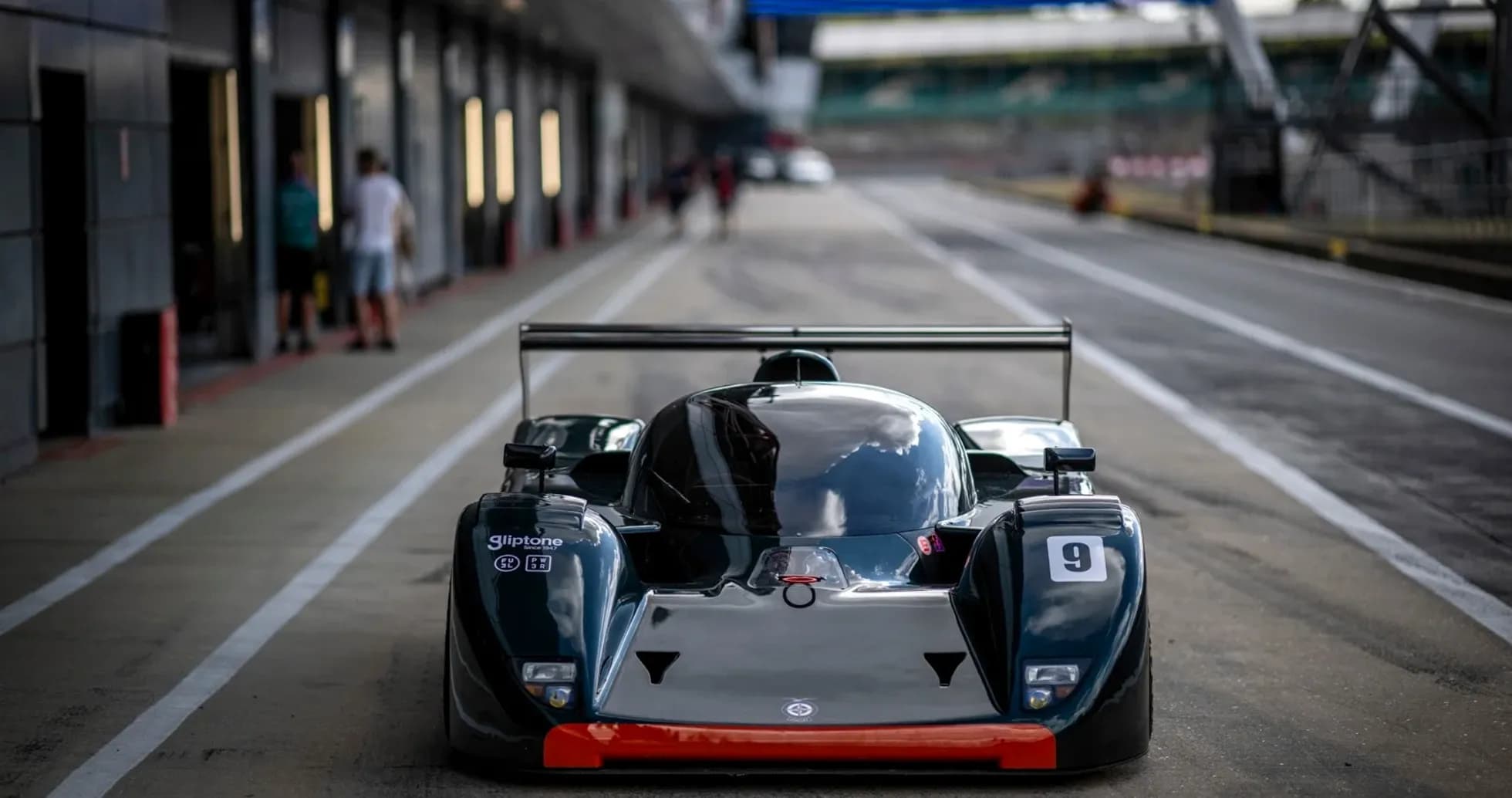
The team set about stripping away the compromises of its later life and rewinding the clock. The goal was not a sympathetic restoration but a full return to the car’s 1992 specification: carbon-composite monocoque, closed cockpit, BRM V12, the lot.
The engine and transmission were rebuilt from the ground up by Dawson Racing, returning the car to its native powerplant and layout. The V12 now runs on sustainable fuel, a neat collision of past and present – the same basic concept that thundered down the Mulsanne, reworked for a very different era of motorsport.
The roof, long since lost to the P301 conversion, posed a particular challenge. BRM leaned on surviving original paperwork and period photography, reverse‑engineering the closed cockpit to restore the car’s original silhouette. This wasn’t nostalgia sketched from memory; it was a forensic reconstruction.
A host of partners helped drag the car back from the margins of history. Motul, Goodyear, and SKF Automotive were among the companies that supported the project, adding modern expertise to an old-school racer.
Silverstone Return – and What Comes Next
This past weekend, at Silverstone, the revived BRM P351 stepped back into the light. Not as a museum piece, not as a static tribute, but as a racing car ready to run again.
The bodywork gleamed, the cockpit was closed once more, and beneath it all sat that rebuilt BRM V12 and transmission, now cleaner in its fuel but unchanged in intent. The car looked as though it had been plucked from the paddock of 1992 and dropped into the present day.
BRM has been clear: this is not a vanity project. The P351 is being prepared to go racing again, with competitive outings planned in yet‑to‑be‑named events. It will run on sustainable fuel, it will carry the same badge that once ruled Formula 1, and it will do so not as a retro parade act but as a working, fighting prototype.
Where it races, and who gets the privilege of wrestling that V12 around a circuit, remains to be confirmed. Those answers will shape the next chapter of a car that has already lived several lives.
For now, one thing is certain: a BRM prototype built to conquer Le Mans, robbed of its moment three decades ago, is no longer just a ghost in the record books. It’s back, it’s loud, and it’s heading for a grid again.