Charles Leclerc's Commitment to Ferrari: The Vasseur Influence
Charles Leclerc did not re-sign with Ferrari because of sentiment alone. He did it, he says, because of one man.
“I believe in Fred 200 per cent.”
In modern Formula 1, that is about as strong a statement as a driver will make about a team boss. For Leclerc, that faith in Ferrari Team Principal Fred Vasseur sat at the heart of his decision to commit his prime years to the Scuderia, even as his 2026 season lurched through one of its roughest patches.
A new deal in the middle of a storm
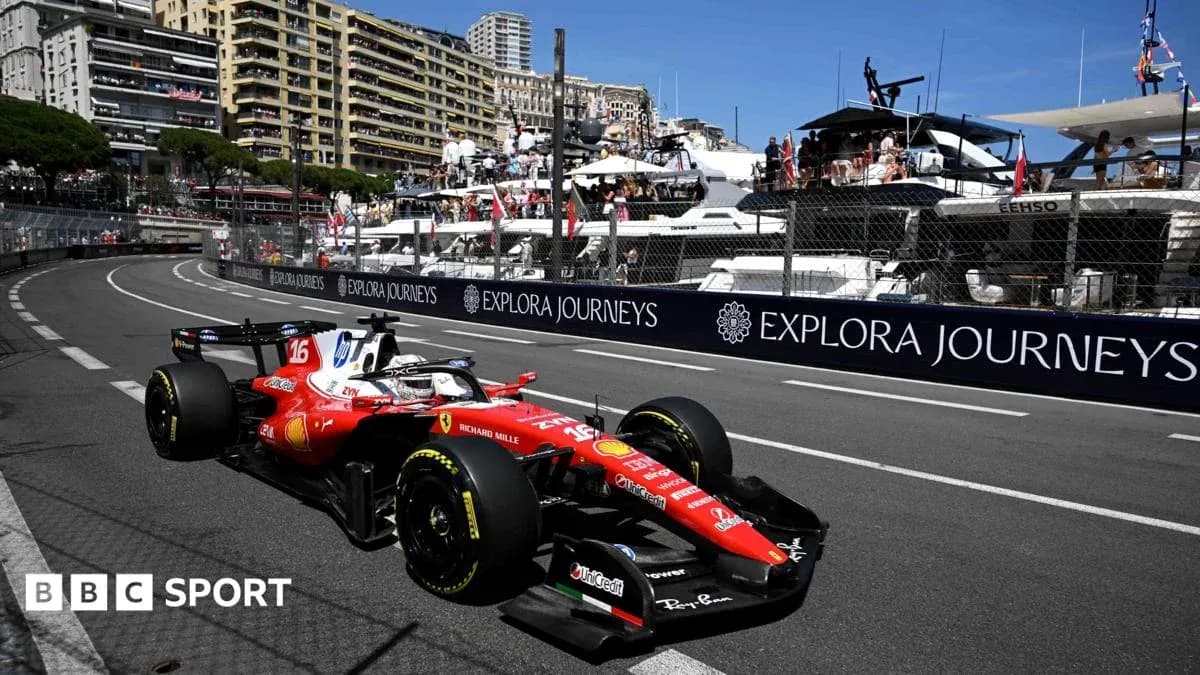
By the time Ferrari announced Leclerc’s new multi-year contract, the numbers on paper did not flatter him. Two DNFs and a lonely P8 across Monaco, Barcelona and Austria had stripped the early shine from his campaign. On the other side of the garage, Lewis Hamilton was collecting silverware: second in Canada, second in Monaco, then his first Ferrari victory in Barcelona.
Leclerc chose that moment to tie himself tighter to the red car.
“It just felt right,” he explained on the official F1 podcast Beyond The Grid. No grand theatre, no dramatic pause. Just a driver who insists he knows where he belongs.
He has been part of the Ferrari family for most of his professional life, first through the academy, then as a race driver since 2019. The bond runs deeper than a contract cycle.
“This is where I feel good. This is where I am the most motivated to do well, just because I love this team so much,” he said. The target has never changed: become World Champion with Ferrari, or keep trying until there is no more time to try.
Leclerc talks about “the project” as if it is something he can almost touch. He points to a team that has started to show more edge: aggressive production schedules, bold upgrades, a willingness to innovate rather than copy. Those details matter to a driver betting his career on a long-term climb back to the top.
They matter, but not as much as Vasseur.
The Vasseur factor
“Fred is a big reason why I have signed again as well,” Leclerc admitted. The phrase “200 per cent” was not a throwaway line. It came from a relationship that predates their current life at Ferrari.
They have known each other for years, long before Vasseur took over at Maranello. Leclerc describes a connection that clicked almost instantly, something rooted in shared values rather than job titles.
“It feels like I know Fred since forever,” he said. “From the very first talks, it felt like I've known him forever.”
This is not the usual corporate language of a driver talking about his boss. Leclerc frames it as a bond that goes beyond “work, business relationship”. In an era where drivers often talk about “projects” and “cycles”, he is betting on a person. Vasseur, in his eyes, is the anchor.
That sense of trust helps explain why a driver enduring a bruising run of results chose to commit, not hesitate.
Shadowed by Hamilton, searching for answers
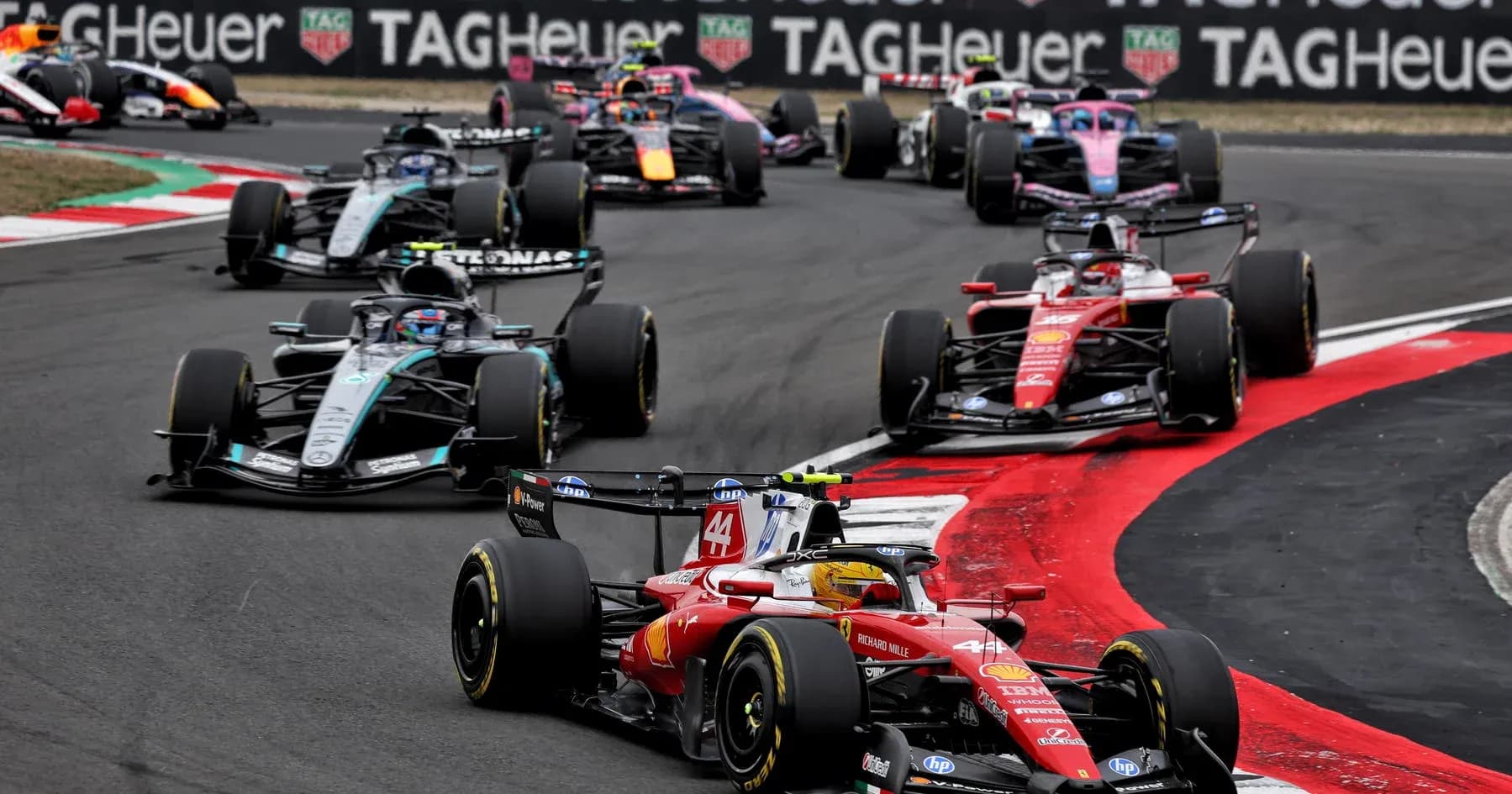
The contrast in form between the two Ferrari drivers in the first half of 2026 could not be ignored. Hamilton, the seven-time World Champion, adapted quickly and turned potential into points. Leclerc, in the same machinery, found himself scrapping in the midfield on days when the other car was fighting at the front.
In that environment, the temptation is obvious: copy the champion. Drive like Hamilton. Brake where he brakes. Turn in where he turns in.
Leclerc knows it does not work like that.
“It's not as easy as, ‘Oh, Lewis is doing that. I'll just do the same,’” he said. Hamilton’s style, he insists, is unique to Hamilton. “He's the best in the world for that particular driving style.”
So Leclerc went hunting in the data, not for a carbon copy of his team mate, but for ways to bend the Ferrari back towards his own strengths. He found areas that “were just not working” for him. From there, the work became more nuanced: tweak the car, refine his approach, chase a feeling rather than a number.
In F1, the data never tells the whole story. “It's not like you sit in front of your computer, look at the data and say, ‘Oh, this is one tenth and a half of a second. Let's change that.’ It's not as easy as that,” he explained. Performance, for him, lives in the space between intuition and telemetry.
The breakthrough came at Silverstone. Ferrari made changes that weekend; Leclerc responded with a victory. He calls it a step in the “right direction”, not a magic fix, but it gave him something more important than a trophy: confirmation that his instincts were not leading him astray.
Fighting the enemy in his own head
From there, Leclerc’s focus shifted to something more abstract: his own mind. The car, he says, is constantly evolving. The sweet spot he felt in Melbourne is gone; the machine he drives now is not the same one he raced in the early flyaways.
His solution is to stop chasing ghosts and stop thinking too much.
“When you overthink, you know that you are losing time on the table,” he said. In his view, the best laps come when a driver stops reacting and starts anticipating, when the car’s behaviour is so familiar that the brain does not need to process every micro-slide or snap.
“I think overthinking is killing performance,” he added. He talks about the “flow state” that elite athletes chase, that rare zone where the car, the track and the driver move as one. For Leclerc, 100 per cent of his potential only appears when that state takes over. The more he has to consciously manage the car, the further away it drifts.
So the task is clear: trust the work, trust the feel, and let instinct drive.
Chasing Mercedes, one upgrade at a time
Beyond the personal journey lies the brutal arithmetic of the championship. Ferrari sit second in the Constructors’ standings, but they trail Mercedes by 87 points. That gap is large enough to hurt, small enough to tease.
Leclerc refuses to waste energy on predictions. “Very difficult to predict,” is his verdict on whether Ferrari can catch the Silver Arrows. Not impossible. Not guaranteed. Just uncertain in a season where development can flip the grid in a month.
“This championship will be won with upgrades,” he said. Under these regulations, with cars running less downforce than in the past, every point of extra grip has a magnified effect. Add a little, feel a lot. Lose a little, and you slide down the order.
The pecking order, he knows, can swing quickly. One strong update can turn a chaser into a contender. One misstep can leave a team stranded.
So Leclerc has narrowed his focus. Race by race. Package by package. He refuses to stare at the long-term picture for too long, but he will not let go of the dream, either.
“The championship is something that I will dream of ticking off one day, particularly with the red team,” he said. It is not a new dream, just a sharper one. “I feel we are getting closer. When will that be? I don’t know, I hope as early as it can be.”
For now, he has his contract, his car, and his conviction that the man running Ferrari is worth 200 per cent of his faith.
The rest of the story will be written in tenths, upgrades and Sundays – and in whether that belief, in Vasseur and in himself, can finally carry the red car all the way to a title.