Duel Arena 1: Chaos and Controversy in Orlando
Duel Arena 1 arrived in Orlando promising a new twist on combat sports. What it delivered at the Kia Center was something far messier: a volatile cocktail of freak-show promotion, genuine violence, and a main event that turned into a nightmare for hometown favorite Mike Perry.
Backed by an online sportsbook and streamed for free on YouTube after an initial pay-per-view plan was scrapped, the debut show mixed MMA, boxing and kickboxing in a single ring. It also leaned hard into outrage as a marketing tool, from its social media taunts to its choice of guests and personalities. The fights, when they finally cut through the noise, told their own wild stories.
Perry’s Night Unravels Against Late-Notice Jenkins
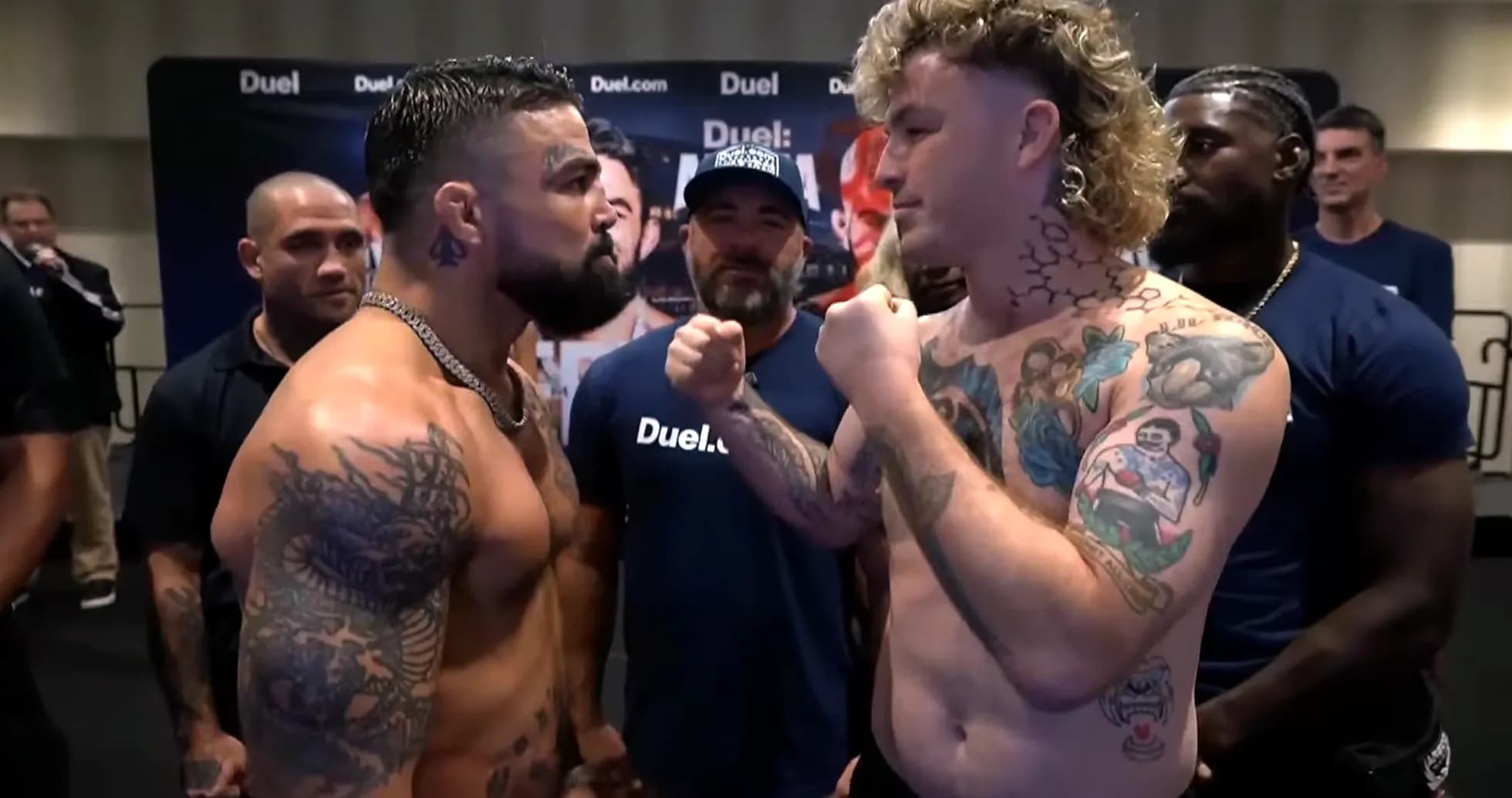
This was meant to be Mike Perry’s coronation. Dillon Danis pulled out on late notice, and Perry, the self-styled “King of Violence” of BKFC fame, vowed that replacement opponent Brandon Jenkins had signed his own “death certificate” by stepping in on a day’s notice.
Instead, Jenkins walked into Perry’s backyard and tore up the script.
From the opening exchanges of their welterweight MMA headliner, Jenkins refused to play the role of sacrificial lamb. He pushed the pace, traded with Perry and refused to back down in front of a crowd that had clearly come to see the former UFC welterweight dish out punishment, not absorb it.
Then disaster struck for the hometown star. Perry appeared to dislocate his left shoulder mid-fight. Jenkins didn’t blink. He did exactly what a short-notice underdog has to do in that moment: he pressed harder. With Perry compromised and struggling, Jenkins poured on the pressure and ultimately smashed his way to a brutal finish, leaving the “King of Violence” flat and injured on home canvas.
The broadcast booth spent much of the aftermath framing the result around Perry’s injury, almost as if the fight hadn’t really happened. The damage on the tape said otherwise. Jenkins had already shown plenty before the shoulder went, and he deserved far more credit than he got for accepting the bout on a day’s notice and then closing the show with authority.
Perry, for all his toughness in taking the fight, blew a golden chance in front of his own fans. He left the ring beaten, hurt, and upstaged by the man who was never supposed to win.
Manuwa Turns Back the Clock, Stops Sherman
If Perry’s night was about collapse, Jimi Manuwa’s was about resurrection.
Seven years removed from his last professional bout, the 46-year-old former UFC light heavyweight stepped into a heavyweight boxing match with ex-UFC big man Chase Sherman. On paper, the size and recent activity favored Sherman. Early on, it looked that way in reality, too.
Sherman dropped Manuwa in the opening round, a reminder of the power difference when a natural heavyweight connects clean. But the veteran Brit refused to fold. In the second round, Manuwa flipped the momentum and started landing with real spite, his hands suddenly sharp and accurate.
The pressure told. Manuwa lit Sherman up and forced a second-round stoppage, capping a remarkable return to combat sports for a fighter many assumed was long finished.
Rowe Grinds Out Boxing Win, Eyes UFC Return
Phil Rowe’s appearance on the card came with less spectacle and more quiet ambition.
The former UFC welterweight outworked Javanis Ross over four rounds in a super welterweight boxing match, doing enough to sweep one judge’s scorecard and take two rounds on the other two. It was workmanlike rather than spectacular, but it was a win, and for Rowe, that mattered.
Afterward, he made his intentions clear: he wants the UFC to remember his name. Rowe once put together a three-fight winning streak in the promotion, only to squander goodwill by missing weight in two of those victories. A rough stretch followed, with four losses in five fights and an eventual release.
Now he has a recent MMA win and this boxing result to point to. History says stranger résumés have led to second chances in the UFC. Rowe is banking on that.
Clark’s DQ Caps a Personal and Professional Spiral
The night’s most uncomfortable storyline surrounded Patrick Clark Jr., the disgraced former WWE performer once known as Velveteen Dream.
Clark arrived at Duel Arena 1 already under a heavy cloud. Allegations of sending lewd images to minors and grooming behavior, which he has publicly denied while later apologizing for “people he’s hurt,” effectively ended his WWE run. Duel Arena offered him a combat sports lifeline of sorts, matching him with Ryan Pownall, a podcast host who made it clear he had no intention of letting Clark’s past slide quietly into the background.
At the pre-fight press conference, Pownall repeatedly labeled Clark a “pedophile,” triggering a visible meltdown from the ex-wrestler. The hostility carried into fight week and into the ring. Clark’s performance then descended into farce, ultimately ending in a disqualification after he repeatedly made a mockery of the contest.
For Clark, it was another public unraveling. For Pownall and the promotion, it was a spectacle they had aggressively courted.
Cunningham’s Spinning Elbow Steals the Early Show
Before the main card chaos, AJ Cunningham delivered the purest highlight of the night.
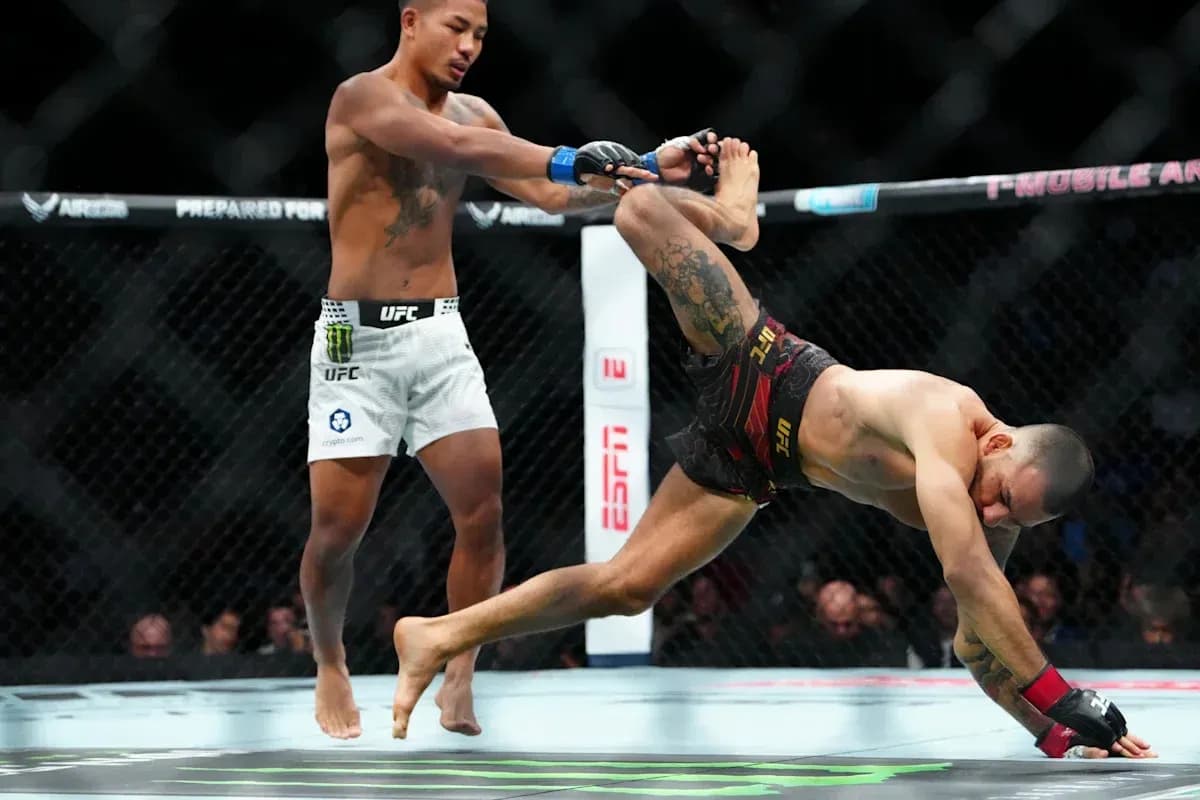
The lightweight, cornered by Jake Shields, uncorked a spinning back elbow that knocked out Joe Penafiel in brutal fashion on the preliminary card. It was the kind of finish that would headline any sizzle reel: clean, sudden, and emphatic.
Cunningham had not won a fight in nearly three years. A former DWCS loser who still found his way into the UFC briefly, he went 0-2 there before being released. His reputation outside the cage, including being labeled a nazi sympathizer and widely regarded as one of the sport’s most controversial figures, hung heavily over the performance.
Yet in the ring, on this night, the elbow was undeniable. The irony? A knockout like that came on a card where he was effectively the opener for a magician versus a juggler.
Spectacle, Stunts and the Edges of Taste
Duel Arena 1 never tried to hide what it was selling.
The promotion’s official social media accounts leaned into hostility from the outset. When Dillon Danis withdrew from his bout with Perry, they didn’t just move on; they fired off slurs in his direction and then hired his mother, Nikki Carpiniello, as a special ring card girl. They promoted her with a suggestive image, clearly designed to troll Danis as much as to sell the show.
The card itself flirted constantly with absurdity. A 4-foot-6 influencer boxed the 5-foot-6 owner of Duel.com in the opening bout, which the owner lost on the cards. At one point, the broadcast filled time by sending a backstage interviewer into the ring to explain what a boxing ring looks like, as if the audience had never seen one before. The big reveal? The canvas had the Duel Arena logo on it.
There was a magician vs. a juggler. There was the so-called King of Ass Magic, complete with a ridiculous hat, beating that juggler in a bout that felt ripped from late-night parody rather than a legitimate fight card. Even then, the production couldn’t get his name right on the graphic.
The broadcast veered off into chatter about conspiracy theories and where Bryce Mitchell fits into that universe. A “special guest” teased by the promotion was flagged as an outwardly racist online figure, part of an apparent anti-woke, shock-value marketing strategy.
The production team, at least, drew some early praise for its polish. Visually, the show hit the marks. It was what surrounded the fights that often felt like a deliberate provocation.
A Debut That Refuses to Blend In
When the dust settled in Orlando, Duel Arena 1 had achieved one thing beyond doubt: it made itself impossible to ignore.
Perry’s injury and brutal loss to late-replacement Brandon Jenkins will linger as the night’s defining sporting image. Manuwa’s comeback knockout, Rowe’s quiet push for a UFC return, Cunningham’s spinning elbow and Clark’s disqualification filled out a card that oscillated wildly between genuine competition and manufactured circus.
The question now is not whether Duel Arena can draw attention. It can. The question is how long a promotion can lean on outrage, insult and sideshow acts before the audience decides whether it’s in on the joke – or simply tired of being one.