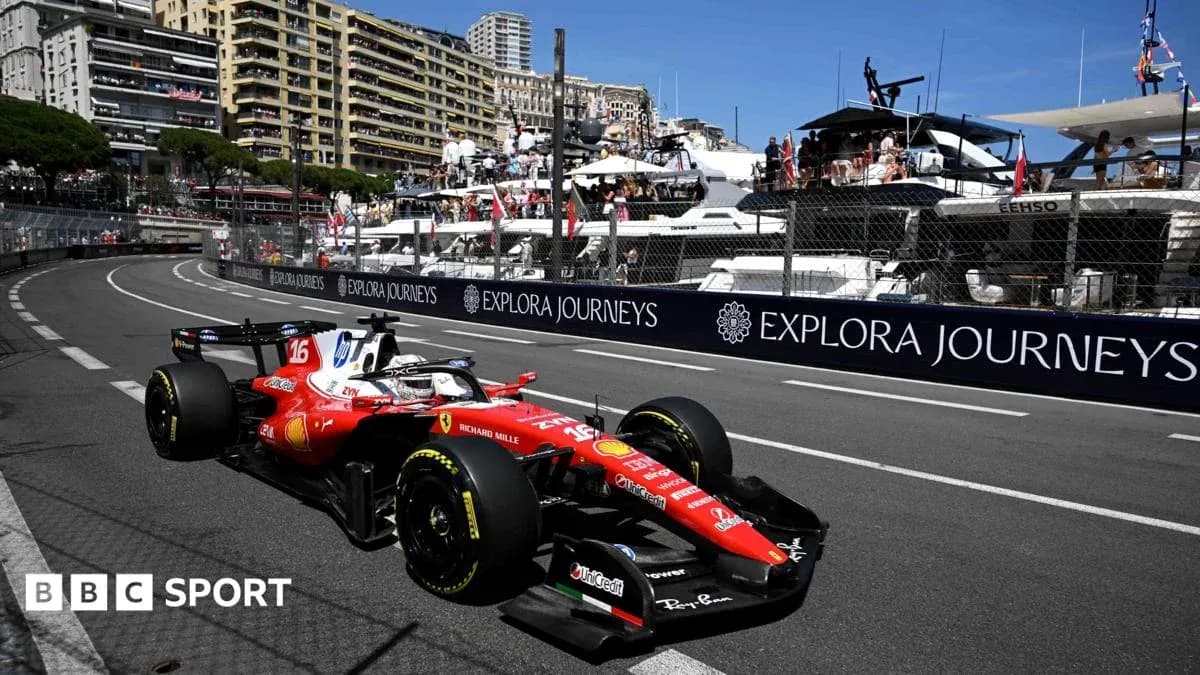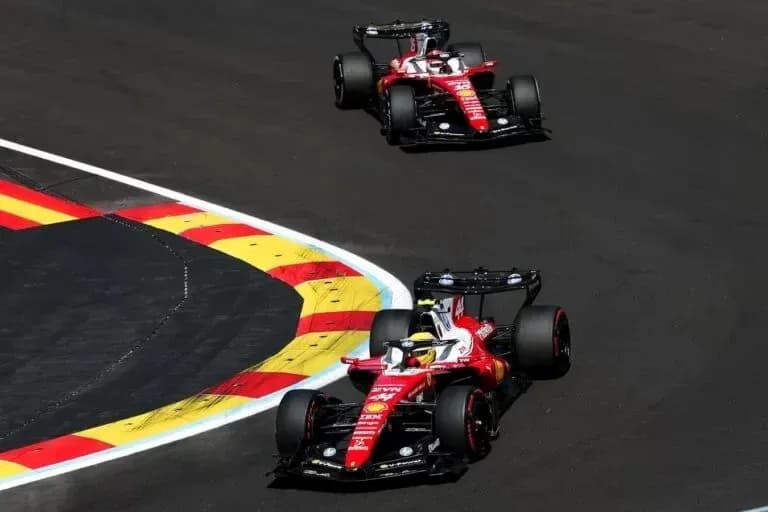
Ferrari's Challenges at the Spanish Grand Prix: Brake Issues and Strategy
Ferrari wrestled with a brake drama on Lap 1 and a tyre mystery late on, yet walked away from the Spanish Grand Prix insisting the real problem lies elsewhere: Saturdays, not Sundays.
Hamilton’s Ferrari Hit By Early Brake Scare
Lewis Hamilton’s first race in Ferrari red at Madrid barely had time to settle before alarms rang on the pit wall.
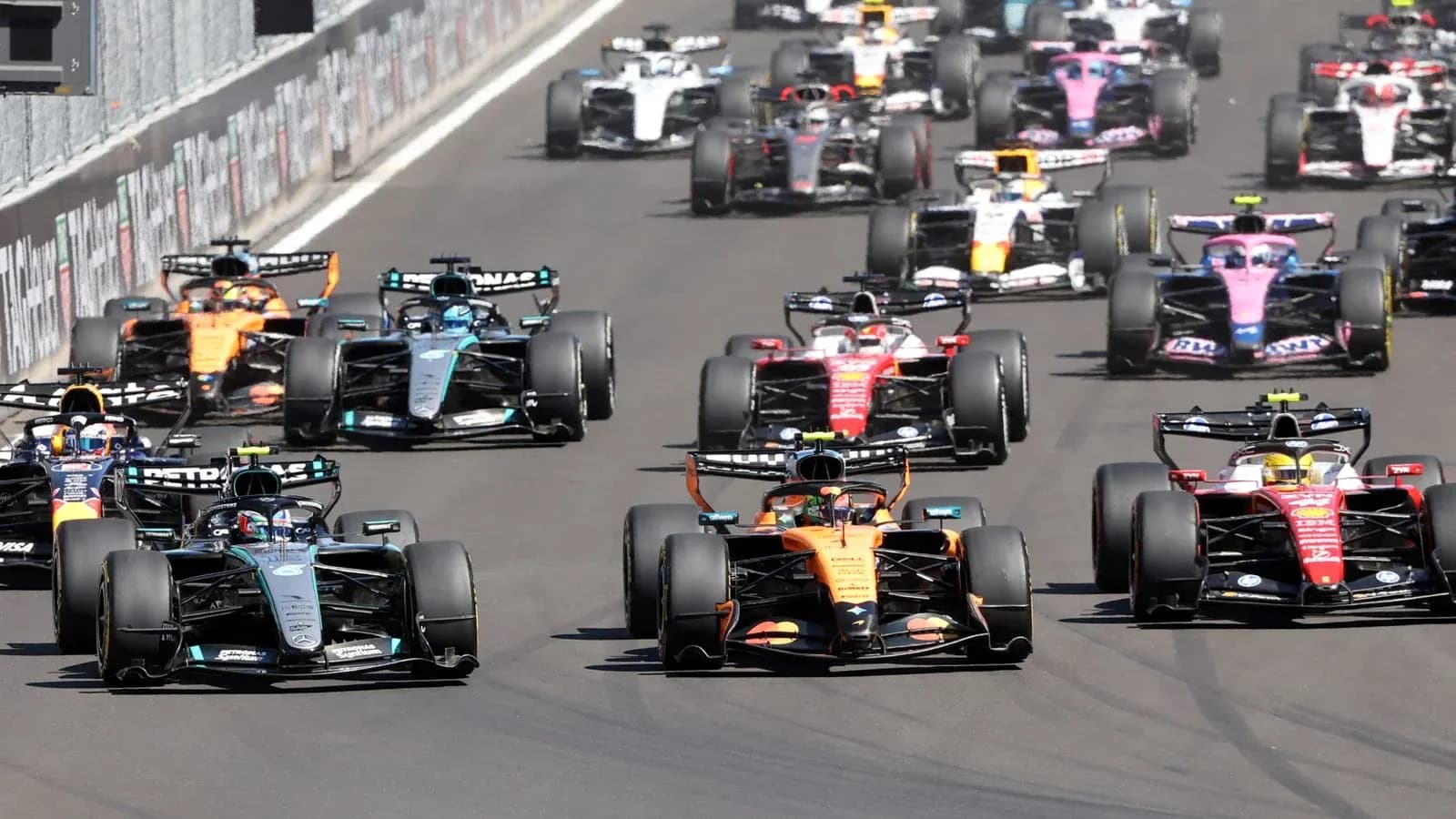
Off the line, chaos. Max Verstappen cut the corner on Lap 1 to hold track position, sparking a debate at Red Bull about whether to hand the place back to Andrea Kimi Antonelli and Hamilton. While that unfolded, Hamilton had his own fight – not with a rival, but with the brake pedal.
The pedal went long. Confidence vanished.
Verstappen slowed to give the position back, which bunched the pack and delayed him further, but Hamilton’s issue opened the door immediately. The Red Bull swept back past the Ferrari as the seven-time champion wrestled with a car he couldn’t fully trust.
From the pit wall, Frederic Vasseur and his engineers tried to fix it remotely.
“Yes, the pedal was long, but we tried to fix it from the pit wall, it came back, and once again,” Vasseur explained after the race. The team believed they’d stabilised the situation when Hamilton continued for another lap, only for the problem to reappear almost immediately.
On a high-speed circuit with heavy braking zones, Ferrari refused to gamble.
“I think in this kind of track, we also don't want to take any risk, and it was, we are on Lap 1, it was still 56 to go,” Vasseur said. “The first time that happened was Lap 2, and it was too risky to go to the next lap. It would have made no sense, to take a crazy risk.”
Hamilton’s race unravelled early, but Ferrari were adamant: this was a safety call, not a performance one.
Leclerc Stretches the Hard Tyre – And the Strategy
Once Hamilton’s troubles were parked, attention moved to the other side of the garage.
Charles Leclerc’s race hinged on the early Virtual Safety Car. Ferrari kept him out on the hard compound and stretched the stint deep into the afternoon, running 49 laps on the tyre as they waited for a twist: a full Safety Car, or even a red flag.
It never came.
Leclerc eventually had to pit without the race-neutralising lifeline they were banking on, but Vasseur remained bullish about the raw pace of the SF-24.
“The race was more than good, we did a stint of 49 laps, 49 I think, with the hard and the pace was still there,” he said. Ferrari had split strategies, as many teams did, with one car on softer rubber and the other on the hard to cover every scenario.
Leclerc led the group of hard-tyre runners. Vasseur was clear: a different twist of fate, and the result would have looked very different.
“He was leading the group of hard, and I think with the second incident, the red flag, it was the win. With a safety car, he would have been P2, P3, nothing like P4, but it's more a strategy than something else.”
For the team boss, Sunday underlined a familiar theme. The car behaves when it matters least for grid position.
“On his side, the pace was good, it's the only thing that we can do on Sunday. Honestly, if we miss something, it's more qualifying, or perhaps a little bit in Monza, or yesterday,” Vasseur added. “But today, I think we did what we have to do, but we took the risk that we have to take, and the pace is the pace that we need to have.”
Race craft? Solid. Strategy? Defensible. The weak link, again, is the starting point.
A Soft-Tyre Mystery Stops Leclerc’s Late Charge
The story of Leclerc’s afternoon should have been a relentless chase on fresh softs. It wasn’t.
He had managed the hard compound well, with strong pace and clean execution. When the Ferrari finally switched to the softest tyre late in the Grand Prix, the expectation was simple: attack Lando Norris, close the gap, and see what pressure might do.
The attack never really came.
“Yeah, I mean obviously Bryan [race engineer] and I didn't speak too much during the race because on a track like this I just wanted to have as little communication as possible,” Leclerc said. At one stage he even had to ask what he was actually fighting for, such was the tunnel vision inside the cockpit.
“But yeah, at the end of the day I think the pace was quite strong on the hard, on the soft at the end I couldn't really push for other reasons, but the hard stint was a good one,” he explained.
The “other reasons” became the most intriguing line of his day.
Pressed on what stopped him unleashing the soft tyre, Leclerc smiled – and closed the door.
When asked to share the details, he replied: “No, not really, no I can't, but it's fine, I mean it will be fine for the next race.”
The issue, whatever its nature, clearly limited his final stint, yet he backed the team’s overall approach. From his point of view, Ferrari had played the hand they were dealt as well as they could.
“Eventually where we are paying the price, it's our qualifying pace, because when you are starting further away then you get to the race and it's very difficult to make up those positions,” he said.
The message was consistent with Vasseur’s: the car on Sunday is not the problem. The grid slot is.
Hamilton Cleared of Holding Leclerc Up
One lingering question in the paddock was whether Hamilton’s early brake issues had compromised Leclerc’s race by backing him into traffic.
Leclerc dismissed that theory instantly.
No, I mean he did it very, very quickly obviously,” he said. Hamilton, dealing with the brake problem, cut corners as he wrestled the car, but he didn’t become an obstacle.
“I wasn't losing so much time because obviously with the brake problems he was kind of cutting the corners, so he didn't hold me up and wouldn't have changed anything in my race.”
No blame, no frustration. Just another variable in a race that never quite tilted Ferrari’s way.
The pattern, though, is becoming hard to ignore. Ferrari’s Sundays keep showing flashes of a team ready to fight at the front. Their Saturdays keep dragging them back into the pack.
If they unlock that one-lap pace, how different does a race like Spain start to look?