Gable Steveson's Stunning Knockout Loss at UFC 331
Gable Steveson walked into UFC 331 as a can’t-miss phenomenon. He walked out in silence, his aura shattered in 12 brutal seconds.
The Olympic gold medalist, billed as the next unstoppable heavyweight force, was knocked out cold by Sean Sharaf in one of the biggest upsets the UFC has ever seen. Steveson closed as a massive -2400 favorite in Los Angeles, the kind of line reserved for mismatches, not landmines.
It took one exchange to prove the odds meant nothing.
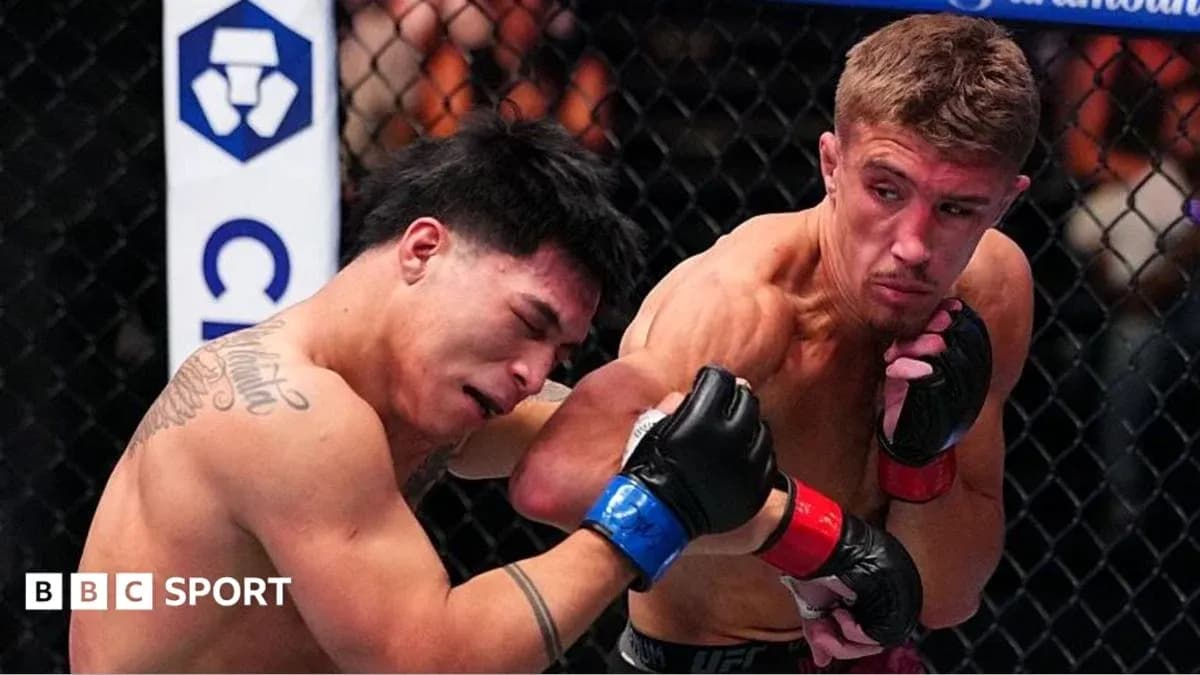
Sharaf, calm and loose, met Steveson in the center. As Steveson moved in, Sharaf launched a sharp counter left hand that detonated clean. Steveson collapsed, unconscious, the roar of expectation replaced by a stunned hush. Twelve seconds. Hype to heartbreak in less time than a deep breath.
The night only grew harsher for Steveson once the fight was over.
Instead of remaining in the cage for the official decision, he turned and walked out, heading to the back before Bruce Buffer could even read Sharaf’s name. For many watching — fans and fighters alike — that choice landed almost as badly as the punch itself. Respect for the sport, for the opponent, for the moment: all of it was suddenly in question.
Daniel Cormier, himself an Olympic wrestler who endured public defeats and title losses, publicly blasted Steveson’s exit. Others from past and present UFC eras joined in, criticizing how the 24-year-old handled his first taste of real MMA adversity.
On Sunday, his manager stepped in.
Abe Kawa took to Instagram with a message that tried to pull the story away from humiliation and toward perspective. He placed Steveson’s loss in a lineage of champions who were forced to learn the hard way.
“It’s OK that Gable got caught,” Kawa wrote. “It’s OK that he was booed. It’s OK his opponent talked shit. It’s OK that the world is kicking him when down. It’s the life he chose. Islam got clipped. Arman has lost. DJ has lost. GSP lost. DC lost. Jose Aldo lost. All went on to have absolutely legendary careers. We stand by our guy. He will be back real soon, and he will be great!”
The names he invoked were deliberate. Islam Makhachev, Arman Tsarukyan, Demetrious Johnson, Georges St-Pierre, Daniel Cormier, Jose Aldo — all champions, all beaten, all forced to rebuild. The message was clear: one savage knockout does not decide a career, even if it feels that way in the moment.
What it does decide is character.
Steveson’s talent is not in doubt. His wrestling credentials are as good as anyone who has ever crossed over into MMA. But raw ability doesn’t shield anyone from the realities of four-ounce gloves and a sport that punishes even the slightest miscalculation. Especially at heavyweight, where one clean counter can turn a sure thing into a cautionary tale.
While Steveson retreated, Sharaf stepped into the spotlight he had just seized with both hands.
For his 12 seconds of perfection, he walked away with $100,000 in bonuses, the kind of life-changing money that can flip an entire career trajectory. One punch, one night, and he goes from undercard anonymity to the man who produced one of the great shocks in UFC history.
Steveson, by contrast, now faces a very different kind of test. The physical recovery from a knockout is one thing. The mental recovery from being violently humbled on a global stage, then hammered again by public criticism, is something else entirely.
His manager insists this is just a bump in the road. The sport will decide whether it’s a bump, a turning point, or the moment that defines him. The next time Steveson walks toward the octagon, the question will not be about his ceiling.
It will be about his response.