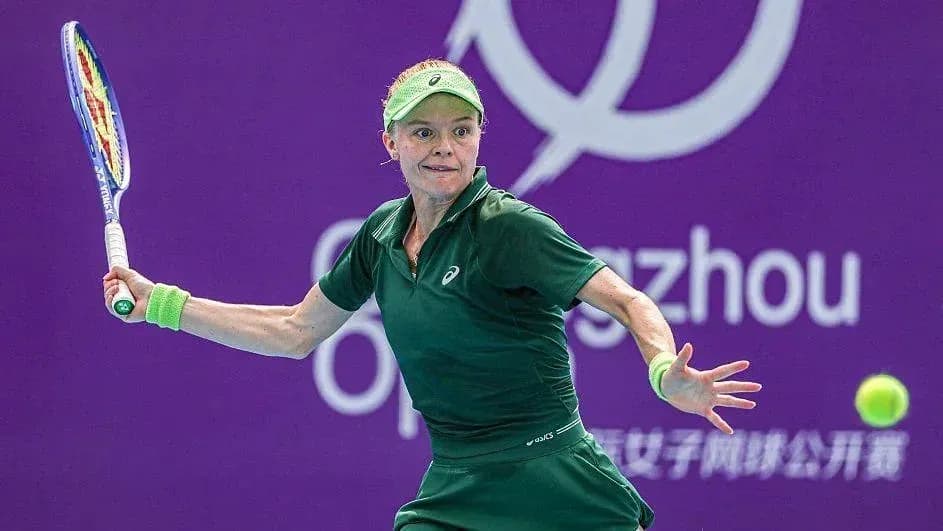
Harriet Dart Reaches First WTA Tour Final in Guangzhou
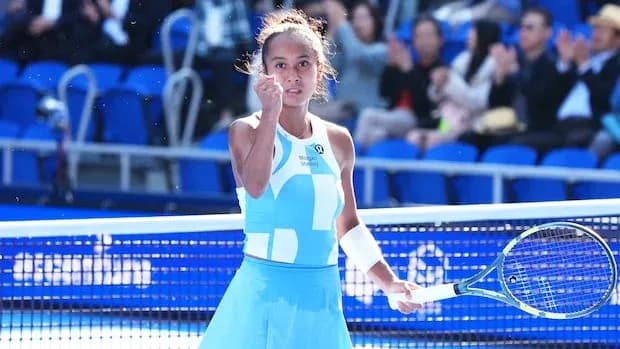
Harriet Dart wiped away tears in Guangzhou, not from exhaustion, but from the realisation that a career-long chase had finally brought her to a first WTA Tour singles final.
“It’s been a really long journey. I’ve wanted it so much, so badly – sometimes too much. To finally be here means the world,” she said, voice cracking, after a 5-7 7-6 (7-1) 6-0 comeback win over Chinese wildcard Sun Xinran that lasted just under two and a half hours.
This was not a smooth ascent. It was a scrap, a test of nerve and resolve, and ultimately a statement from a 30-year-old qualifier who has refused to let the sport move on without her.
A rollercoaster start
Dart, the British number five, walked on court chasing a first tour-level final in what was only her second semi-final, following her last-four run at the 2024 Transylvania Open. Across the net stood a 16-year-old home hope, the reigning US Open junior champion, riding a wave of local expectation.
The opening games belonged to Sun. Dart double-faulted on break point in her first service game, gifting the teenager an early lead, and soon trailed 3-0. Her frustration showed. The timing was off, the arm tight, the scoreboard unforgiving.
Then she reset.
From the baseline, Dart began to dictate, stepping into rallies, taking the ball early and stringing together four straight games to turn 1-4 into 5-4. She earned the right to serve for the set. That’s when the doubts crept back in.
Two more double faults at 5-4 derailed the surge. The racket swing slowed, the shoulders tightened. Sun needed no second invitation. She held to 15, broke Dart for a third time, and snatched the opener 7-5, a reminder that teenage fearlessness can be ruthless.
Hanging on by a thread
The second set became a tug of war.
Dart broke in the first game. Sun broke straight back. Dart surged again to break in the fifth game. Sun replied immediately. Each time the Briton edged ahead, a loose service game dragged her back into the mire.
The tension spilled beyond the rallies. Dart repeatedly complained to the chair umpire about the noise from the crowd, visibly irritated as the home support roared Sun on. The atmosphere crackled. So did the pressure.
Twice Dart had to serve to stay in the match. Twice she held, clinging on with a mixture of stubborn defence and bold first strikes. This was the phase she later called a “rollercoaster”, when “more nerves and more feelings come out” and she admitted she was “really battling with myself”.
The tie-break blew that tension apart.
Dart came out swinging and never let up, racing through it 7-1. The forehand bit, the return found its mark, and for the first time all afternoon, the crowd fell quiet. The match, and the mood, had turned.
“I’m proud of the second set and was able to turn it quickly,” she said. It sounded understated for what was, in truth, a psychological heist.
Total control in the decider
Once level, Dart didn’t just edge away. She ran.
Sun, who had matched her from the back of the court for two sets, began to struggle both emotionally and physically. The teenager took a medical timeout for treatment on her left leg, her movement visibly hampered as the decider unfolded.
Dart sensed it and showed no mercy.
She tore through the third set 6-0, winning 28 of the 41 points. The serve, so fragile early on, held firm. The groundstrokes pinned Sun behind the baseline. What had been a knife-edge contest turned into a procession.
There was no drop in intensity, no lapse in focus. A player who once let chances slip now closed with authority.
A career milestone within reach
This run in Guangzhou has already transformed Dart’s ranking picture. Starting the week outside the top 100, she has climbed 14 places to 101st in the live standings. One more win on Sunday, against fourth seed Lilli Tagger or Kaitlin Quevedo, will haul her back into the top 100 and deliver the title that has eluded her since she made her WTA Tour debut in Eastbourne in 2015.
For nearly a decade, Dart has lived on the margins of the main tour – qualifying draws, long-haul flights, early exits, the constant grind. Now, at 30, she stands one match away from a WTA trophy and a ranking that reflects her persistence.
The journey has been long. The breakthrough, at last, is here. The only question left is whether she can turn the biggest opportunity of her career into the defining win of it.