India Dominates Sri Lanka to Secure Fourth Women’s T20 Asia Cup Title
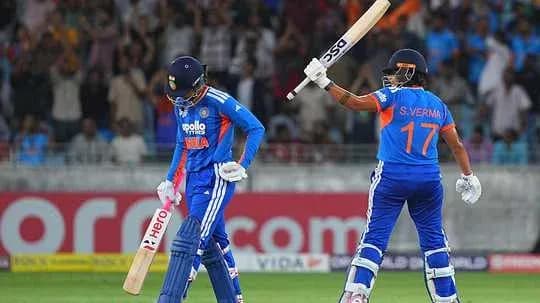
Smriti Mandhana and Shafali Verma did not just set up a final. They ended it inside an hour.
On a humid Sunday that belonged to their bats, India’s openers ripped the contest away from Sri Lanka and handed their side a fourth Women’s T20 Asia Cup title with a commanding 72‑run victory. The margin was brutal. The manner, even more so.
Verma lights the fuse, Mandhana holds the stage
Shafali Verma did not arrive with fireworks. She started with touch.
Two gentle deflections off Mithali Ayodhya – one guided past gully, another nudged to midwicket – raced to the fence and told Sri Lanka this would not be a nervy final. They were India’s first warnings.
Then came the real damage.
Against Chamari Athapaththu, Verma suddenly opened her shoulders. Two sixes in four balls, clean and ruthless, sent the ball soaring and the tone of the afternoon with it. The early caution vanished. The field spread. India’s intent did not.
Mandhana, who had kicked off the innings with a boundary first ball, slipped into a different gear. She left the violence to her partner, threading singles and doubles, almost invisible in her control. While Verma tore into anything loose, Mandhana turned the strike over and quietly built a platform that grew into a mountain.
The acceleration was staggering. Verma, having eased her way in, exploded to the fastest fifty in Women’s T20 Asia Cup history, reaching the mark in 24 balls – one delivery quicker than Mandhana’s own record from 2022. It was her third half-century of the tournament and easily the most emphatic.
Chamudi Praboda bore the brunt as Verma cashed in on every error in length, peeling off back‑to‑back fours and keeping India’s run rate in the stratosphere. By the eighth over, her fifty was done. By the 12th, India were cruising at 120 for no loss. The final was slipping beyond Sri Lanka’s reach, almost in silence.
Together, Mandhana and Verma climbed into the record books again, drawing level with the world record for the most 100‑plus stands for any wicket in women’s T20Is – six. This one felt like the most ruthless of the lot.
A wobble, but the damage is done
Sri Lanka needed a break, any break. It finally came.
Verma fell in the 13th over, a dismissal that gave Athapaththu’s side a sliver of daylight and a reason to gather in a huddle that had felt more like a formality until then. The pressure told again almost immediately, but this time it was India who blinked.
Harmanpreet Kaur and Mandhana collided in thought if not in body, a dreadful mix‑up leaving Mandhana run out and visibly frustrated. From 120 for 0, India suddenly looked human. The middle order went hunting for the boundary and found trouble instead, wickets tumbling as the run rate slowed and the innings lost its earlier fluency.
Yet the foundation had been too strong, the early overs too brutal. Even as the middle order perished in the pursuit of late acceleration, India still surged past 180. G Kamalini, brought in for Pratika Rawal, supplied the final flourish with a six off the last ball, a sting in the tail that underlined the gulf between the sides.
For Sri Lanka, the scoreboard already felt heavy. History made it heavier.
Sri Lanka’s chase unravels
Only once before had a team chased down more than 150 in a Women’s T20 Asia Cup match. Sri Lanka had done it, against India, in the 2024 final. That memory offered a thin thread of hope.
Four balls into the chase, Kranti Gaud snapped it.
Imesha Dulani tried to repeat the lap shot with which she had opened the innings. The first had worked. The second sent her stumps flying. Gaud roared, the send‑off raw and charged, and India’s fielders rushed in. Sri Lanka’s task, already steep, now looked close to impossible.
The next three overs went quiet. Sri Lanka retreated, regrouped, and for a brief stretch, resisted. Athapaththu, the one batter who could realistically bend this chase to her will, chose her moment to counter‑attack. She slog‑swept Verma for six and plundered 12 from the part‑timer’s first over, a reminder that she would not go quietly.
Vishmi Gunaratne joined her in steadying the innings. Together they pushed Sri Lanka past 50 without further loss, nudging India back into thought rather than celebration. Athapaththu then targeted Prema Rawat, taking 11 off the over with a six and a four in consecutive balls. For a handful of overs, the chase flickered with possibility.
Then Deepti Sharma stepped in.
Deepti turns the screw, Charani finishes the job
Deepti’s second over changed everything. Athapaththu charged down, looking to dominate again, and lost her shape. The ball spun, the feet didn’t quite get there, and the stumping was clinical. Sri Lanka’s captain walked off. With her, most of the chase went too.
Three balls later, Gunaratne’s off stump was pegged back. Two set batters gone in one over. Sri Lanka, from simmering hope, plunged into crisis.
The collapse did not stop there. Shree Charani, enjoying a stellar 2026, took over the dismantling. She sliced through the middle order with precision, hitting hard lengths, attacking the stumps, and refusing to let any partnership breathe. Every over felt like a question Sri Lanka could not answer.
Beyond the top three, only Nilakshika Silva managed to reach double figures. The rest came and went, prodding, swiping, misreading, as the innings withered. The required rate ballooned. The belief evaporated. The scoreboard crawled and then stalled.
Sri Lanka were bowled out for 111. The contest had long since gone; the formalities finally caught up.
A statement win
The 72‑run victory stands as the second‑biggest margin in the final of a five‑plus team Women’s T20I tournament, behind only Australia’s 85‑run hammering of India in the 2020 T20 World Cup final at the MCG. It is not just another trophy for India. It is a marker.
They arrived at this Asia Cup as the strongest side in the field and left no room for debate. From Verma’s record‑breaking assault to Mandhana’s measured control, from Deepti’s turning point over to Charani’s ruthless clean‑up, this was a champion team playing like one.
Four titles now. The question is no longer whether India rule this tournament.
It is how long anyone else can live with them.