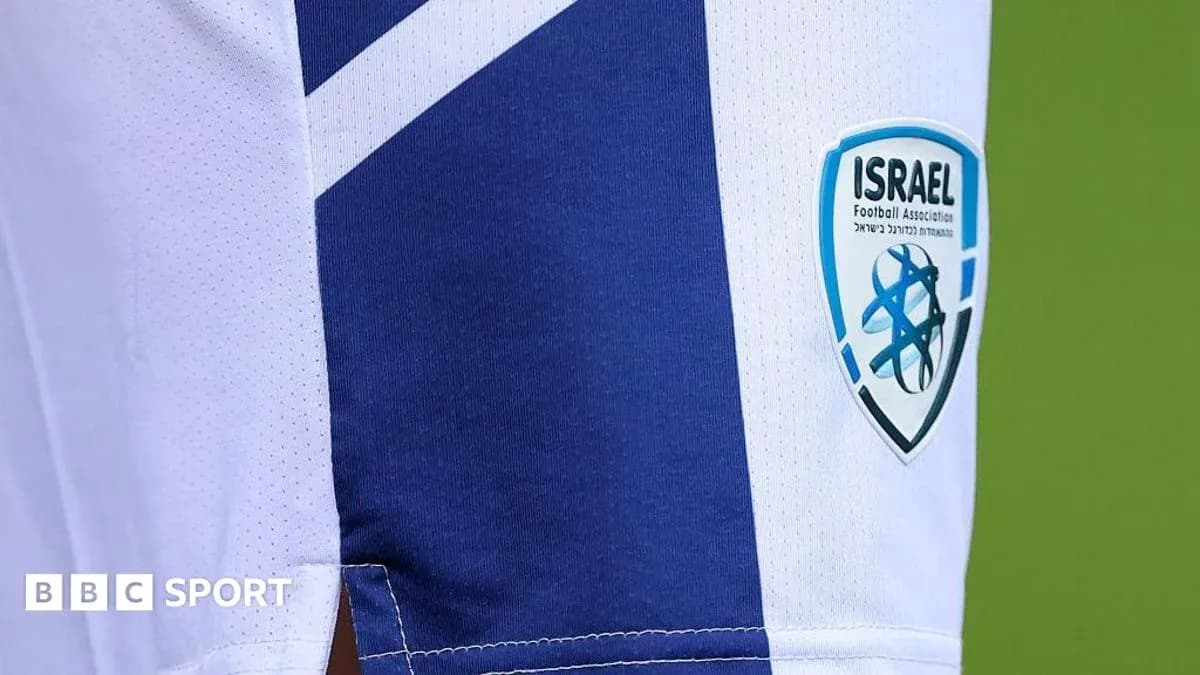
Ireland vs Israel: A Nations League Match Amidst Political Tensions
On Sunday, a Nations League game will be played that barely looks like elite international football at all.
No away fans. A neutral stadium. Stripped-back TV coverage without commentators or pundits. And a sense that this is less a football match and more a fault line in European politics.
Republic of Ireland will face Israel in Debrecen, Hungary, in a fixture that almost never made it this far. The Irish squad will walk into a near-empty, carefully controlled arena, carrying not just their shirts and hopes of points, but the weight of a national argument about Gaza, international law and what it means to share a pitch with Israel in 2026.
A vote that split Irish football
This game survived a vote. That is how contentious it has become.
When Ireland were drawn with Israel, Austria and Kosovo in the Nations League back in February, the Football Association of Ireland knew what was coming. Calls to boycott Israel over its military offensive in Gaza began almost immediately, from fans, activists and politicians.
The FAI pushed the decision out to its delegates. In July, they gathered and voted: 75 in favour of fulfilling the fixtures, 32 for a boycott. A clear majority, but far from a united front.
The stakes were bluntly financial and sporting. Refusing to play could have triggered Uefa sanctions, long-term damage to Ireland’s standing in European football and the loss of millions of euros in income. The FAI argued that Irish football, already operating on thin margins, could not afford to be the one to walk away.
So the games stayed on the calendar. But almost everything around them changed.
Football in a vacuum
Irish fans have been shut out. No tickets have been made available to them for either match, not in Debrecen this weekend nor in the “home” game on 4 October, which will be staged not in Dublin but in Backa Topola, a small town in Serbia.
There will be a small allocation for Israeli supporters in Hungary, as has been the case for previous Israel fixtures relocated there. Hungary has become a regular host for Israel’s home matches, its government offering strong diplomatic ties and the willingness to provide the security and policing that other European nations have been reluctant to guarantee.
The FAI had already decided in the summer that Ireland’s home game would not be played on Irish soil. The official explanation was “operational challenges that could impact on the delivery of the game on home soil”. Reports in Ireland have gone further, suggesting the association feared that protests could disrupt or even prevent the fixture from going ahead in Dublin.
Backa Topola, then. Remote, neutral, and easier to lock down. The FAI gave no public reasoning for picking the Serbian town, but the logic is obvious: distance dilutes protest and simplifies security.
Even the television pictures will feel muted. Public broadcaster RTE will show the matches, but only to “meet its contractual obligations”. No studio build-up, no pundits, no half-time analysis, no commentary. Just the game, presented almost in a vacuum. RTE will not take any advertising or sponsorship money linked to the broadcasts.
For a Nations League tie, it is an extraordinary level of retreat.
Anger that will not move off the ball
The decision to play has not calmed the argument. It has sharpened it.
Fans across the League of Ireland have staged protests during recent domestic fixtures, banners and chants aimed squarely at the FAI’s stance. On Monday, more than 160 Irish athletes signed an open letter under the banner of Irish Sport for Palestine, urging a boycott of the games. The list includes boxer Tyrone McKenna and former European champion Ciara Mageean, voices with real weight in Irish sport.
Inside Abbottstown, there is discomfort too. FAI CEO David Courrell revealed that Uefa had rejected a request to keep Ireland and Israel apart in future draws. Director of football John Martin called the situation “very uncomfortable for everyone”.
Manager Heimir Hallgrímsson went further. He insisted that playing Israel does not mean legitimising what he called Israel’s “genocide” in Gaza.
“We’re not playing with genocide, we’re playing against genocide,” he said. “We’re playing against Israel, we’re not playing with Israel.”
The response from the Israel Football Association was immediate and furious, accusing Hallgrímsson of “ignorance, hypocrisy and stupidity”. The row added yet another layer of hostility to a fixture already thick with it.
A match at the edge of a political storm
This is not the first time Irish teams have faced Israel since the war in Gaza began. The Republic’s women’s basketball side played Israel in EuroBasket qualifiers last autumn and earlier this year, games that only went ahead after what was described as “extensive deliberations”.
But the football team now steps into a far more charged landscape.
Since October 2023, when Hamas attacked Israel, killing about 1,200 people and taking 251 hostages, Gaza has been under relentless bombardment. More than 73,000 people have been killed in Israeli attacks, according to Gaza’s Hamas-run health ministry, figures the United Nations treats as reliable.
Ireland has been one of Europe’s most vocal supporters of the Palestinian cause. In May 2024, alongside Spain and Norway, it formally recognised a Palestinian state. Later that year, it joined South Africa’s genocide case against Israel at the International Court of Justice.
The stance has gone beyond statements. Ireland has boycotted Eurovision since 2025 over Israel’s continued participation, became the first EU country to ban goods from illegal Israeli settlements in the West Bank, and has imposed travel bans on Israeli government ministers.
On Monday, Irish foreign minister Helen McEntee distilled the government’s position into a stark sentence: “Ireland’s view is clear – international law is being breached. We are seeing an attempt to erase a population.”
Israel rejects that accusation, insisting its actions in Gaza are acts of self-defence after the 7 October attacks.
All of that hangs over a Nations League group game. All of it shapes how every pass, every handshake, every anthem will be seen.
A game that cannot just be a game
So Ireland travel to Hungary for a match that will count in the table but live far beyond it.
The players will line up in a neutral stadium, with no Irish support in the stands, under the eye of a broadcaster that has stripped away all the usual noise and gloss. In October, they will do it again in Serbia, in a town chosen precisely because it is far from home and far from the streets where this argument is loudest.
The FAI has chosen to play. Protesters have chosen not to let that choice pass quietly. Uefa has chosen to keep the fixture on its schedule and the teams in the same draw.
What happens on the pitch will decide points. What happens around it will ask a more uncomfortable question: how long can football pretend these are just fixtures, and not front lines?