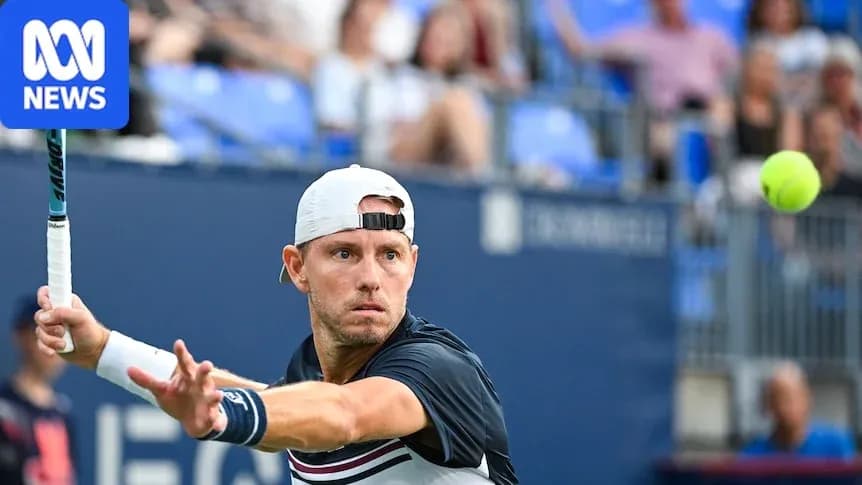
James Duckworth Defeats Lorenzo Sonego in Winston-Salem
James Duckworth finally cracked the Lorenzo Sonego code in Winston-Salem, and he did it with the timing of a player who knows a major is just around the corner.
For two matches, the Italian had been his problem he couldn’t quite solve. Wimbledon 2021: straight sets, Sonego in control on grass. Eastbourne 2022: another blow, this time in a pair of tiebreaks after Duckworth had led. Same surface, same opponent, same frustration.
Not this time.
On the North Carolina hard courts, Duckworth flipped the script with a 7-5, 6-3 win that carried the feel of both revenge and release. Third time lucky, yes, but also third time ruthless. The 34-year-old needed one hour and 44 minutes to clear a mental and tactical hurdle that had lingered for three seasons.
He was sharp on serve, disciplined off the ground and, crucially, unyielding under pressure. Duckworth broke Sonego twice and stared down all three break points he faced. Each escape underlined how much this one mattered: not just a quarterfinal spot at an ATP 250, but a clean runway into the US Open, where his current ranking of 79 has already secured him a place in the main draw.
The match tightened late in the first set, Sonego probing, Duckworth holding firm. When the Australian finally seized the opener 7-5, the weight of those previous defeats seemed to fall away. From there, he played with a looser arm and a clearer head, closing out the second set 6-3 to book his spot in the last eight.
Waiting for him is 15th seed Fabian Marozsan, a dangerous Hungarian shot-maker who had to work far harder than expected to get through his own match. Marozsan recovered from a ragged start to beat American wildcard Martin Damm 2-6, 6-3, 6-3, setting up a quarterfinal that will test Duckworth’s resilience and ambition with New York looming.
If Duckworth’s afternoon was about payback and momentum, Rinky Hijikata’s was about running into a buzzsaw.
Hijikata’s push for the quarterfinals was abruptly stopped by Benjamin Bonzi, who turned their encounter into a 57-minute masterclass in control. The Frenchman barely put a foot wrong in a 6-1, 6-1 dismantling, hitting his spots on serve and suffocating Hijikata’s attempts to get any foothold in the rallies.
Bonzi’s numbers told the story: he won a staggering 96 per cent of points behind his first serve and converted five of seven break points. Hijikata simply never had a look. Every half-chance vanished under the weight of a clean first delivery or a precise, early strike from the baseline.
Across the draw, the day brought its own contrasts.
Britain’s top hope in the event, fourth seed Arthur Fery, advanced with the kind of composed performance coaches love to see in a lead-up week. He handled qualifier Mees Rottgering 6-3, 6-3, never really troubled, never really drifting. Job done, on to the next round.
For Stefanos Tsitsipas, though, Winston-Salem closed with a jolt. The seventh seed, a marquee name in a modest field, fell 6-3, 7-6 (1) to American Aleksander Kovacevic. The tiebreak was brutal: Kovacevic surged, Tsitsipas faded, and another seed exited earlier than expected.
So the Australian story in Winston-Salem splits in two. Hijikata heads out, brushed aside by a red-hot Bonzi. Duckworth moves on, buoyed by a win that carries more emotional weight than the ranking points alone suggest.
Next comes Marozsan, the semifinals on the line, and beyond that the bright lights of Flushing Meadows. After finally solving Sonego, how far can Duckworth ride this surge into New York?