Kevin Pietersen Returns to England Cricket as Mentor
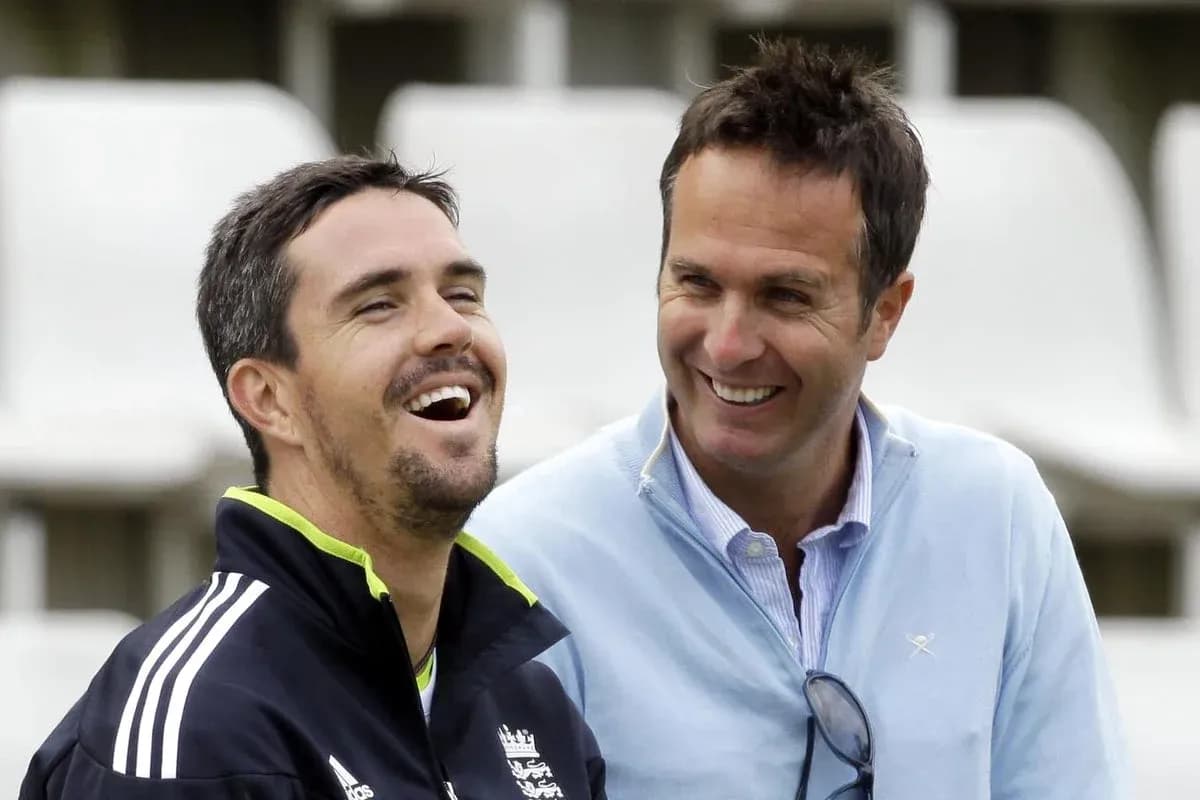
Kevin Pietersen is back in England colours – not with a bat in his hand, but with a clipboard and a brief: sharpen the country’s white-ball edge. And Michael Vaughan thinks it is exactly the kind of risk English cricket should be taking.
A dozen years after being effectively cast out following a spectacular breakdown in relations with the England hierarchy, Pietersen has returned as a specialist mentor with the ODI and T20 sides. For a player whose international career ended in rancour, it is a striking twist.
Vaughan, who captained Pietersen in the 2005 Ashes and knows both his brilliance and his baggage, did not try to pretend this is a safe, tidy move.
“I like it, it’s quirky. It’s a risk, it has to be a risk because you’re not too sure what you’re going to get because Kev’s not done a great deal of coaching,” he said.
That is the crux of it. Pietersen is not a products-of-the-system coach, not a man who has spent years ticking off badges and age groups. He is a star player stepping straight into an elite environment, armed with opinions, ego and a vast bank of experience.
What he does have, Vaughan argued, is a level of batting and big-occasion know-how that English cricket has rarely seen.
“His knowledge of batting, his knowledge of winning, his knowledge of playing at the right intensity at the right moments, there’s no-one been better in my time playing for England.”
For all the history and the bruises of 2014, Vaughan is adamant that English cricket is right to open the door again.
“I’m happy he’s back in English cricket because (in) 2014, I always felt that Kev was dealt an iffy hand,” he said. “Kev brings a lot of things on himself but there are many others who have done equally silly things and have been allowed back into English cricket.”
This is not Pietersen’s first taste of mentoring. He has worked with Delhi Capitals in the Indian Premier League, though his stint there made as many headlines for a mid-tournament holiday to the Maldives during the 2025 season as it did for throwdowns in the nets. Since retiring in 2018, his main home has been the commentary box, not the dressing room.
Now he is embedded with England’s white-ball group, present at the Utilita Bowl on Sunday as preparations ramp up for the T20 series against Sri Lanka, which starts on Tuesday. His remit stretches all the way through to next year’s ODI World Cup – a tournament staged largely in his native South Africa. For a man who once lit up international attacks, it is a chance to influence a new generation on home soil of a different kind.
Vaughan, though, admitted the appointment caught him slightly off guard.
“I’ve seen him at Delhi doing a few coaching gigs – I believe he hasn’t got two weeks in the Maldives in his contract, which is good, I believe he has to stay and coach,” he joked.
“I was actually surprised they’ve brought him into the white-ball set-up. I thought the Test team would have approached him. The white-ball team over the last year have been doing quite well.”
That is where the intrigue deepens. England’s white-ball side, while not flawless, has been relatively stable and successful in recent years. The Test team, by contrast, has lurched through reinventions and philosophical shifts, often searching for the kind of fearless batting Pietersen once embodied.
Yet the crossover between formats gives Pietersen a different route to influence.
“I would think that the batters in the white-ball team who play Test cricket, he’ll be having an influence on them,” Vaughan said.
The message from Vaughan is clear: this cannot just be a headline-grabbing experiment. Results have to follow.
“Winning will be the key. They’ve got to start winning trophies, to justify all these decisions and, let’s be honest, a huge amount of money being spent. England have to start winning trophies.”
That pressure forms the backdrop to every bold call the ECB now makes. Bringing back a polarising former great, who once publicly criticised the current white-ball set-up for “inadequate preparation” on a tour of India, only heightens the scrutiny. If England falter in major tournaments, the gamble will be questioned. If they thrive, the move will be hailed as inspired.
Vaughan was speaking in a week that showed another side of the game’s future. At Lord’s, the inaugural winners of the Barclays Knight-Stokes Cup were crowned, with boys’ and girls’ state-school teams experiencing the sport’s most storied ground on finals day.
Applications are already open for next year’s edition of the national hardball competition for state schools, with around 15,744 students and 1,100 teams expected to take part in 2025.
“This will go from strength to strength,” Vaughan said. “I’m hoping next year that we’ll have more than 2,000 teams enter, that’s the goal.”
From Lord’s school finals to a World Cup in South Africa, English cricket is trying to widen its base and sharpen its elite edge at the same time. Pietersen, once the ultimate outsider-insider, now stands back inside the tent, charged with helping England’s white-ball batters rediscover a ruthless streak.
If they do, this “quirky” risk will look like the moment English cricket finally made peace with one of its most combustible talents – and used that fire to chase more trophies.