Lando Norris Challenges Kimi Antonelli for the 2026 Formula 1 Title
A month ago, the 2026 Formula 1 title looked like a closed case. It belonged to Mercedes and Kimi Antonelli.
The numbers were brutal. Antonelli sat on 204 points heading into the Hungarian Grand Prix. Between them, McLaren’s two drivers couldn’t even match that total: Lando Norris on 103, Oscar Piastri on 92. The reigning champion looked boxed in by a silver car and a rising star.
Then McLaren turned up at the Hungaroring with a very different weapon.
McLaren’s upgrade – and an instant response
The team rolled out a substantial upgrade package in Budapest: reworked front and rear corner bodywork, a new floor, a revised rear wing. On paper, it was a big step. On track, it was a jolt to the championship.
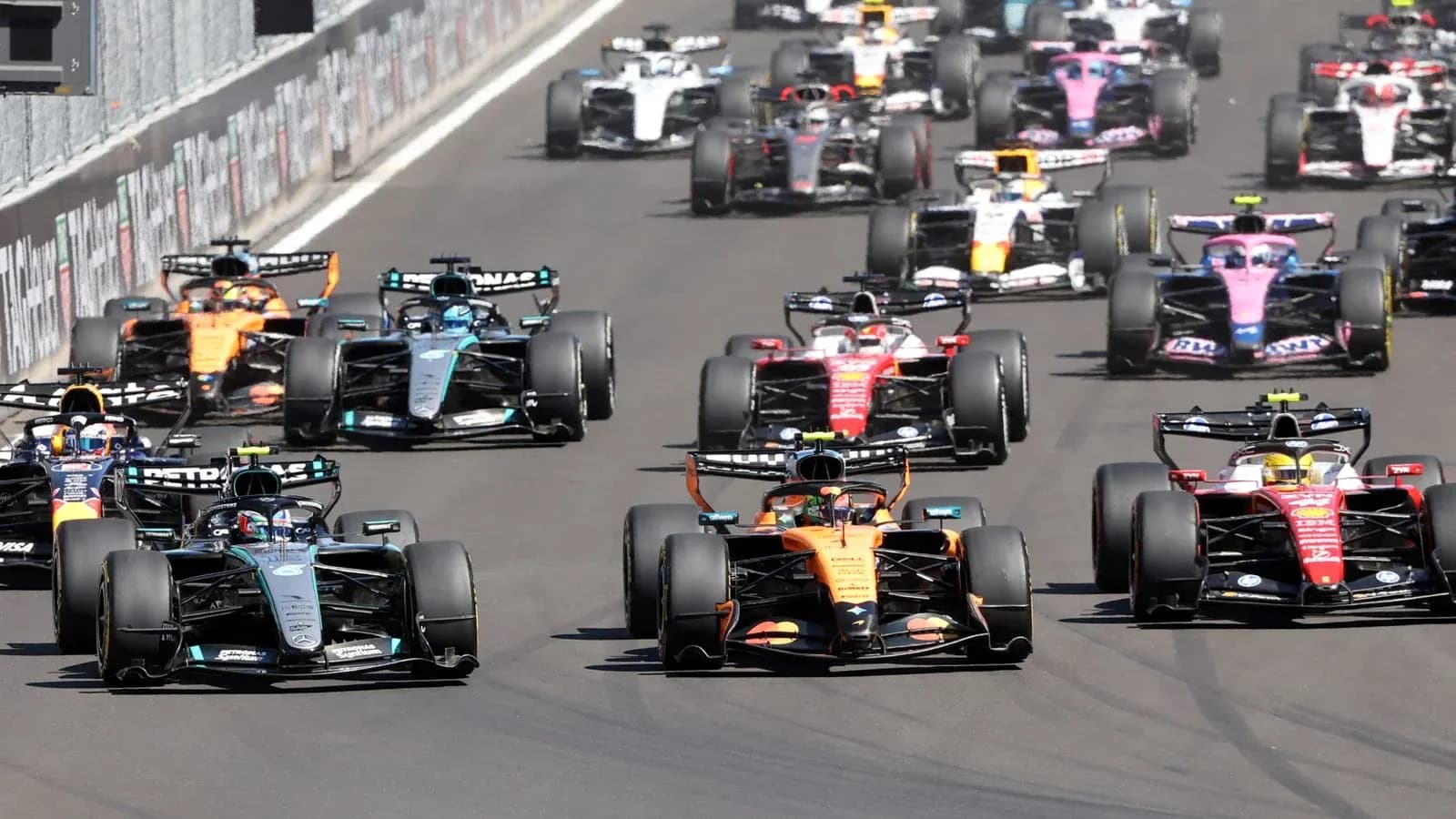
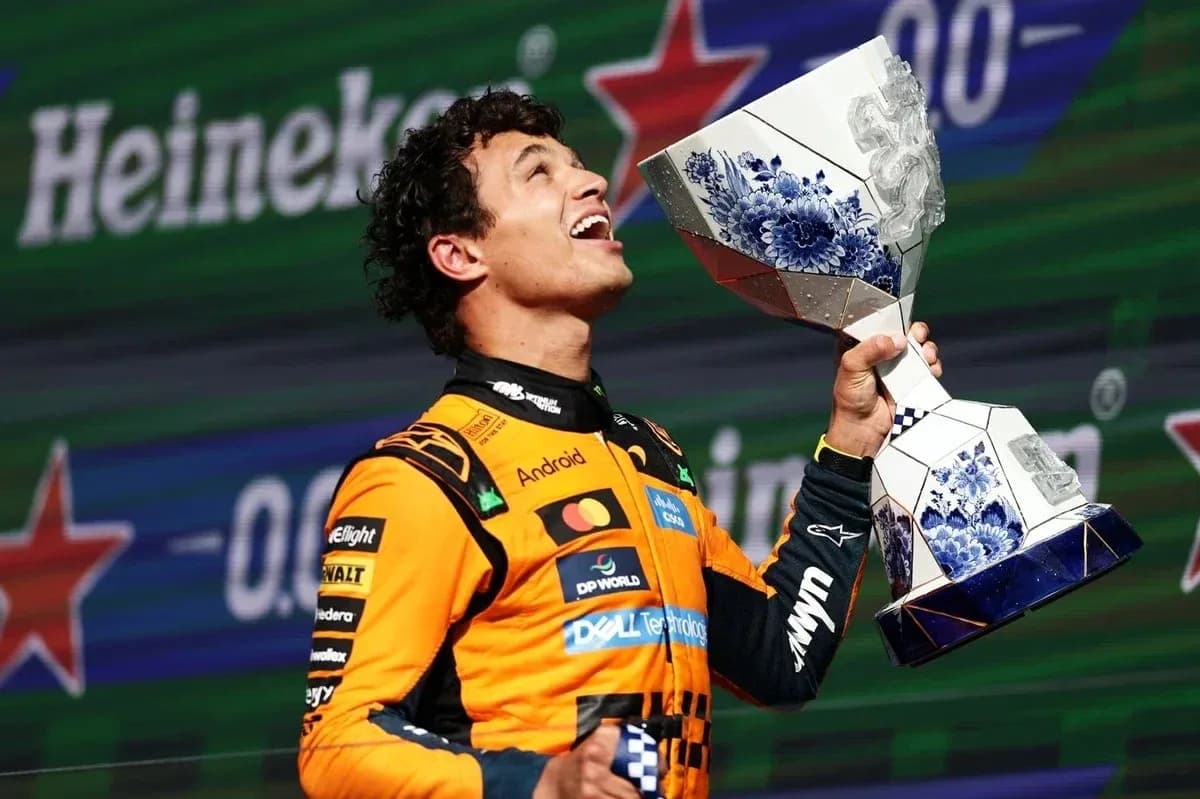
Norris stuck it on pole and won in Hungary. One race later at Zandvoort, he did it again – this time with a move that said as much about his headspace as his machinery. Around the outside of Antonelli at Turn 1, no hesitation, no half-measures. Another victory from pole. Another statement.
The gap to Antonelli is still sizeable at 83 points. But it no longer feels like a formality. Not with Norris in this mood, and not with this version of the MCL40.
The easy storyline is that McLaren bolted on some new parts and the world champion simply cashed the cheque. Andrea Stella isn’t buying that.
“He’s driving at the level of a world champion”
The McLaren team principal has watched Norris closely through the last two seasons, through the highs of a title and the uneasy start to its defence. What he sees now is a driver operating beyond the spec sheet.
“Lando is driving and operating at a very high level, in absolute sense, in relation to a Formula 1 world champion,” Stella said after the Dutch Grand Prix. “He's driving at the level of a world champion.”
For Stella, this isn’t a sudden spike. It’s the latest step in a long climb.
What stands out in his eyes is the way Norris has grown since the start of 2025. “Something clicked,” as Stella put it. Not a single magic moment, but a change in how the team works with Norris – and how Norris works with the team. That approach has now been extended to Piastri’s side of the garage as well, and Stella credits it with Norris’ “continuous improvements”.
The Dutch weekend underlined that point. On raw pace, this was not a race McLaren expected to own. The sprint had suggested they were short of the kind of dominance that allows a team to assume victory. So they dug into the details: tyre exploitation, car behaviour over a stint, how to turn an apparently even fight into a winning position.
Both drivers made gains in how they handled the tyres. The question mark, Stella admitted, hangs over Piastri’s second stint in the race. Norris, though, kept finding grip where others were losing it.
Qualifying: Norris turns the screw
One-lap pace tells its own story. Through 2025, Norris and Piastri were almost impossibly evenly matched. Across qualifying and sprint qualifying, the head-to-head finished 15–15. No clear number one, no obvious weakness.
The reset came with the new 2026 machinery. Early on, Piastri had the edge. Heading into the unexpected April break, Norris trailed 3–1 in qualifying. For a reigning champion, it was a concern.
Then the tide turned, hard.
Since that break, Norris has dominated Saturdays. He leads Piastri 12–1 in qualifying, with the Australian quicker only once – in Monaco. The average gap is just 0.128s, but the pattern matters more than the number. Norris keeps landing on the right side of the line. Piastri keeps chasing.
This is the same driver who, at the start of 2025, had people inside McLaren quietly worried about his qualifying form. That doubt has gone. Stella now calls Norris “capable of maximising the performance in qualifying trim,” and the numbers back him.
When the lights go out and grip disappears, the gap widens again. “When you have conditions in which the car slides in the race, there's not much grip, he is the master in this kind of conditions,” Stella said. On days when the car dances on the edge, Norris looks most at home.
The new edge: assertiveness and control
Speed alone doesn’t explain the swing. Stella keeps coming back to Norris’ state of mind – the way he chooses his fights, the way he reads a race.
“If you want to look at Lando from another angle, I would say that definitely he is now expressing a higher level of assertiveness as he drives,” Stella observed. The pass on Antonelli at Zandvoort, sweeping around the outside at Turn 1, was the headline example. No wild lunge, no desperation. Just a driver absolutely sure of what he could do.
What intrigues Stella most is how that self-confidence shows itself. Sometimes it’s in a bold move. Sometimes it’s in the decision not to make one.
“You know what? I'm not going to have a fight now because I may lose in this fight. It's a very long race. See you at the end of the race,” is how he framed Norris’ thinking. That is a champion’s calculation: knowing when to back off, trusting that your speed and tyre life will bring the chance back later.
The recent wins underline that shift. In both of his latest victories, Norris did not convert pole into a turn-one lead. He ended the first lap in second place. Lesser drivers can feel the air go out of their race at that moment. Stella heard none of that from his man. No panic, no dip in belief. Just a driver preparing the race he wanted to run, waiting to “cash in on his competitiveness” when the race opened up.
For Stella, two words define Norris’ evolution from a technical and mental standpoint: assertiveness and confidence. They are, he believes, the qualities that have moved the needle most away from the data sheets and into the realm where titles are decided.
McLaren’s upgrades have dragged the MCL40 back into the fight. Norris’ driving has done the rest.
The question now is simple: with this version of Lando Norris hunting him down, how long can Kimi Antonelli keep that lead intact?