Lando Norris Loses Race Win Due to VSC Timing
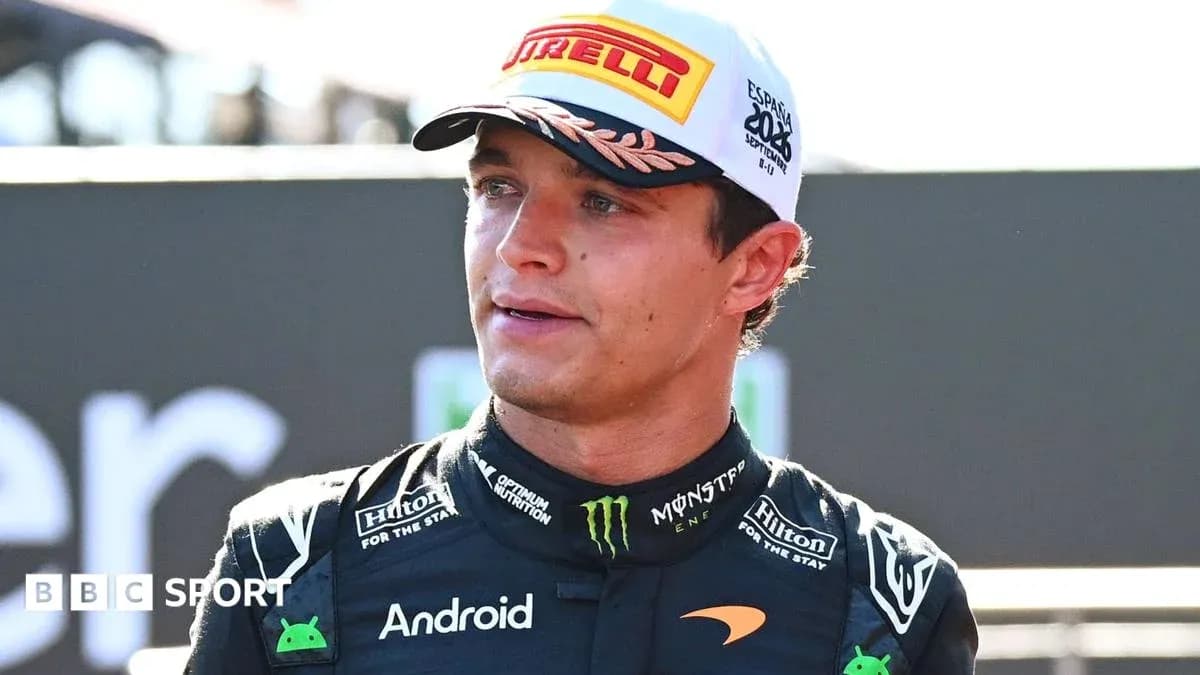
Lando Norris walked into the mixed zone looking like a man who had just had a win stolen by a coin toss.
He more or less had.
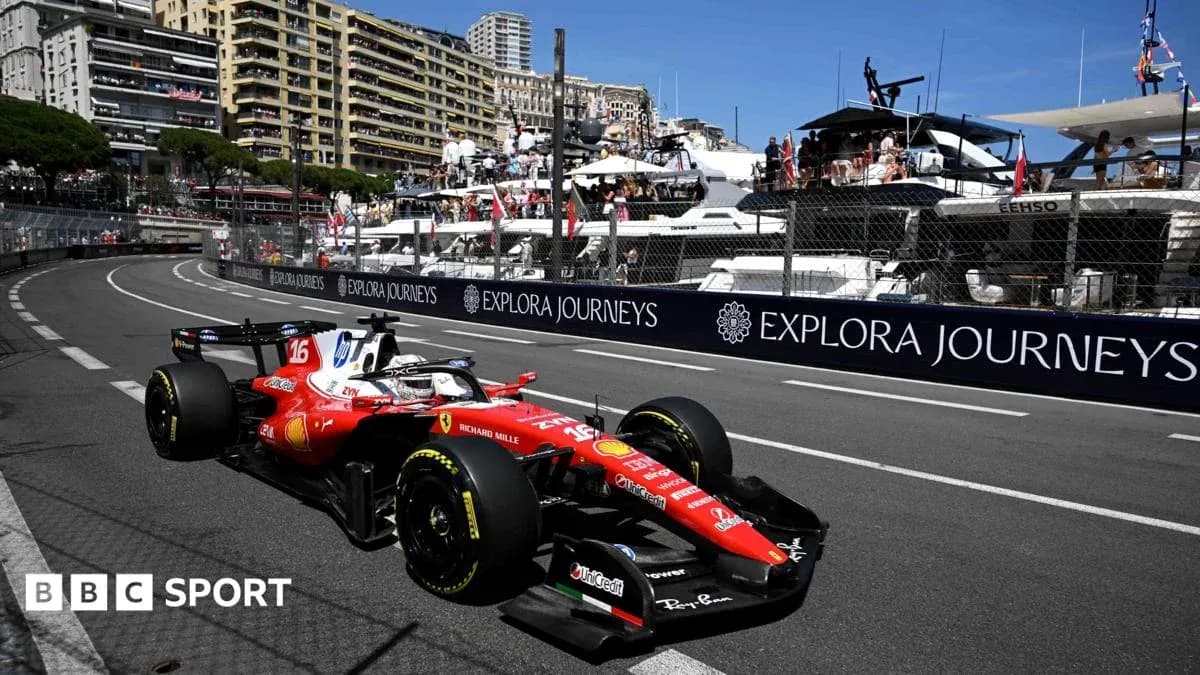
For 14 laps around Madrid’s tight new Madring street circuit, the McLaren driver was in a race of his own. Pole position secured with what Andrea Stella called “a masterpiece” of a lap, more than six seconds clear of Kimi Antonelli after 13 tours, Norris was doing exactly what title contenders are supposed to do: control, manage, disappear.
Then the virtual safety car arrived. And with it, the race vanished.
A race turned in 20 seconds
The timing was brutal. Norris had just swept past the pit entry at the end of lap 14 when Lance Stroll’s Aston Martin rolled to a halt in the Turn 20 run-off. Seconds later, the VSC was deployed.
Norris was committed. Everyone behind him was not.
Antonelli and Max Verstappen, far enough back on the road, dived straight into the pits under the VSC, banking the 11-second time gain that comes with stopping while the field is artificially slowed. Norris, the race leader, was the only driver on the grid who never even got to choose.
By the time he completed another lap and finally peeled into the lane at the end of lap 15, the VSC had already been withdrawn. His stop was now full price. The race had reset, and he was on the wrong side of it.
“It is a rule that should not define a whole race,” Norris said. “I was the only one on the whole grid that didn't get the chance to do the pit stop. That's just unfortunate.”
The numbers were savage. McLaren’s stop went wrong as well, costing Norris another five seconds with issues on his two right-hand tyres. He rejoined more than 15 seconds behind Antonelli and over nine seconds adrift of Verstappen.
From dominant leader to third, all in the space of a single VSC cycle and one messy stop.
A win lost in the pits, not on the track
This was not one of those days where strategy calls felt debatable or where a slow first stint invited pressure. Norris had done the hard part. The medium tyre he started on was fading, yes, but his pace was emphatic. The hard compound, as Antonelli and Verstappen discovered, was “amazing” in race trim.
McLaren still had to gamble on when to stop. Once the VSC dropped, they saw only one logical move.
“I had to come in at the end of the lap because it was the only chance,” Norris said. “The medium tyre was destroyed and the hard tyre was amazing. The pace was very, very strong on the hard tyre… we caught up 13, 14 seconds or more, almost. So, plenty of positives. A day full of positives, just one thing let it all down.”
Stella backed that call. Staying out, he argued, would have been a slow bleed to nowhere.
“We considered staying out,” the McLaren team principal explained, “but you have to accept the fact that now you are on relatively used medium tyres. And the people behind you will be on new hard. So you're never going to open a gap on people on new hard.”
The other hypothetical hung in the air: should McLaren have anticipated the VSC and boxed Norris immediately when Stroll stopped, before race control acted?
“In hindsight, that would have been a good idea,” Stella admitted, before spelling out the risk. The Madring has the longest pit lane on the calendar, a 27-second hit under green. If race control had decided against a VSC and McLaren had pitted from the lead on a hunch, they might have thrown away a certain victory.
“So a good rule,” Stella said, “is to respond to what is a fact, to what is the real condition of the circuit.”
On Sunday, the facts lined up against them.
Street circuit, no escape
Once back out on track, Norris did what he could. He chewed into Verstappen’s advantage, hauling the Red Bull into view before the chequered flag. On a conventional circuit, that would have set up a late attack and perhaps even a charge at Antonelli.
On the Madring, it meant nothing.
Overtaking proved virtually impossible on the narrow, twisting layout. Even Antonelli, in clean air and with a car quick enough to extend his championship lead to 81 points, admitted the reality.
“In the race, you're just stuck behind,” he said.
Norris never got the chance to convert his superior pace into a move. Third place was the ceiling, not the floor.
He did not spare the track in his assessment.
“I don't know how someone looks at this design and goes, ‘Mint,’” he said, though he conceded there was “a lot of opportunity” to improve the layout for next year.
The sting in all of this? The man who benefited most was the first to say he shouldn’t have.
Antonelli, who took the win and with it another step towards the title, was disarmingly honest.
“If I have to be realistic and honest, today we didn't deserve to win,” he said. “Lando deserved to win, and so I think our result was probably P2 or even P3.”
When luck writes the script
The rawness of Norris’ frustration was not just about Madrid. It was about the principle.
He has gained from VSC timing in the past. He has lost from it as well. Drivers accept that over a season, fortune tends to level out. This felt different.
“So, it's probably one of the first times a win has been lost simply because of it,” he said. “Of course, it just hurts more, the fact that I lose a win. You know, there's literally nothing I could do as a driver today to do a better job.”
Verstappen, who has lived through his own share of safety-car swings, recognised the broader issue.
“We'll probably talk about it in the next briefing and see if there is anything that can be done,” he said.
The specific trigger for Norris’ anger was the brevity of the VSC. The pit entry at the Madring sits before the final corner. When the VSC was called, Norris was already in that final corner. When it ended, one lap later, he was at Turn 21, again just one corner before the pits. Antonelli, having already stopped, was still behind at Turn 19.
Every other driver had at least one lap where a pit stop under VSC was an option. The leader did not. The system, designed for safety, had created an asymmetry that felt arbitrary.
A rule for the SAC, not the paddock
Stella, usually measured to the point of caution, allowed himself to wonder aloud if the sport needs to rethink how the VSC is used.
“Perhaps there's a wider reflection that the Formula 1 community should apply as to whether you keep things like they are or you introduce ways of maintaining more fairness,” he said. “Offering the personal opinion. I'm puzzled myself as to what's right.”
He floated one idea: a minimum VSC duration, perhaps at least one full lap, to ensure all drivers experience the same conditions and at least have the chance to respond strategically.
“Is it correct to give enough duration such that everyone will have been subject to the same track conditions?” he asked. “Or you just keep it in the hands of the gods, and sometimes you are lucky, sometimes you are not. I'm not sure myself.”
The place for that debate is not the pen or the press conference but the Strategy Advisory Committee. From there, any change would have to pass through the F1 Commission and into the sporting regulations. Stella warned that such a process is “relatively lengthy” unless the FIA and Formula 1 themselves decide this is an area that demands urgent attention.
For now, the rule stands. Sometimes it gifts a race. Sometimes it takes one away.
In Madrid, it took one from a driver who had done almost everything right, on a day when even the winner said he should have been beaten. The championship picture moves on, Antonelli’s lead swelling, Verstappen banking more points, McLaren clinging to the positives of raw pace.
Norris leaves with a podium, a blistering pole lap, and a car that hunted down a Red Bull with ease. He also leaves knowing that on this circuit, on this day, no amount of talent or tyre management could outrun the timing of a line of text on race control’s screen.
How many more Sundays like that will Formula 1 accept before it decides luck has too much say in who stands on the top step?