Lehečka Secures Davis Cup Victory for Czechs Against Americans
The Czechs did it to the United States last year in Delray Beach. They did it again in Prague, this time on home clay, under real pressure and with the tie hanging by a thread.
Jiří Lehečka delivered the final blow.
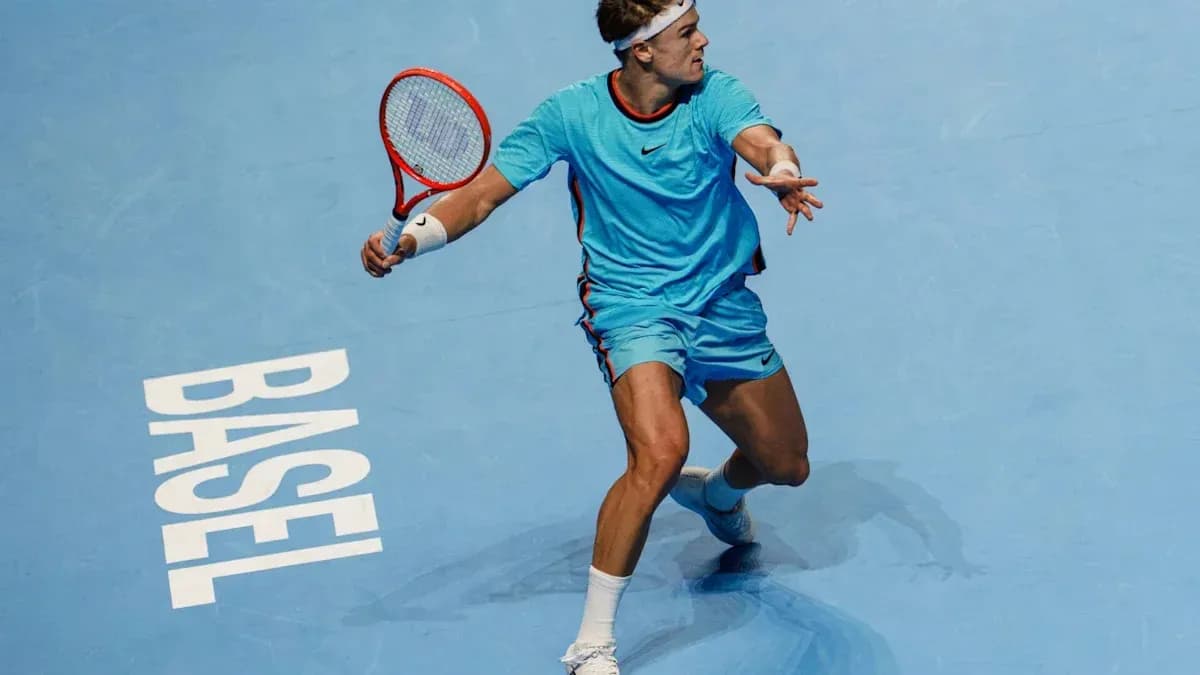
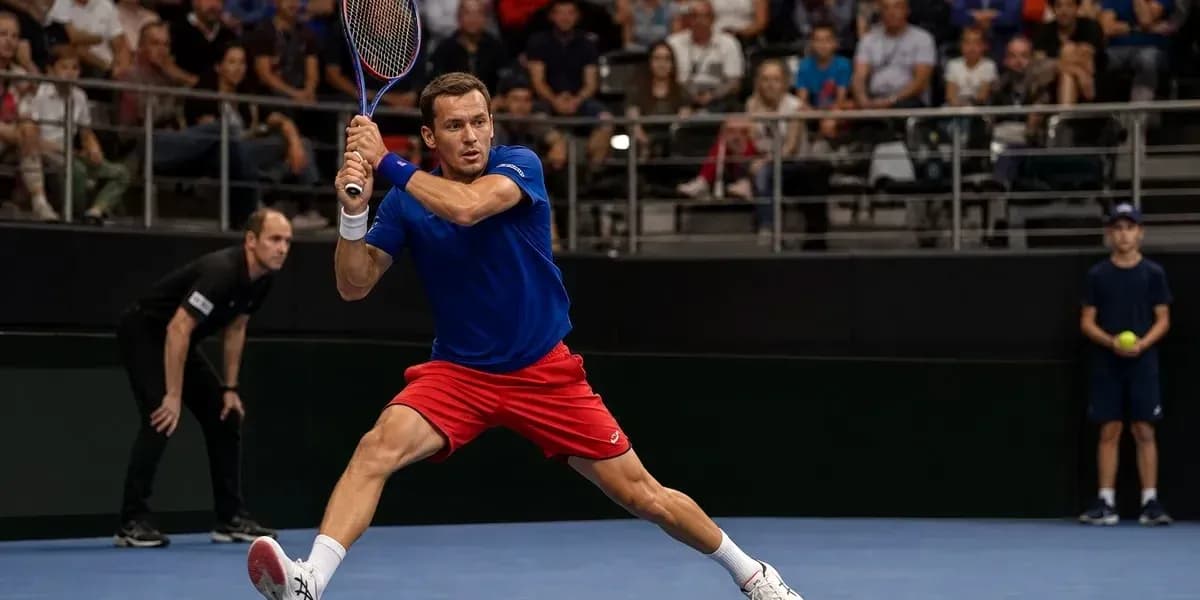
The 22‑year‑old clinched a 3–2 victory for the Czech Republic in the Davis Cup qualifying tie with a 6–3, 7–5 win over Learner Tien, sending his country back to the finals in Bologna this November. One swing of his racket, one more American challenge crushed at the same stage for the second straight year.
Twelve months ago, it was Jakub Menšík who played executioner, stunning Frances Tiafoe in Delray Beach to knock the U.S. out. This time, Menšík lit the fuse again. Lehečka finished the job.
A tie on the brink
The day began at 1–1. It quickly lurched towards trouble for the hosts.
Christian Harrison and Austin Krajicek dragged the U.S. into the lead with a gritty doubles win over Adam Pavlásek and Patrik Rikl, 5–7, 6–3, 7–6 (10–8). The Americans stared down four match points and survived them all, snatching a match that looked gone and silencing the Prague crowd.
At that moment, the tie tilted. The visitors had momentum, belief, and a foothold in a hostile arena.
Menšík ripped it away.
Facing Ben Shelton, fresh from a run to the US Open final, the young Czech refused to flinch. He dropped the first set 5–7, then tightened his game and turned the match around, winning 6–4, 6–3. It was the kind of Davis Cup performance that changes the whole mood of a weekend: fearless, aggressive, and perfectly timed.
That win dragged the Czechs level at 2–2 and handed Lehečka the chance to decide it all. He knew it. He later admitted that without Menšík’s victory over Shelton, his own shot at glory would never have come.
Lehečka bends, then breaks Tien
Lehečka had already taken down Shelton in straight sets the previous day. Confidence should have been high. Instead, the final rubber started with a jolt.
Tien broke early and looked sharp, taking control of the baseline exchanges. The home crowd grew restless. Lehečka, though, refused to panic. He reset, found his range, and began to dictate with heavier, more precise hitting. The first set swung his way 6–3, and suddenly the noise in Prague doubled.
Tien responded in style. He raced out to a 3–0 lead in the second set, forcing the Czech No. 1 to chase again. The tension was obvious; every service game felt like a mini-crisis. Lehečka dug in, clawed back the break, and turned the scoreboard around once more.
The pressure finally told on the American teenager. Serving to stay in the match, Tien faced match points. He saved three. On the fourth, Lehečka closed the door and with it the tie, securing the decisive point that sends the Czechs to Bologna.
New faces, same ruthlessness
What stands out in this Czech run is the collective edge. Lehečka spoke openly about how different Davis Cup victories feel, how the team format amplifies every point. It showed. Each man fed off the other.
The United States, the most decorated nation in Davis Cup history with 32 titles, again leaves this stage empty‑handed. The drought now stretches back to 2007, a long gap for a country used to owning this competition.
History made and hopes rising elsewhere
The weekend did not belong to Prague alone.
In Seoul, South Korea broke new ground. The hosts beat India 3–1 to reach the Davis Cup final eight for the first time in their history. Kwon Soon‑woo delivered the clinching point with a commanding 6–1, 6–2 win over Sumit Nagal, a statement performance on a landmark day for Korean tennis.
In Vienna, Austria joined the party. They secured their own ticket to Bologna with a 3–1 victory over Belgium. Jurij Rodionov handled the pressure of the decisive rubber, edging Zizou Bergs 7–6 (8–6), 6–3 to close out the tie.
All roads now lead to Bologna in November, where Italy will attempt to claim a fourth consecutive Davis Cup crown on home soil. The Czechs arrive with a growing core, fresh scars inflicted on the United States, and a belief that this new generation can turn big moments into something bigger.
The Americans, meanwhile, are left to wonder how a nation with 32 titles keeps watching others lift the trophy.