The Madring Misfire: Revamping F1’s Newest Circuit for Exciting Racing
The new Madring was supposed to be Formula 1’s latest showpiece. A hybrid layout wrapped around the Ifema exhibition centre near Madrid’s Barajas airport, half bespoke race track, half repurposed roads. A blank-enough canvas, in theory, to design something that worked for modern F1.
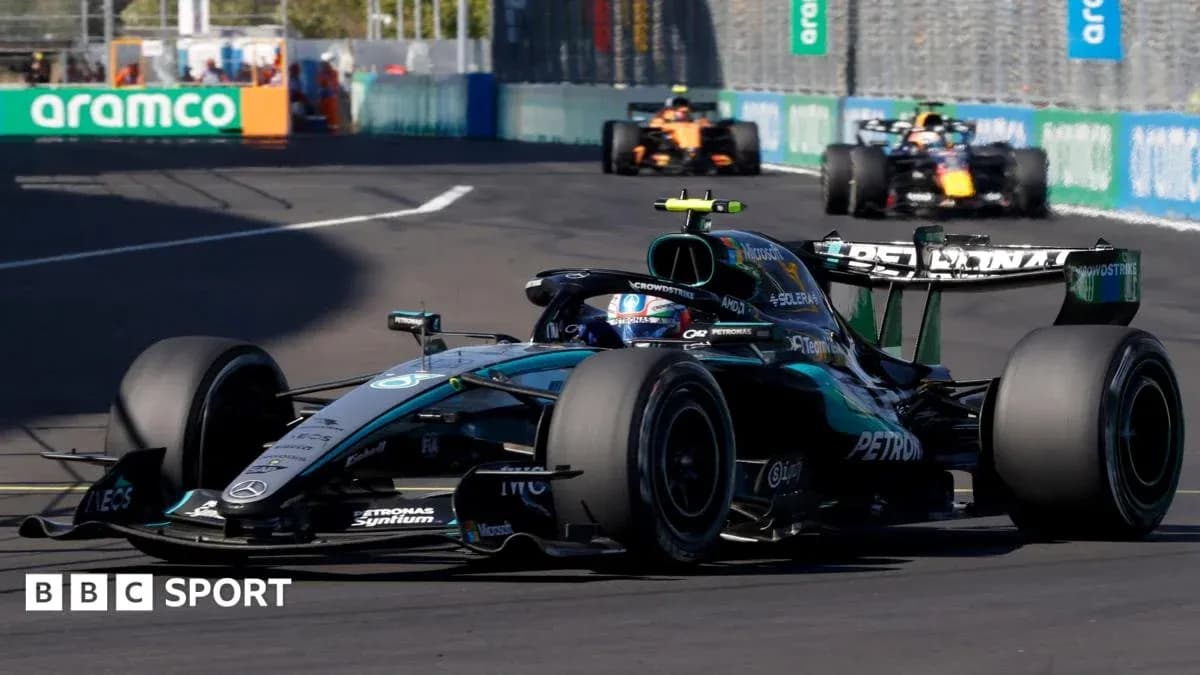
Instead, it produced exactly what the drivers had warned about: a procession.
Before a wheel had turned in anger, the grid was already unimpressed. They looked at the map, saw the shapes and the sequences, and shook their heads. Overtaking? “Next to impossible,” came the early verdict. The race proved them right.
Lando Norris captured the mood with a single, cutting line afterwards: “I don't know how someone looks at this design and goes: ‘Mint.’”
A Track That Forgot What Racing Needs
The core problem is brutally simple. There is no proper straight that feeds into a heavy braking zone. No long run, no big stop, no obvious divebomb territory. Without that, modern F1 cars, with all their aero wake and sensitivity, have nowhere to attack.
Then come the corners. Too many of them demand that drivers brake and turn at the same time. That kind of entry kills side-by-side racing. You can’t throw a car down the inside when both of you are already on the edge of grip just to make the apex. On top of that, the walls on corner exits creep back towards the track, hemming drivers in and punishing anyone brave enough to try something different.
And looming over all of it is the pit lane. The Madring’s is the longest on the calendar. That matters. The longer the pit lane, the bigger the time loss for a stop. The bigger the loss, the less incentive teams have to pit more than once. With high tyre degradation, the equation gets worse: drivers back off, manage rubber, and drive well within the limit. Fewer risks, fewer mistakes, fewer safety cars. Less chaos, less drama.
The ingredients for a dull race weekend were baked in.
The Fixes Are Obvious – If F1 Wants Them
The irony is that the circuit is not beyond redemption. In fact, it’s the opposite. The bones of a good track are there; they just need to be rearranged.
Norris, who was scathing about the racing but complimentary about the driving challenge, laid out a clear vision. Strip out Turns 18 and 19. Draw a straight line from Turn 17 to Turn 20. At the end of that, create a wide, uphill-style entry, something in the mould of Turn 1 or Turn 10 in Austin – a big, open hairpin.
That would give drivers what they currently lack: a long run, a slipstream, a DRS blast, and a huge braking zone with multiple lines into the corner. In his words, it would “create much better opportunities for everyone and you'll be able to enjoy the race.”
He didn’t stop there. He pointed to “trickier changes” too – reshaping the awkward chicane at Turn 5 and reworking the flow from there to Turn 7. That section, clumsy and disjointed, currently smothers momentum.
Right now, the Madring is “great in qualifying,” Norris said. A fun lap. A challenge. But “to me, it's not a great race track.” The difference between those two statements is exactly where F1 needs to focus.
A Paddock in Pieces
The issues do not end at the white lines. The pits and paddock set-up also jarred with the sport’s slick, high-end image.
The working environment for teams and F1 staff sprawled across a fractured, spread-out footprint, split awkwardly by buildings. The pit lane itself is divided by a structure, and the paddock is scattered across multiple areas. Nothing about it felt cohesive.
The site, dominated by vast exhibition halls, is functional rather than glamorous – “a bit like holding a grand prix at the NEC in Birmingham” was one withering comparison. That’s not a crime in itself, but it makes the job of creating a logical, efficient race hub much harder.
If F1 and the organisers are serious about making Madring a long-term home, they need to find a way to put pits and paddock together, outside, and in one coherent space, with a pit lane that isn’t bisected by a building. It’s basic race-circuit architecture. Right now, it looks like an afterthought.
The good news for Madrid? None of this is unfixable. The bad news? In modern F1, patience for dull races is thin. The track will not get many free passes.