Luis Enrique’s PSG Exploit Manchester City’s High Line to Win 4-2 at Etihad
PSG’s Tactical Mastery Over Manchester City
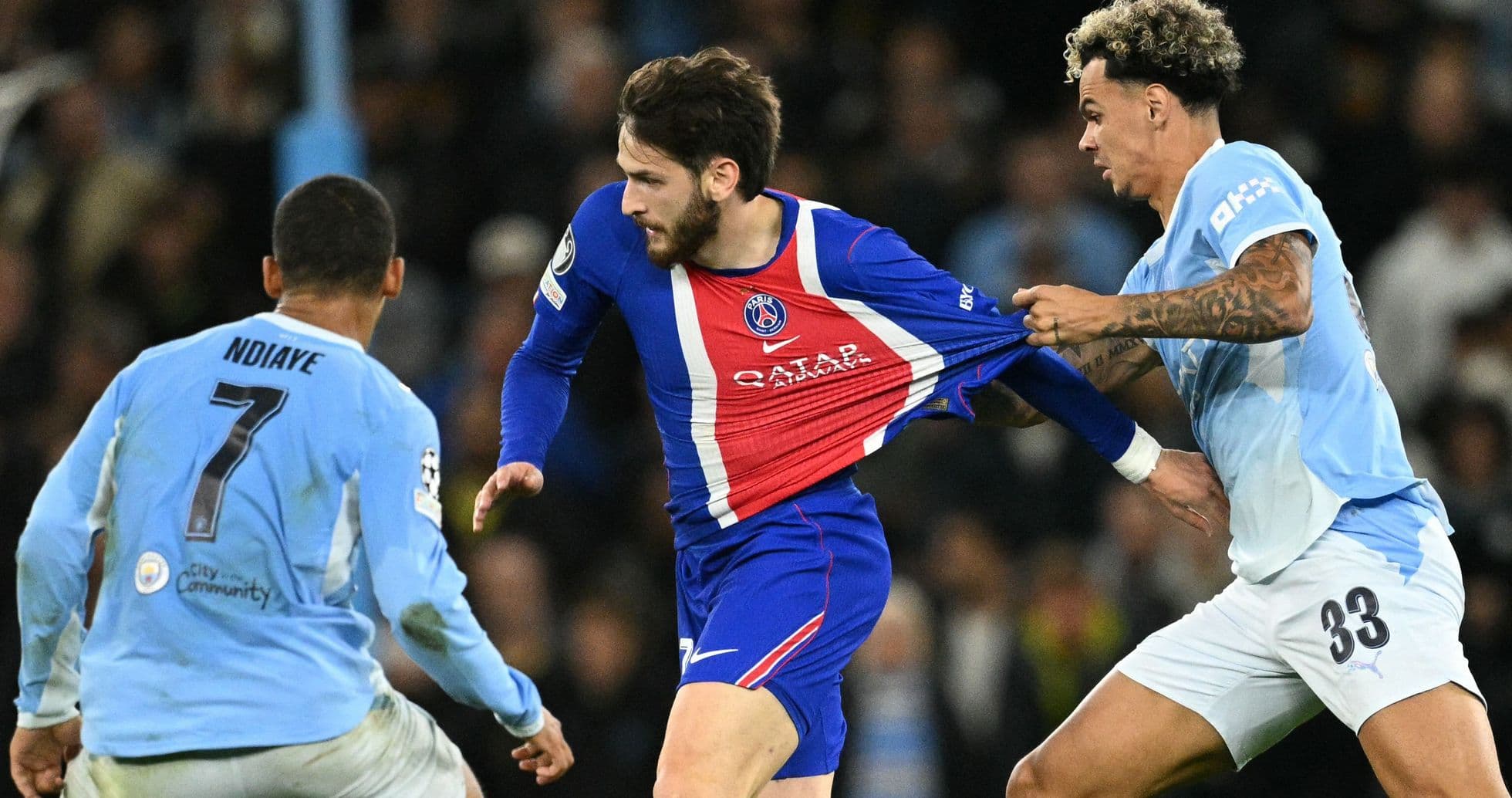
Paris Saint-Germain showcased a brilliant display of transition football to claim a 4-2 victory against Manchester City at the Etihad Stadium. Despite a determined second-half response from Erling Haaland, City’s defensive lapses during the opening 45 minutes proved too costly to overcome.
Clash of Styles: Maresca vs Luis Enrique
The match highlighted a battle between two contrasting tactical approaches. Manchester City, under Enzo Maresca, aimed to dominate possession and press high using a 4-2-3-1 setup, trying to suffocate PSG in their own half. Maresca relied heavily on Enzo Fernandez and Elliot Anderson as a double pivot to dictate play, while depending on Jeremy Doku and Rayan Cherki’s individual skills to break down PSG’s defense.
On the other hand, Luis Enrique set up PSG in a flexible 4-3-3 that emphasized quick vertical transitions over sideways passing. By drawing City forward aggressively, PSG created large pockets of space behind City’s defense. Their plan was to bypass the initial press swiftly, using the speed of Ousmane Dembele and Desire Doue to isolate City’s centre-backs in one-on-one situations during rapid counterattacks.
Manchester City’s Tactical Setup
Maresca deployed a 4-2-3-1 formation which often morphed into a 3-2-5 during buildup phases, with Josko Gvardiol dropping back for extra cover. City pressed aggressively, pushing their front four high whenever Safonov passed short to Marquinhos or Willian Pacho, aiming to force long clearances. This intense pressing came with risks as the gap between midfield and defense became too wide, exposing Ruben Dias and Marc Guehi to direct runs.
In possession, City struggled to find rhythm early on. Enzo Fernandez tried to control play from deep, but PSG’s midfield block effectively cut off passing lanes to Cherki at number ten. Jeremy Doku, tasked with stretching the left flank, was often doubled by Achraf Hakimi and Warren Zaire-Emery. Without central penetration, Haaland remained isolated despite City holding 54% possession. Defensively, City’s high line was repeatedly exposed by PSG’s quick first-time passes into channels.
Paris Saint-Germain’s Tactical Approach
Luis Enrique’s 4-3-3 showed great discipline and precision. Defensively, PSG shifted into a compact 4-5-1 when City entered midfield, with Vitinha and Fabian Ruiz shielding the back four expertly. They showed patience, allowing City possession in non-threatening areas before pouncing on mistakes. Vitinha orchestrated this strategy by quickly recovering the ball and launching diagonal runs from Dembele or direct surges from Doue.
The build-up was deliberately risky to lure City out. Including Safonov in circulation baited City’s press. Once bypassed, Zaire-Emery and Ruiz pushed forward vertically to exploit spaces. In the first 30 minutes, Doue and Dembele punished City’s defensive errors with clinical finishing. Maghnes Akliouche’s movement into half-spaces dragged Guehi out of position, creating openings for PSG’s wingers. PSG scored three goals from just 46% possession in the first half, underscoring their efficiency as counter-attacking specialists.
The Tactical Battle
The key struggle unfolded in wide areas and transition zones. Luis Enrique recognized City’s full-backs, especially the attacking Gvardiol, left space behind. He instructed Dembele to stay wide and high, ensuring City could not fully commit to their attacking rotations without risking a long-ball counter. This limited City’s ability to overload the final third and forced midfielders to cover more ground sideways than comfortable.
Enrique’s pragmatic approach triumphed over Maresca’s rigid positional game. PSG’s mobile front three overwhelmed City’s stationary center-backs early on. By the time City adapted, PSG’s three-goal lead in the first 32 minutes, thanks to goals from Doue, Dembele, and Vitinha, had already swung the psychological and tactical balance.
Second-Half Changes
Maresca responded to the first-half troubles with three substitutions at halftime, bringing on Matheus Nunes, Ayyoub Bouaddi, and Iliman Ndiaye for Ruben Dias, Rayan Cherki, and Jeremy Doku. This shifted City to a more dynamic setup, adding bodies in the box to support Haaland. Ndiaye’s direct play helped create the chance for Haaland’s goal in the 53rd minute. City grew more vertical, abandoning some slow build-up for crosses and quicker recycling.
Luis Enrique reacted by refreshing his attack and strengthening midfield. Khvicha Kvaratskhelia replaced Doue in the 66th minute, adding a fresh counterattack threat, while Joao Neves regained control centrally. When Haaland scored again in the 75th minute to make it 4-2, PSG dropped deeper, switching to a 5-4-1 block after introducing Lucas Hernandez and Lucas Beraldo. These defensive reinforcements successfully contained City’s late aerial pressure, preserving PSG’s lead despite City taking 27 shots overall.
Match Summary
The decisive factor was PSG’s first-half tactical superiority. They lured City into complacency before ruthlessly exploiting spaces on the break. Haaland’s brace showed City’s quality and fightback spirit, but the damage done by Doue, Dembele, Vitinha, and Akliouche was too significant. Luis Enrique’s focus on fast vertical transitions outperformed Maresca’s possession-heavy tactics, proving that controlling space beats just controlling the ball in top European football.
Upcoming Fixtures
- Manchester City: Premier League, 17 Oct 2026, 17:00 vs IPS
- Paris Saint-Germain: Ligue 1, 17 Oct 2026, 18:15 vs STR