Manchester United's Left-Back Dilemma: A Risky Decision
As the clock ticked past 23:00 BST on 1 September and the window slammed shut, a single question hung over Manchester United’s summer like a cloud over Old Trafford.
What about a left-back?
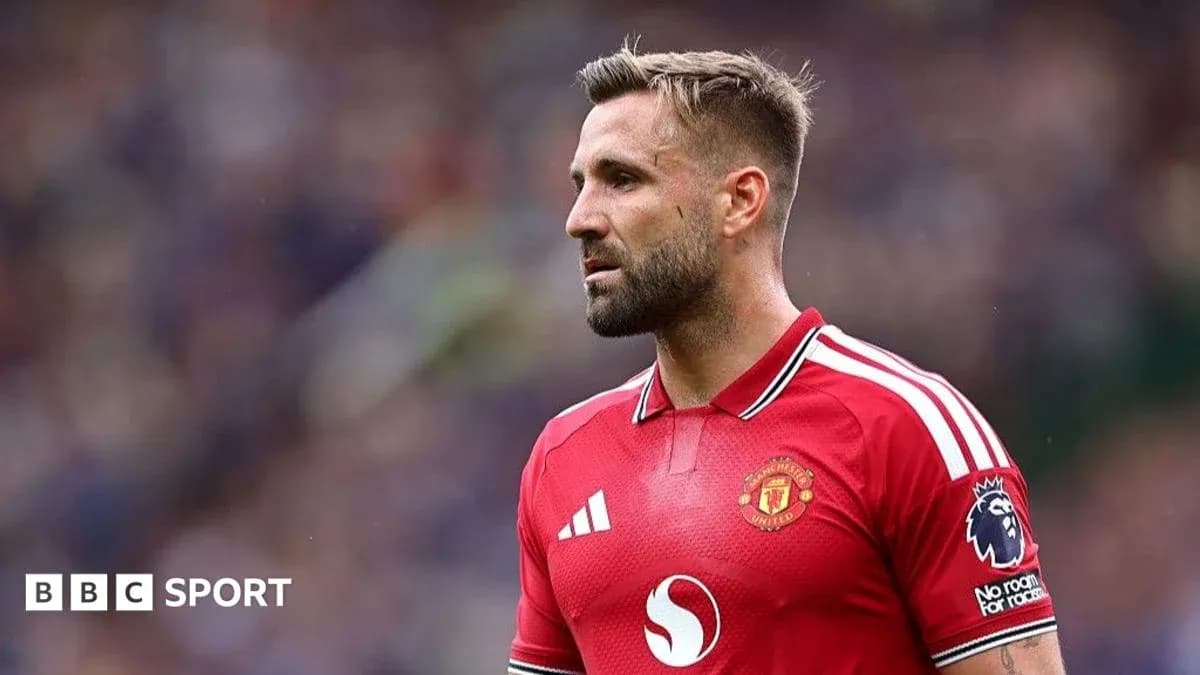
It had felt inevitable. Since the final whistle of the 2025-26 season, when debates about Michael Carrick’s squad began in earnest, one weakness kept flashing red on the dashboard. United had one senior, specialist left-back. One who had just delivered a remarkable, almost defiant season of durability. And one whose body, history suggests, cannot be pushed forever.
Luke Shaw started all 38 Premier League games last term. For a player whose career has been punctured by injury setbacks, that was extraordinary. United rode that fitness streak hard. Perhaps too hard.
Tyrell Malacia’s departure at the end of June only sharpened the focus. His contract expired, he moved on, and nobody was surprised. What did surprise many was what came next: nothing. No replacement. No new face walking through the door to share the load with a 31-year-old full-back in a season that could stretch beyond 60 matches.
Targets were not the issue. United had a list. Lewis Hall at Newcastle. Alejandro Balde at Barcelona. Jorge Salinas at Racing Santander. Names that fit the modern profile: young, athletic, comfortable on the ball. The recruitment department did its homework.
Then came the late twist: Rayan Ait-Nouri. A bold move, an attempt to tempt him across Manchester on loan. City refused. For that deal to have any legs, United would have had to commit to an obligation to buy down the line. Instead, they stepped back and chose to wait for what they regard as first-choice options.
The window closed. The gamble began.
Hall admired, Baleba chosen
Inside Old Trafford, there is no mystery about how highly United rate Lewis Hall. They really like him. If Newcastle had been open to a sensible deal, Hall would be in a red shirt now.
But Newcastle, stripped of key players by Premier League rivals over the summer, were never likely to roll over. Conversations made it clear: prising away a highly regarded 22-year-old would require a huge fee.
United’s budget was not limitless. With the numbers in front of them, they decided to pour the bulk of their remaining resources into what they saw as the bigger hole: midfield. That decision ended with a £70m commitment to Carlos Baleba from Brighton, a signing they view as central to reshaping the spine of Carrick’s team.
Hall, they concluded, could wait until next summer.
Balde was a different problem. United would have taken him on loan. Barcelona would only sell. Salinas had a relatively low release clause, but Atletico Madrid were always in pole position. By the time United pivoted to Nicolas Tagliafico, the moment had gone. He slipped away as well.
So when United circled back and finally acted on an agent’s initial suggestion around Ait-Nouri, it carried a clear message: even within the club, there is no absolute conviction that the path they’ve chosen at left-back is risk-free.
Shaw, Mazraoui, Dalot… and the Amass question
The plan, such as it is, looks like this.
Shaw remains first-choice. Behind him, Noussair Mazraoui is viewed as the primary back-up on that flank. He plays left-back for Morocco and has the tactical intelligence to tuck inside or push high when needed. Diogo Dalot, who has switched flanks before, offers another layer of cover. Then there is Harry Amass.
And that is where the story becomes more complicated.
Amass is a natural left-back, schooled in United’s academy, who impressed on loan at Sheffield Wednesday last season before an injury struck soon after a winter switch to Norwich. At 19, he is still learning, still growing, but his performances in pre-season — often shadowing Shaw — turned heads inside and outside the club.
Yet United were willing, even expecting, to let him leave.
This is not a new tension. In the summer of 2024, Erik ten Hag left Amass out of his Community Shield squad, despite the teenager having held his own against Mo Salah in a pre-season game in the United States just a week earlier. Ten Hag’s view then was blunt: physically, Amass was not yet at the required level.
Two years on, that argument should, in theory, hold less weight. Time builds bodies. But the doubts linger.
Clubs have circled. Interest in Amass has been consistent, and his omission from United’s Premier League 2 game against Leicester on Monday only fuelled the belief that he was heading out, probably on loan, before the deadline.
He stayed. No move. No clarity. His exact role in Carrick’s senior set-up remains undefined.
Yoro’s emergence and a reshaped back line
United’s willingness to lean on Mazraoui as a left-back option is tied closely to another emerging storyline: Leny Yoro.
Signed from Lille in 2024 for £52m as a central defender, Yoro spent much of this summer operating on the right. Carrick used him there repeatedly in pre-season, testing his range, his comfort out wide, his ability to step into midfield and build play.
Against Ipswich on Sunday, Yoro came on at right-back for Dalot, at the same moment Mazraoui replaced Shaw on the opposite flank. It was a snapshot of United’s defensive future: flexible, interchangeable, less rigidly defined by traditional roles.
At 20, Yoro is far from the finished article in that position. He still has to learn the nuances of defending in wide areas — body shape, timing, when to overlap and when to sit. But he has pace, strength and composure on the ball. The template is there. United fans only need to glance across the city to see how Josko Gvardiol, signed as a central defender, has adapted to the full-back role at Manchester City to understand how such a switch can work.
This is the calculation. A back line built on versatility rather than pure specialists. A squad stretched to cover multiple roles rather than one more big fee on a player they are not completely sold on.
Avoiding another Telles moment
There is another scar that shapes United’s thinking: the signings that did not work.
Inside the club, there is a clear determination not to repeat the pattern of Alex Telles, Matteo Darmian or Sergio Reguilon — full-backs who arrived in recent years but never truly met the standard required for a side with title ambitions. Functional, yes. Transformative, no.
All summer, United held a hard line on fees. They refused to be dragged into paying more than they believed a player was worth, even under late-window pressure. That policy did not bend for Hall, Balde, Ait-Nouri or anyone else.
On paper, it makes sense. The logic is sound. Why spend heavily on a stop-gap who may block a better signing next summer? Why panic into another short-term fix that lingers on the wage bill for years?
But football does not live on paper.
This is a decision that will be judged not in meeting rooms or spreadsheets, but in the chaos of a winter away day when Shaw feels a twinge in his hamstring. In a Champions League knockout tie when Mazraoui is already covering another position. In the moments when a season’s momentum can swing on one tackle, one sprint, one player too many out of position.
United have chosen to trust Shaw’s body, Mazraoui’s adaptability, Dalot’s versatility and Yoro’s development, with Amass hovering somewhere between academy hope and first-team reality.
It is a calculated risk. It might even be the right one.
But the truth is simple: only the results will tell them if they were brave — or just one injury away from being badly exposed.