Manchester United's Managerial Crisis: A Cycle of Decline
The image was brutally familiar.
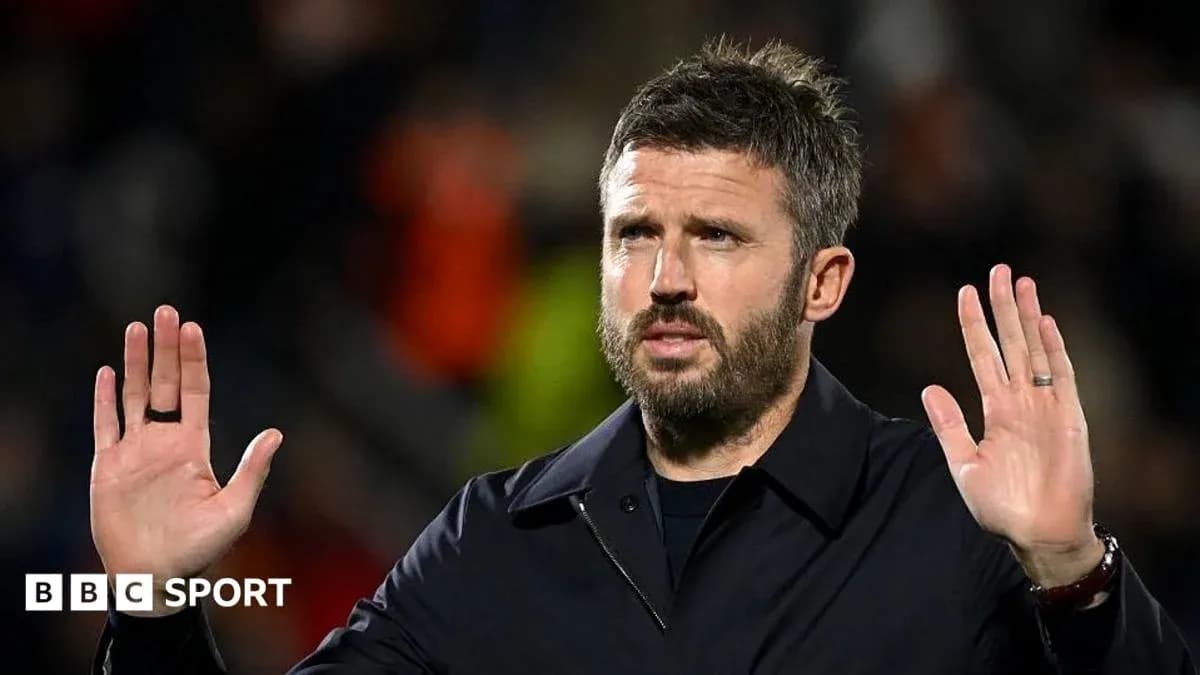
Michael Carrick, hands raised in apology, walked towards a furious away end after a 4-1 defeat. Same scoreline. Same hollow gestures. Same sense of inevitability. Three years ago it was Ole Gunnar Solskjaer at Watford. Now it is Carrick in Como, swallowed by the same unforgiving cycle that has consumed every Manchester United manager since Sir Alex Ferguson stepped away.
Different faces. Same ending.
The job nobody can do
Carrick is the seventh full-time manager since Ferguson closed a 26-year reign with 38 trophies and a functioning football empire. Since then, United have tried almost everything and everyone.
David Moyes, Ferguson’s chosen heir, shrank under the scale of the job. Louis van Gaal and Jose Mourinho arrived as proven serial winners. Solskjaer came in as the sentimental choice, the smiling antidote to Mourinho’s toxicity. Erik ten Hag rode in on the back of a vibrant Ajax side that had lit up the Champions League. Ruben Amorim was billed as Europe’s hottest young coach.
All of them, in time, walked the same lonely path towards the sack.
Van Gaal delivered an FA Cup. Mourinho brought a League Cup and a Europa League. Ten Hag claimed an FA Cup in 2024, a landmark win over Manchester City that felt like a turning point at the time. In the context of Ferguson’s era, it is meagre return. Slim pickings from a once-relentless machine.
Carrick now stands in that line, results collapsing around him and the dressing room starting to splinter. Lisandro Martinez publicly took aim at director of football Jason Wilcox after the Champions League defeat at Atletico Madrid. Bruno Fernandes questioned the tactical plan in Como. When players start looking upstairs and sideways, managers rarely survive long.
The question is no longer whether United have picked the wrong man. It is whether anyone can manage this club as it is currently built.
A superclub in slow decay
United’s decline did not begin with Carrick, nor with Ten Hag, nor even with Moyes. It began with the succession plan to Ferguson, a monumental task that the club managed to mishandle almost from the first step.
Carlo Ancelotti, Pep Guardiola, Jurgen Klopp – all three chose other projects. In December 2019, the sight was almost comic. Guardiola at City. Klopp at Liverpool. Ancelotti at Everton. Three elite managers within 35 miles of Old Trafford. None in the United dugout. United had Solskjaer, appointed on a wave of nostalgia and goodwill after a buoyant interim spell, but lacking the managerial CV to justify the job long term. He lasted just under three years.
Carrick, for all his intelligence and popularity as a player, feels like Solskjaer revisited. A former favourite who steadied the ship in temporary charge, then promoted full-time despite a thin managerial résumé built mainly on a sacking at Middlesbrough. Solskjaer arrived at Old Trafford with the same blemish from Cardiff City.
The pattern is painfully clear. United keep reaching for comfort, not clarity.
So the questions now cut deeper. Has the post-Ferguson era ever felt as bleak as this? Has hope ever been thinner? Has morale, inside the club and in the stands, ever felt lower?
The weight of the owners
Managers come and go. The owners remain.
From the Glazer family and former executive vice-chairman Ed Woodward to current part-owner Sir Jim Ratcliffe, United’s leadership has spent more than a decade trying to recreate the Ferguson years. The methods have varied. The outcome has not.
Fans have protested against the Glazers since their leveraged takeover in 2005, their anger fuelled by the debt heaped onto the club and a sense of drift. The Glazers have stayed put, unmoved by banners, marches and boycotts.
Ratcliffe’s arrival, initially pitched as a reset, has only complicated the picture. By buying into a partnership with the Glazers, he immediately inherited a share of the hostility. He has spoken of delegating football decisions to specialists such as Wilcox and chief executive Omar Berrada, yet the chaos has only intensified on his watch.
Ten Hag was almost sacked before the 2024 FA Cup final. The win over City saved him, earned him a contract extension and about £200m to reshape the squad. Six months later, he was dismissed anyway. The payoff for him and his staff exceeded £10m. A catastrophic piece of indecision: financially damaging, football-wise destabilising.
Then came the Dan Ashworth saga. United fought to bring in one of the game’s most respected sporting directors, waited out his gardening leave from Newcastle United, and finally got him through the door in July 2024. Five months later, he was gone after a behind-the-scenes disagreement. Ashworth spent as long on gardening leave as he did actually working for United.
Responsibility for Ten Hag staying was reportedly laid at his door by some. Others suggested he wanted to pursue English managers such as Graham Potter or Gareth Southgate rather than Amorim. Whatever the truth, United lurched into another reset.
Amorim, systems and stubbornness
The club turned to Amorim, the man many had touted as Europe’s next elite coach. Yet even his appointment carried warning signs. His devotion to a 3-4-3 system had already given Liverpool pause, prompting them to pivot towards Arne Slot when replacing Klopp.
At United, that tactical rigidity proved fatal. Amorim lasted just 14 months. His exit came with a pointed parting shot at the hierarchy and a hostile meeting with Wilcox. Another manager gone, another fallout, another layer of mistrust.
By the time Carrick took over, the atmosphere at Old Trafford was already sour. Ratcliffe’s aggressive cost-cutting had seen long-serving staff depart and “efficiencies” bite into the club’s day-to-day operations. Inside the building, morale sagged.
Outside, patience snapped.
Fans, finances and a fraying bond
The summer ticket-touting investigation poured petrol on an already smouldering relationship with supporters. United launched a clampdown on account sharing, threatening season-ticket confiscations if fans failed to respond. After the backlash, the club admitted they had underestimated how many supporters shared details and softened some of the language. But they stood by the investigation itself.
For a fanbase already weary of on-pitch mediocrity and off-pitch missteps, it felt like another misjudgement. Another sign the club’s hierarchy did not quite understand the people who fill the stands.
Ratcliffe had promised sharper financial management. The numbers tell a more complicated story. Overall debt still sits at around £1bn. United did post record revenue of £678m and a £23m operating profit despite missing out on European football for the first time in a decade, a stark turnaround from the £113m loss in 2023-24. They also spent £64m on land for a new stadium, the projected 100,000-capacity arena Ratcliffe wants as his legacy, with Berrada insisting the club remains on track for a build likely to cost more than £2bn.
On paper, those figures hint at ambition and financial muscle. On the pitch and in the boardroom, the story is very different: a club burning through managers, sporting directors and strategies at an alarming rate.
Carrick at the front, others in the shadows
Carrick now fronts the operation. He fields the questions, absorbs the anger and carries the weight of a decade’s worth of failure he did not create. On current evidence, he will pay with his job for problems embedded far deeper than the dugout.
His appointment was a familiar move: an easy, popular choice after he guided United back into the Champions League. A comfort hire. A man the crowd trusted, at least initially. Poor results have stripped away that protection. The comfort blanket has gone.
The real culprits sit elsewhere.
Ratcliffe’s regime has produced churn and instability rather than clarity and renewal. The Glazers still loom over everything, their ownership a permanent backdrop of discontent. Decision after decision – from managers to executives to football strategy – has dragged United further from their rivals, not closer.
An unmanageable giant?
The most damning question now hangs over Old Trafford.
Is this still a dream job, or has Manchester United, through years of decay, decline and dreadful decision-making, become unmanageable?
They will always find someone willing to take the seat. The badge still carries weight, the stadium still inspires, the history still seduces. But United can no longer simply pick from the world’s elite. Any established coach with options will look at the squad, the politics, the debt, the churn, and wonder if there is a realistic path to success without vast new investment and a clear, stable structure above them.
Right now, neither is guaranteed.
So Carrick stands in front of the fans, arms raised, the latest man to apologise for a mess that predates him by years. Behind him, a club wrestles with its own reflection, as the teams it once considered peers edge further into the distance.
At some point, United must decide: do they keep changing the man on the touchline, or finally confront the people and the processes that keep dragging every one of them down?