Marcus Trescothick Questions Role of Specialist Opener
Marcus Trescothick has never been one for romantic notions about the job of opening the batting. He did it as well as almost anyone in an England shirt, but as the Test side eyes a winter in South Africa and the return of Jacob Bethell, even one of the country’s great specialists is questioning whether “specialist opener” still needs to be a job title at all.
“You generally want your best top seven, however that looks,” he said, summing up England’s dilemma in a single line. The names are on the table. The jigsaw isn’t close to finished.
Bethell’s return and a crowded top order
Bethell’s comeback from a knee injury for December’s tour is the trigger point. England like him. They’ve already nudged him up to open in the one-day side, they know he brings left-arm spin, and they see a long-term multi-format cricketer.
But the Test top order is already creaking under scrutiny.
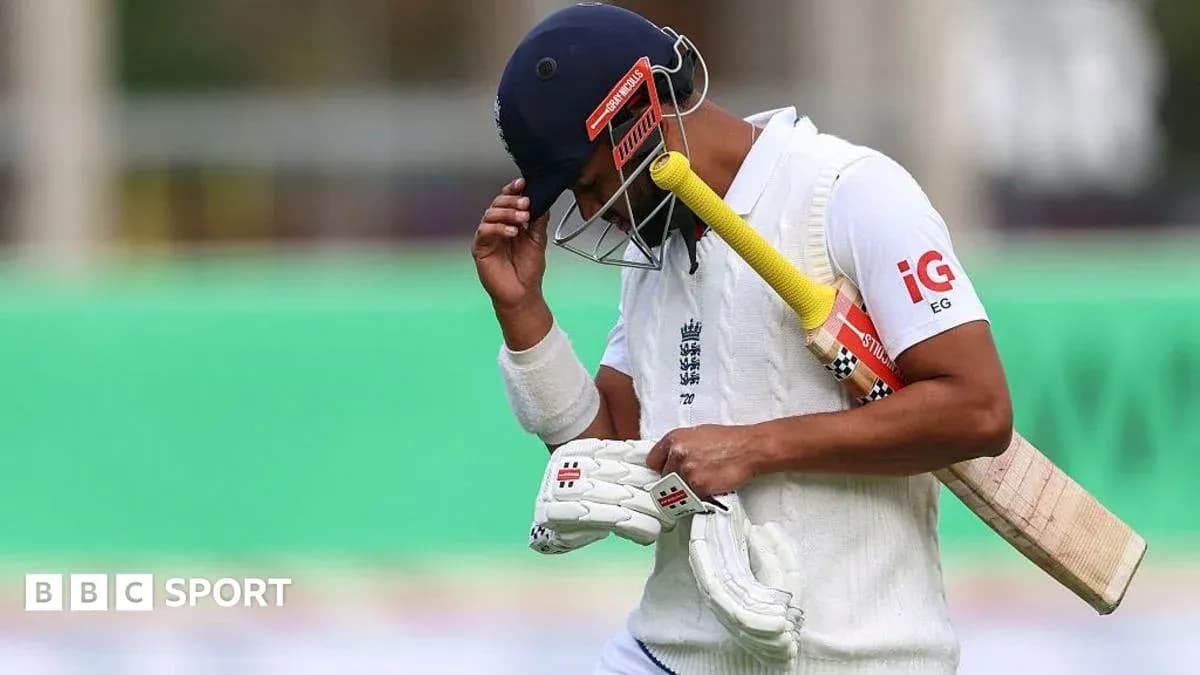
Emilio Gay, in his first summer at this level, has shared the new ball with Ben Duckett. Three half-centuries hint at promise; an average under 25 underlines how tough the jump has been. He looks organised, but the numbers are stark.
Duckett, one of the senior figures in this evolving dressing room, produced England’s only hundred of the summer, against New Zealand at Trent Bridge in June. That innings felt like a statement at the time. Since the start of the Ashes, though, he averages under 24, and across three Tests against Pakistan he did not pass 20 once. For an incumbent opener, that is uncomfortable territory.
Behind them, Jordan Cox has quietly made himself hard to ignore. Thrust in at number three as Bethell’s stand-in, he finally got his Test debut this summer and responded with an average north of 42. He has opened in first-class cricket, so the idea of shunting him up a slot is not outlandish. Every run he scores tightens the squeeze on someone else.
And that’s before Bethell walks back into the room.
Specialists under threat in a shifting game
Trescothick, interim coach for the Pakistan series and a pillar of that 2005 Ashes side, knows what it once meant to be an opener. He also knows the landscape has shifted since he ended his 76-Test career in 2006.
“I reckon times have changed a little bit,” the 50-year-old said. “I think you look at your best batting line-up, however that fits up. If that's with a specialist opener, great. If not, I think you can plan around it in this day and age. Players adapt pretty quickly because they're chopping and changing formats.”
That is the crux. England are no longer wedded to the idea that the man facing the first ball must have lived his entire life doing only that. If Bethell is among the best seven batters, they will find a way. If Cox continues to churn out runs, they will find a way. If Duckett’s returns stay modest, reputation will only protect him for so long.
Dan Lawrence complicates the picture in a different way. He is the other new member of the top six from the Pakistan series, but his off-spin makes him more than just a batter. In a squad that already leans heavily on all-round options, that extra string to his bow may shield him from the “who gets squeezed out?” debate – though Bethell’s left-arm spin offers its own tempting variety.
These are not small calls. They will shape the identity of England’s batting for the next cycle.
Fleming arrives, questions pile up
Trescothick will not be the man making those final decisions. His stint as interim coach ends with the series win over Pakistan; Stephen Fleming now steps in to take full control of the Test side.
Appointed in July, the former New Zealand captain has watched from afar as England swept Pakistan 3-0. He is due in the UK in the coming days to sit down with the hierarchy, assess the summer, and plot a route through South Africa.
He is expected to take in some of the white-ball series against Sri Lanka, too, with the ODI and T20 teams still under the command of his compatriot and close friend Brendon McCullum. A few county visits are on the cards. Quiet reconnaissance, but important. Fleming will want his own feel for conditions, characters, and options before he signs off on a batting order that may ask a middle-order player to wear the new ball.
When McCullum ran both Test and white-ball sides, the support staff moved as one across formats. Trescothick was part of that group. With Fleming now in charge of the red-ball team alone, that structure is being ripped up and redrawn.
Former Australia batter Mike Hussey has already revealed he was sounded out by Fleming, though reports in Australia say he has turned the role down. It adds another layer of uncertainty to a backroom reshuffle that is still taking shape.
Trescothick admits he does not yet know where he fits.
He has a preference. He will not say what it is.
“It's probably best I don't mention it at the moment because it may not be the case of what happens,” he said. “I love doing both formats. It's brilliant and I've been privileged to be in the position of assistant coach.”
For now, he remains in the thick of it. But the next few weeks will decide whether he is Fleming’s right-hand man, a white-ball specialist, or something else entirely.
Pietersen back in England colours
While the Test side wrestles with the future, the white-ball setup is about to experience a blast from the past.
Kevin Pietersen, 12 years after he was effectively sacked in the fallout from the 5-0 Ashes defeat in 2013-14, is back in England kit. The 46-year-old has been appointed as a consultant for the white-ball team and will link up with the squad on Sunday, ahead of the first T20 against Sri Lanka in Southampton on Tuesday.
For a generation of England fans, Pietersen remains the most flamboyant and inventive batter they have seen. The switch-hits, the swagger, the refusal to play within the lines – all of it is now being invited back into the dressing room he once left in acrimony.
Trescothick has already been on the phone.
“We've spoken already, to plan a little bit,” he said. “I gave him a couple of things that I wanted him to look at, to get his advice on.
“He is buzzing. Putting back on the shirt or the tracksuit, he is buzzing for that opportunity.
“Having his presence around and the knowledge he has about batting – he sees batting in a different light to many different people. If we can tap into that, it's only going to benefit the team.”
England’s immediate future, then, is being shaped on two fronts. In Tests, Fleming must decide how radical he wants to be with an opening role that no longer has to belong to a traditional opener. In white-ball cricket, Pietersen’s imagination is being plugged into a side already built on aggression.
Somewhere in the middle of all that, a young batter like Bethell waits to find out not just whether he plays, but where he bats – and what, in this new England, an opener actually is.