Marta's Final Chapter: Brazil's Iconic Farewell at the 2027 Women's World Cup
Marta's Last Stand on Home Turf
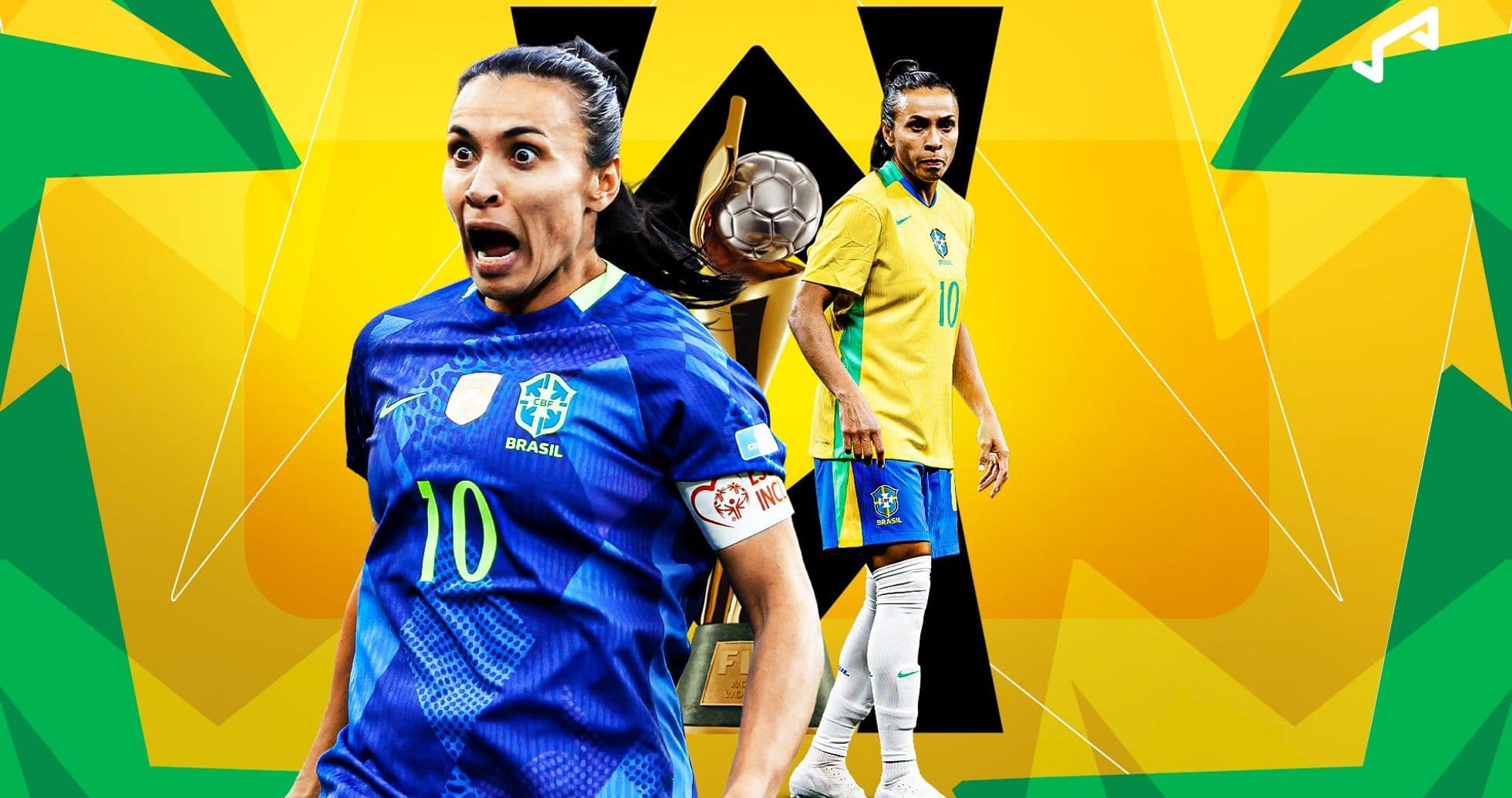
Known widely as the greatest of all time in women's football, Marta aims to cap her career with a memorable farewell, leading Brazil in the 2027 Women's World Cup hosted on home soil. At 41 years old when the tournament begins, she looks to inspire her nation one last time.
The Unmatched Legacy
In football debates, male players like Lionel Messi, Cristiano Ronaldo, Diego Maradona, and Pelé often come up. But for women’s football, Marta stands apart, once famously called "Pelé in a skirt" by Pelé himself. Her dazzling style and skill have made her a standout for over two decades, long before women's football gained global popularity.
Her achievements include winning titles such as the Champions League and Copa America. She also holds the record as the top goal-scorer in Women’s World Cup history. Yet, a World Cup winner’s medal has eluded her so far.
After initially retiring from international play post-2024 Olympics, where Brazil narrowly lost the gold medal match to the United States, Marta reversed course and played a key role in Brazil’s 2022 Copa America triumph. Now, with Brazil hosting the 2027 World Cup, it seems this will be her final shot at glory on home ground.
A Golden Generation That Almost Was
Back in 2007, Marta shone brightly as Brazil reached the Women’s World Cup final. Despite losing 2-0 to Germany, she won her second consecutive FIFA World Player of the Year award that year, the second in a streak of five straight wins.
She was not alone in brilliance. The squad included players like Cristiane, a prolific striker; Formiga, who became the most capped international player ever; Pretinha, known for scoring in crucial moments; and Rosana, a stalwart with over 100 caps who later starred for Lyon in Europe.
This ensemble was considered a golden generation destined for World Cup success.
Support Shortcomings Held Them Back
Unfortunately, funding from the Brazilian Football Confederation (CBF) lagged behind. As Rosana reflected, investment arrived only after women had to prove themselves, unlike in other countries where support comes earlier.
Brazil dominated South America, winning nine of ten Copa America Femenina tournaments since 1991. Still, they fell short on the global stage, earning silver medals at the Olympics in 2004 and 2008 but never securing a major title. This team might be the strongest in women's football history never to win a major trophy.
“The generation we had was possibly the strongest Brazil has seen to this day,” Rosana said in 2021. “Not having investment come sooner to help us reach our goal is sad.”
Marta's Rise Beyond National Borders
Off the national pitch, Marta continued to impress. In 2004, she joined Umeå IK in Sweden, then the top league in women's football, winning four straight Damallsvenskan titles and the UEFA Women’s Cup (now Champions League), while reaching additional European finals.
Her coach recalled her unique approach: solving problems her way, breaking the mold to win games and trophies.
Marta later found success in the United States, capturing two national championships, before returning to Sweden, where she obtained citizenship and fluently speaks the language. Along the way, she collected numerous individual honors including Golden Boots and FIFA awards.
International Frustrations
Despite her brilliance, Brazil struggled to reach previous heights internationally during the 2010s. At the 2011 World Cup, they exited in the quarterfinals after losing to the U.S. on penalties. The 2012 Olympics saw them eliminated by world champions Japan at the same stage.
The 2015 World Cup was disappointing with an early round exit against Australia. Hosting the 2016 Olympics brought a semifinal run but no medal after losing the bronze match.
An Emotional Farewell Seemed Near
By the 2019 Women’s World Cup, many expected this to be Marta's swan song. At 33, her future participation was uncertain. After Brazil's last-16 defeat to hosts France, she delivered a heartfelt message to young players, tears visible.
“There won't always be a Formiga, a Marta, or a Cristiane. Women’s football depends on you to survive. Think about it, value it more. We’re asking for support. You have to cry at the beginning and smile at the end.”
This speech suggested she accepted her nearing retirement, urging the next generation to carry the sport forward.
One More Chance to Shine
Yet, 2023 wasn’t the end. After another tough World Cup group-stage exit, Marta kept fighting. In 2024, at 38 and mid-season in the NWSL, she led Orlando Pride to the Shield and Championship titles, then helped Brazil reach their first major final since 2008—the Olympic gold medal match.
With the 2027 World Cup on the horizon, she hopes to finally claim the ultimate prize. No teammates remain from the 2007 squad except her. Though her role may have evolved, Marta's legacy laid the foundation for Brazil’s new generation ready to challenge for the crown.
Wearing the captain’s armband, she will lead Brazil in front of their home crowd, chasing a historic victory in what could be her final dance on the world stage.