Mike Hesson Eyes Permanent Role as Pakistan Test Coach
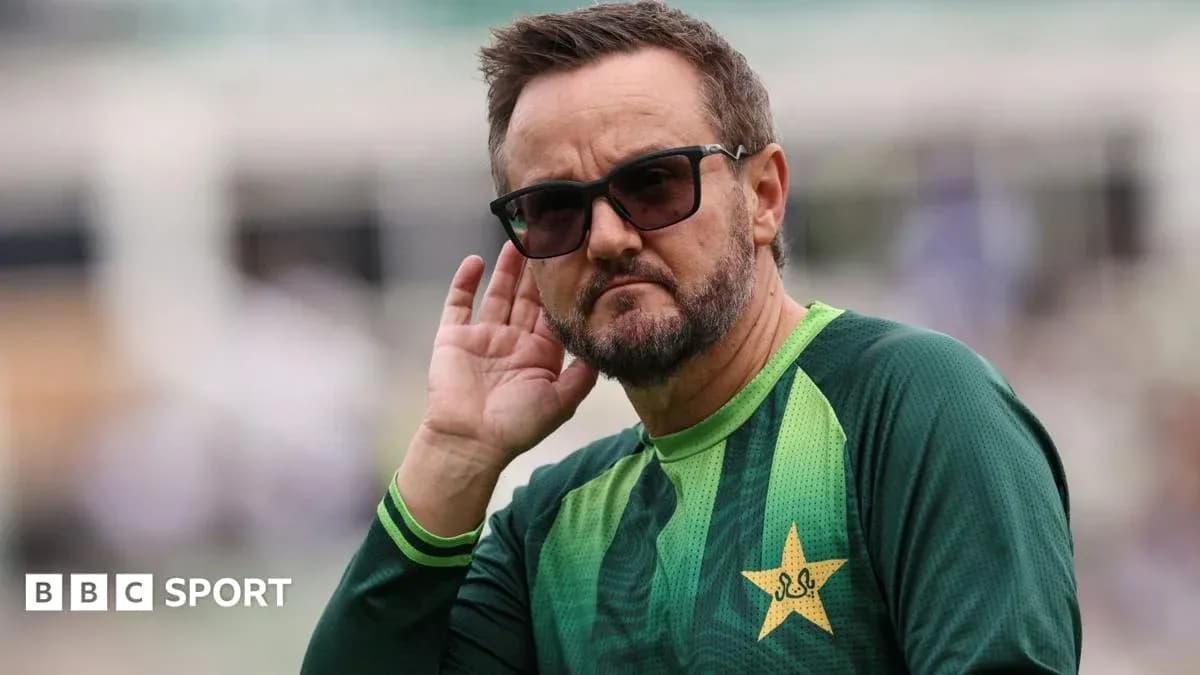
Mike Hesson has thrown his hat firmly into the ring to become Pakistan’s permanent Test coach – and revealed he turned down the chance to talk to England earlier this year.
The 51-year-old New Zealander, already in charge of Pakistan’s white-ball sides, was parachuted into the Test set-up on an interim basis for the third Test at Edgbaston, replacing Sarfaraz Ahmed after bruising defeats at Headingley and Lord’s.
The result in Birmingham – an eight-wicket loss – will not decorate his CV. The performance, though, offered just enough resistance to hint at a direction of travel.
“I’ll be open to it, for sure. I love Test cricket,” Hesson said, making no attempt to hide his interest in taking the role full-time.
He has seen enough in a short, chaotic window to believe there is something to build on.
“I think there’s enough talent around the system in Pakistan that if we can provide some good direction, we can make some strides forward,” he said. “It’s certainly not going to happen in a game or two, but I think there is some skill there I’d certainly be considering looking after.”
Those are not the words of a man passing through. They sound like the start of a project.
England call, Pakistan commitment
Hesson’s name carries weight in international cricket. He rebuilt New Zealand between 2012 and 2018, taking them from scrappers to a hardened, tactically sharp outfit that reached a World Cup final and became one of the most respected sides in the game.
So when England sacked Brendon McCullum as their Test coach in July, it was no surprise the England and Wales Cricket Board sounded him out. They ultimately appointed another Kiwi, Stephen Fleming, but not before Hesson’s phone started buzzing.
“I was contacted by my agent to say there had been an approach to have a discussion around my availability, as I’m sure many people were,” he explained.
The door opened. Hesson shut it.
“I made it pretty clear I had committed to Pakistan,” he said.
That line matters. Pakistan cricket has lived for years with the perception of being a stopover job – high risk, high drama, short tenure. Hesson’s track record suggests something different.
“Most of the positions I’ve been in, I’ve been in for five or six years. I see it through, then you have a break, then you refresh and try for something else.”
This is how he works: long cycles, clear identity, loyalty to the project. If the Pakistan Cricket Board chooses him as permanent Test coach, it will not be on a short fuse by design.
A team undercooked, a format underloved
The defeat at Edgbaston extended a painful run for Pakistan’s red-ball side, but it did not feel like the capitulation of the previous two Tests. There was resistance. There was some organisation. There was, at least, a contest.
Former captain Ramiz Raja, watching closely, sensed the difference.
Pakistan, he said, “put up a fight” in the eight-wicket loss, but the bigger picture still troubles him. The issue, in his eyes, runs deeper than one coach or one tour.
“It’s time to revisit Test match cricket,” Ramiz told BBC Test Match Special. “It’s back to the drawing board because in the sub-continent not a lot of emphasis is put on Test match cricket.”
That is the battleground Hesson is walking into. Not just opponents, but priorities.
Ramiz pointed to the turbulence around the squad in recent weeks – Sarfaraz’s removal, the change in leadership, the hurried shift in direction – and the impact it can have on players trying to prepare for the longest format.
“Obviously there was mayhem around the team and that may have hurt the dressing room environment. But Pakistan were also a little underdone, undercooked with preparation.”
Underprepared players, under-prioritised format, overbearing expectations. It is a familiar Pakistan story.
A crossroads for Pakistan’s red-ball future
This is where Hesson’s interest becomes more than a passing quote. Pakistan have a white-ball coach who wants to take ownership of the Test side as well, who has already turned down a conversation with England to honour that commitment, and who believes there is enough raw material in the system to shape a serious Test team.
The PCB now faces a decision that will define more than just the next series. Do they back Hesson to run the entire cricket operation over a sustained period, giving him the time he craves and the authority he usually demands? Or does Pakistan’s Test side continue to live in the margins, shuffled behind the white-ball circus?
The talent is there. The interest from a proven international coach is there.
What Pakistan choose to do with both will say everything about how seriously they truly take Test cricket in the years ahead.