Mixed Martial Arts at the Asian Games: A Step Towards Olympic Inclusion
In a modest gym in Nagoya that looks more like a school sports hall than a launchpad for Olympic dreams, fighters in rash guards and four-ounce gloves are trying to drag a once-banned sport into the heart of the global sporting establishment.
Mixed Martial Arts, long derided in parts of the United States as “human cockfighting”, has arrived at the Asian Games. For the people who have spent years trying to sanitise its image and codify its chaos, this week in Japan feels like a door being nudged open.
“This is a big step,” said Galastein Tan, director general of the Federation of International Mixed Martial Arts, as bouts unfolded on a white-and-grey mat nearby. Continental Games status, he argued, is not just a line on a CV. It is proof of structure.
“Inclusion means that you already have a good governance structure, you have enough members, athletes to be able to compete, your ruleset, your officials are ready and therefore it is a significant one,” he said.
From cage to mat
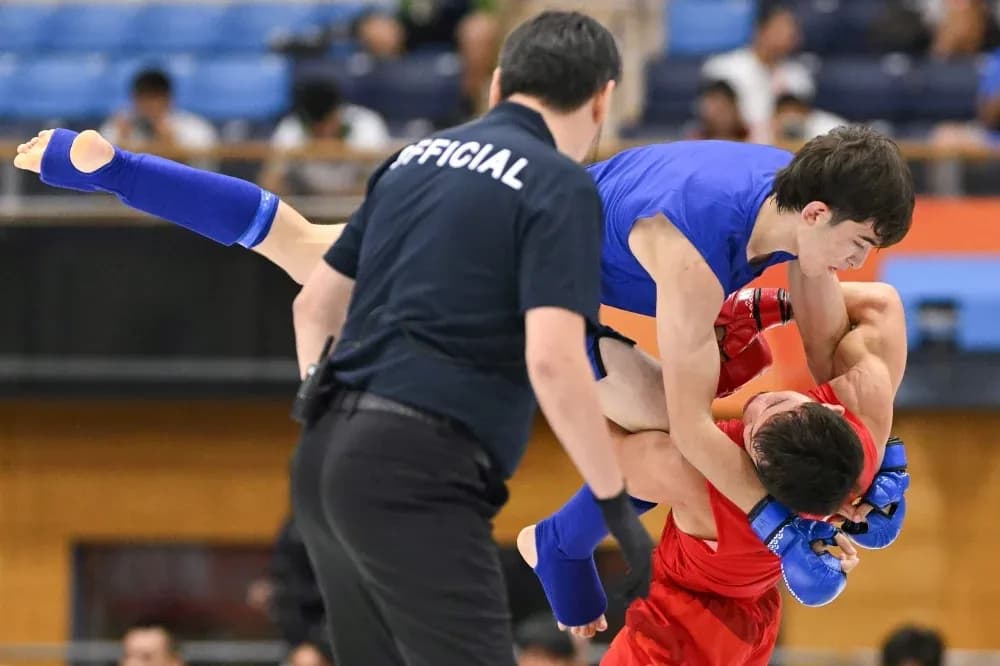
The scene in Nagoya is a long way from the neon and noise of a UFC card in Las Vegas. There is no walkout smoke, no booming pyrotechnics, no caged octagon dominating an arena. Men and women compete in separate categories, trading strikes and grappling exchanges in front of a small but committed crowd.
The atmosphere is intimate, almost club-like. The stakes are not.
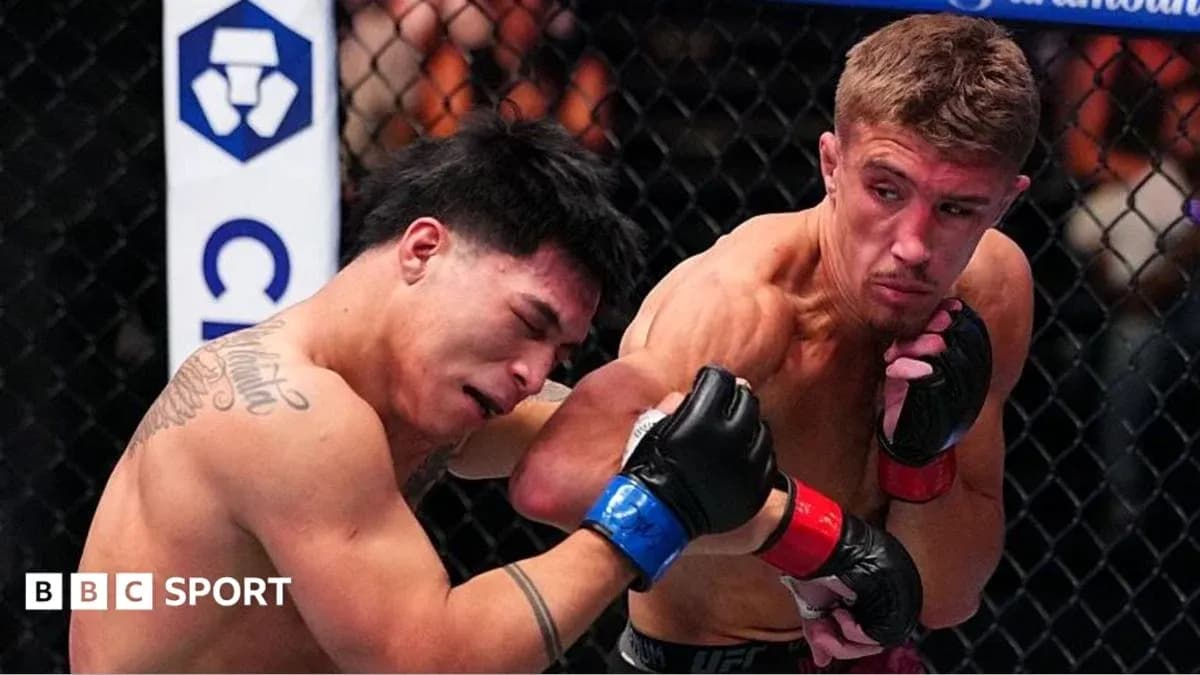
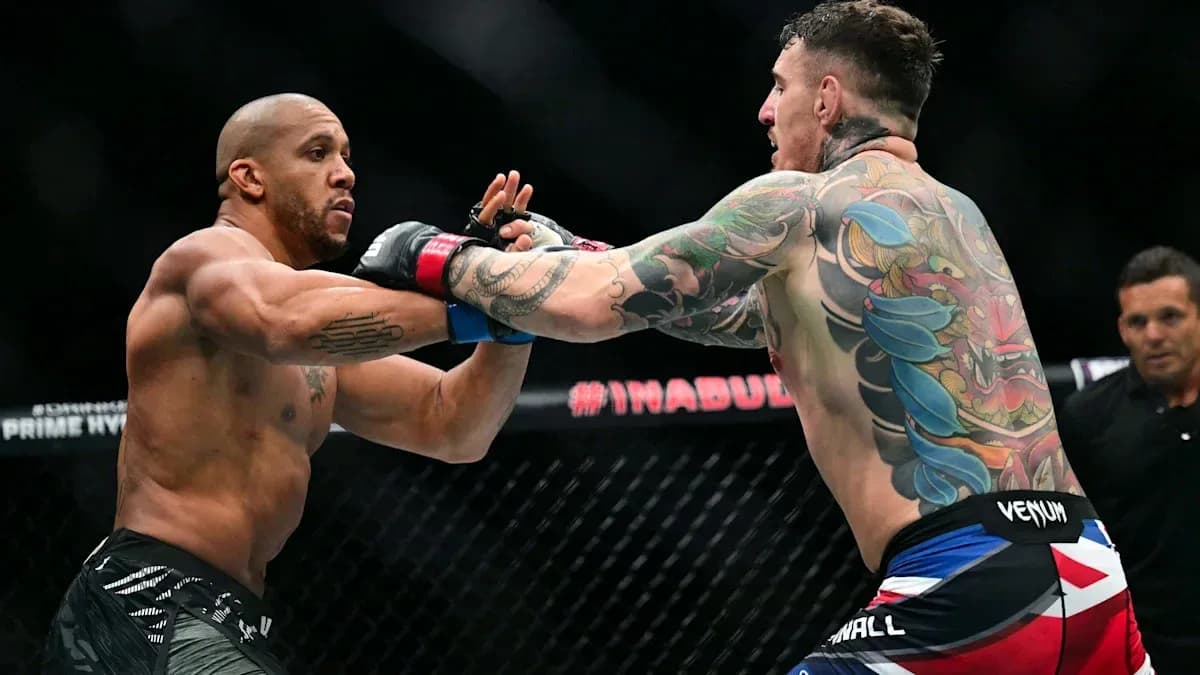
For fans raised on the Ultimate Fighting Championship, the first thing that jars is the absence of the cage. In June, the UFC staged an event on the South Lawn of the White House, a symbol of how far the sport has come in American mainstream culture. Those fights, like almost all in the promotion’s history, took place inside an eight-sided fence.
Here, there is nothing to lean on, no metal mesh to trap an opponent against. Just open mat and boundary lines.
For athletes who built their game around “cage wrestling” — pinning, stalling, grinding along the fence — it demands a rethink. Tan is blunt about why that change is necessary.
A cage, he said, “does not really align with Olympic values”.
That single detail hints at the broader challenge. To reach the Olympics, MMA must not only convince sceptics it is safe enough; it must also reshape itself into something the Olympic movement can recognise and regulate.
Rules, risks and a crowded queue
Getting the world to agree on one set of rules is the next great fight.
What strikes should be legal? How much ground-and-pound is acceptable? Where is the line between a submission attempt and a dangerous joint attack? These are not academic questions. They cut to the heart of what makes MMA both compelling and controversial.
“We have been in talks with the IOC and other relevant stakeholders that have influence or decision on the recognition,” Tan said, upbeat but realistic about the road ahead.
He knows MMA is not alone in this race. Teqball — a spectacular blend of football technique and table tennis angles — is also making its Asian Games debut. So is padel, the fast-growing racquet sport that has filled courts from Madrid to the Middle East.
All three want the same prize. Only a limited number of sports will get it.
Plenty of political lobbying lies in front of them. Plenty of old prejudices, too. MMA still carries a reputation, in some quarters, for being too brutal for polite Olympic company. The echoes of the 1990s linger, when US senator John McCain dismissed the sport’s early, barely regulated incarnation as “human cockfighting” and campaigned to have it banned.
The modern version, with weight classes, medical checks and stricter rules, looks nothing like that. Driven by the UFC’s global boom, MMA has become mainstream entertainment. It fills arenas, sells pay-per-views and churns out crossover stars.
Yet the Olympic bar sits higher than popularity alone. One of the biggest structural hurdles remains: a fragmented landscape.
For the International Olympic Committee, a single, unified governing body is non-negotiable. Boxing’s recent wrangles with its own federation serve as a cautionary tale. MMA’s various organisations will have to find common ground if they want a place on the programme.
A pathway for the next generation
On the mat in Nagoya, those politics feel distant. For athletes like Singapore’s Teo Hui Hoon, already guaranteed at least a silver medal, the Asian Games represent something more tangible: a visible ladder.
“I think it will grow the talent pool a lot,” she said, reflecting on what recognition at this level — and potentially at the Olympics — could mean.
“It will encourage more children and teenagers to take up the sport and take it seriously.
“Because now there’s a clear pathway, right? You can join a national team, the next step you can go to the Olympics.”
That word — pathway — is the one that matters in gyms around Asia. In Thailand, where Muay Thai has shaped generations of fighters. In Kazakhstan, with its deep wrestling and combat sports tradition. In the Philippines and Japan, where martial arts are part of the sporting fabric.
For years, MMA existed on the fringes of that system, a professional end point but rarely a recognised route for young athletes in national programmes. Asian Games inclusion changes that conversation. National federations can now justify investment. Coaches can sell parents on a sport that leads somewhere beyond smoky local shows and distant UFC dreams.
Eyes on LA and Brisbane
Tan and his colleagues know the timeline. Los Angeles 2028 is almost certainly too soon. The programme is largely set, and the queue of hopeful sports is long. Then comes Brisbane in 2032, a Games that will be shaped by a younger, more digitally native audience — precisely the demographic that already consumes MMA in huge numbers.
“Nothing is impossible,” Tan said, when asked about the sport’s Olympic horizon.
He believes MMA “is a sport that the Olympics finds relevance to and the ability to connect with both adults and also the youth”, stressing its “global appeal” and its readiness “to fit into a major Games schedule”.
The message is clear. From the sport’s side, the answer is yes.
“So if the IOC or LA28 comes and say, MMA, would you like to be in as a medal sport or demo sport, we are ready.”
From a cramped hall in Nagoya to the glare of an Olympic opening ceremony is a long walk. MMA has taken its first serious stride. The question now is whether the Olympic movement is prepared to meet it in the middle of the mat.