Monza: The Legendary Circuit of Speed and Fate
The story of Formula 1 begins at Monza. Not in the boardrooms or in the rulebooks, but on a baking September afternoon in 1950, with Giuseppe Farina in an Alfa Romeo, hurtling towards immortality.
Farina won that first Italian Grand Prix of the world championship era and, with it, the inaugural drivers’ title. An Italian, in an Italian car, crowned in Italy. No-one else has ever done that. Monza set the tone early: it would be a place where history doesn’t just happen, it announces itself.
Champions on a Knife-Edge
By 1953, the script had grown richer. On the grid: Farina again, this time in a Ferrari. Alongside him, Juan Manuel Fangio in a Maserati. On the far side, Alberto Ascari, Ferrari’s talisman. Between them, they would carve up the first eight world titles.
Fangio won that race. Ascari took the championship that year. Monza, even then, was more than a single afternoon’s result. It was the stage on which seasons were decided and legacies hardened.
Three years later, the circuit’s fearsome banking framed another defining image. Fangio, Stirling Moss and Peter Collins thundered around the steep concrete curves in 1956, the cars dancing on the edge of adhesion. Moss, in a Maserati, won the race. The story that stuck, though, belonged to Ferrari.
Collins, the young Briton, handed his Ferrari over to Fangio mid-race, sacrificing his own title hopes so the Argentine could bank the points he needed. Fangio finished second and secured his fourth world championship. The gesture became part of Formula 1 folklore. At Monza, loyalty and ruthlessness often share the same garage.
Glory and Grief
The circuit’s speed has always come at a cost. In 1961, Ferrari’s Wolfgang von Trips arrived at Monza on the brink of becoming Germany’s first world champion. He never got the chance. On the second lap he collided with Jim Clark’s Lotus. Von Trips’ car flew into the crowd on an embankment. He died, along with 14 spectators.
The photograph of him before the race is chilling now: helmet off, unaware that the title would go instead to his team-mate, Phil Hill, and that Monza would again be left with blood on its hands.
The human side of the sport flickers through quieter moments too. In 1967, Lotus driver Graham Hill sat in the pits adjusting his helmet and visor, his family clustered around him. His wife Bette, his children, and at the front a six-year-old boy named Damon. Nearly three decades later, that boy would win a world championship of his own. At Monza, the generations often overlap in a single frame.
Before chicanes cut into its straights, Monza was a slipstreaming lottery. In 1969, Jackie Stewart in a Matra beat Jochen Rindt’s Lotus by a whisper at the line, with Jean-Pierre Beltoise and Bruce McLaren almost welded to their gearboxes. The top four were covered by less than two tenths of a second. It was racing as a knife fight in a phone booth.
A year later, Nina Rindt sat in the pits, stopwatch in hand, keeping time for her husband Jochen during practice. Shortly afterwards, he crashed on the approach to Parabolica. A suspected suspension failure sent his Lotus into the barriers. He never came home. Weeks later, Rindt became Formula 1’s only posthumous world champion. Another title, another tragedy, another chapter written in Monza’s unforgiving script.
The drama refused to ease. In 1971, BRM’s Peter Gethin won one of the tightest races the sport has seen, crossing the line just ahead of Ronnie Peterson, Francois Cevert, Mike Hailwood and Howden Ganley. Five cars in six tenths of a second. A photo finish for the ages, in a place already drowning in them.
Pain, Resolve and the Price of Risk
Monza is not only about the drivers behind the wheel. In 1973, Frank Williams organised a race around the circuit for drivers and team members. James Hunt led the pack visually, bare-chested and unmistakable, but it was Williams who claimed the £750 prize. Even off the track, competition seeped into every step.
Three years later, Niki Lauda arrived at Monza carrying scars that spoke louder than any headline. Six weeks earlier, he had suffered a near-fatal crash at the Nürburgring. Burns, damaged lungs, a body still raw. Yet the Ferrari driver dragged himself back into the cockpit to keep his title fight with James Hunt alive.
Lauda finished fourth that day in Italy, extending his lead. The courage was staggering. The title, though, slipped away by a single point at the end of the season. Monza had given him a lifeline; the year took it back.
The 1978 race underlined the sport’s brutal unpredictability. A multi-car accident erupted behind the leaders at the start. Ronnie Peterson’s Lotus was destroyed. He lay trapped in the wreckage with serious leg injuries while fellow drivers tried to pull him free. The injuries did not initially seem fatal, yet delays and complications followed. Peterson died the next morning from an embolism.
On the same day, his team-mate Mario Andretti secured the world championship. His later words cut through the euphoria: “Unfortunately, motor racing is also this.” Few venues embody that truth more starkly than Monza.
Ferrari’s Theatre, Senna’s Anguish
By 1988, McLaren had turned Formula 1 into a procession. They won every race that season – except one. Monza.
Ayrton Senna, leading comfortably, came up to lap Jean-Louis Schlesser, standing in for Nigel Mansell at Williams. The two collided at the chicane with two laps to go. Senna’s McLaren spun out. Suddenly, Ferrari’s Gerhard Berger and Michele Alboreto found themselves gifted a one-two.
The tifosi erupted. A home victory, in a season otherwise painted in McLaren red and white. The joy, though, carried a sombre edge. Enzo Ferrari had died only weeks earlier. The old man was gone, but his cars had just beaten the dominant force of the era on home soil. It felt like a final salute.
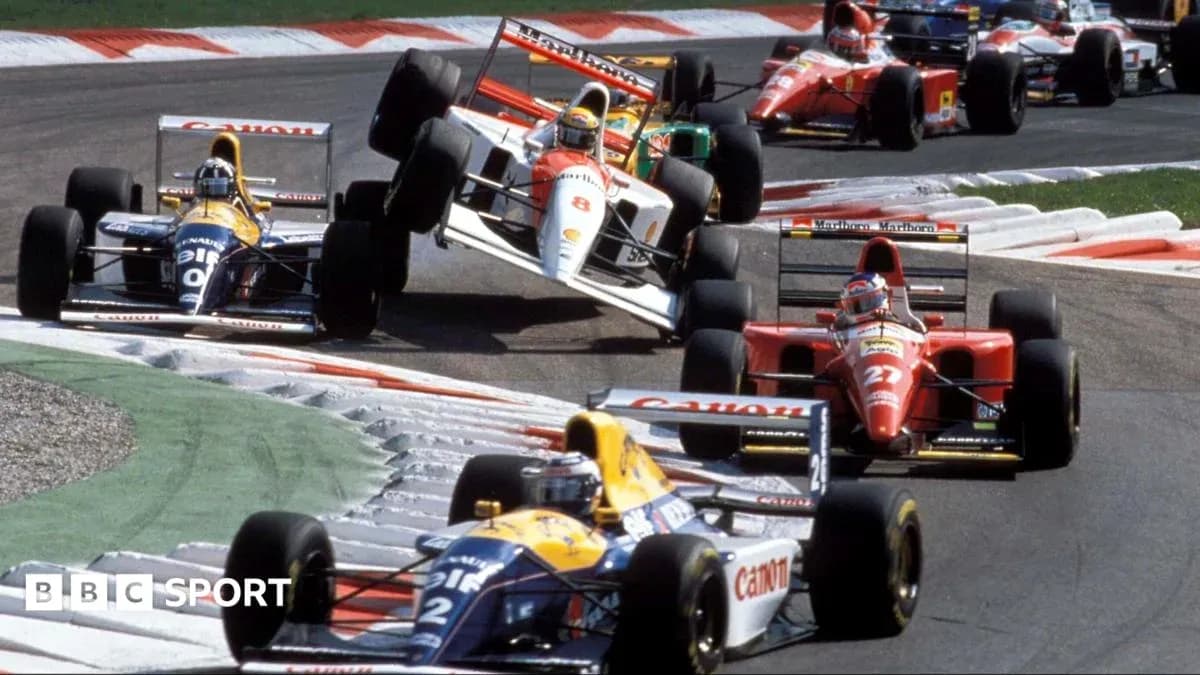
The same chicane haunted Senna again in 1993. This time he tangled with Damon Hill’s Williams at the start. Both survived the clash and continued. Hill regrouped and came back to win the race. At Monza, even the greats often find themselves on the wrong side of its kerbs.
That same year delivered one of the most surreal finishes in F1 history. Christian Fittipaldi’s Minardi clipped team-mate Pierluigi Martini on the charge to the flag. Fittipaldi’s car somersaulted, flipped upside down and crashed back to earth – yet both drivers walked away. Fittipaldi’s forward momentum carried him across the line. He finished eighth, one place behind Martini, having crossed the finish line while upside down.
Tears, Titles and a Halo
The emotional toll of Monza doesn’t always come from crashes. In 1999, Mika Hakkinen spun out of the lead and ended his race in the gravel. The Finn broke down in tears, convinced he had thrown away the championship. The image of the double world champion, helmet off and inconsolable, became one of the enduring pictures of that season. He recovered, regrouped, and still beat Ferrari’s Eddie Irvine to the title. Monza had shaken him, but not broken him.
A year later, the same straight became a sea of red. Michael Schumacher’s victory in 2000 triggered a tidal wave of Ferrari tifosi flooding the start-finish straight. It proved a pivotal win on his way to the first of five consecutive drivers’ titles with the team. Monza, once again, acted as a hinge point in a dynasty.
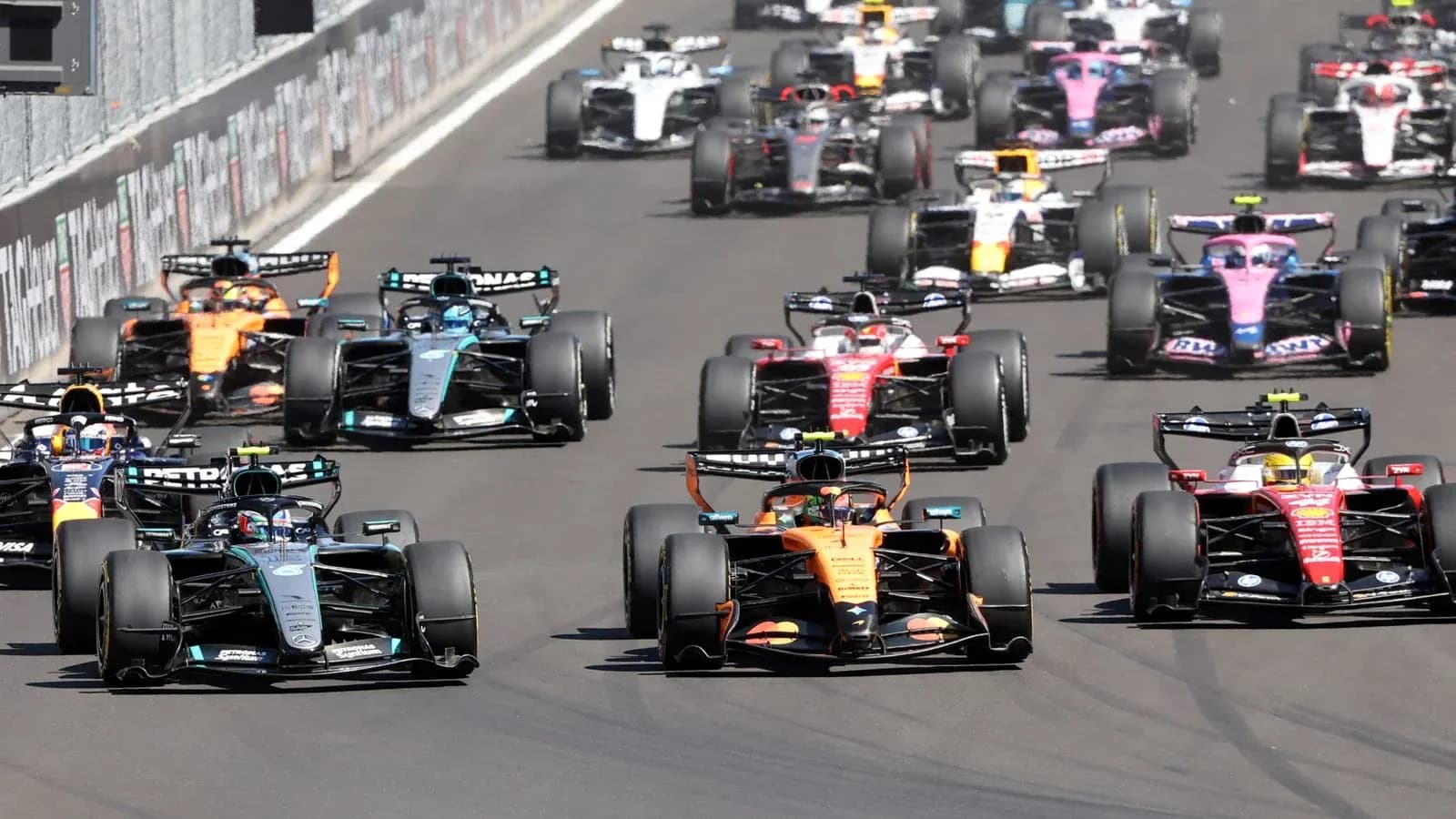
The first chicane has remained a magnet for chaos. In 2011, the usual jostling for position produced a familiar scene: cars facing in all directions, some on the asphalt, some in the escape roads, all trying to survive the bottleneck. At Monza, the race can be lost in the first 300 metres.
The 2021 season, one of the most volatile in modern times, added another indelible image. Max Verstappen and Lewis Hamilton, locked in a ferocious title fight, clashed at the first chicane. Verstappen’s Red Bull rode up over the Mercedes, its rear wheel landing on Hamilton’s car. The halo – once controversial, now unquestioned – took the impact. It may well have saved Hamilton from serious injury.
Monza watched it all, as it always has. From Farina’s first crown to Verstappen and Hamilton colliding over a modern title fight, the circuit has remained the sport’s most unforgiving mirror. Speed, courage, misjudgment, triumph, grief – they all arrive here eventually.
The old banking still stands, crumbling in the trees, a concrete monument to an era when bravery and risk were almost indistinguishable. The modern cars no longer touch it, but its shadow stretches over every Italian Grand Prix.
How many more careers, championships and lives will Monza shape before it finally yields its place in the sport’s mythology?